




.svg)
Labour faces a dual challenge as its traditional urban strongholds fracture under the pressure of a rising Green-Reform pincer movement.
The political landscape of urban Britain is undergoing its most significant realignment in a generation as the 2026 local government elections approach. In the heart of East London—specifically across Tower Hamlets, Newham, Hackney, and Croydon—the Labour Party’s once-impenetrable wall of support is showing deep structural cracks. While international crises like the conflict in Gaza initially sparked this movement, a deeper investigation reveals a more complex cocktail of domestic grievances: local service decay, the cost-of-living crisis, and a perceived lack of protection against the far right.
Recent polling data from March 2026 indicates a historic shift. The Green Party, led by Zack Polanski, has surged to a record 17% in national voter intention, effectively tying with the Conservatives and narrowing the gap with Labour’s 21%. This surge is most acute in London’s immigrant-heavy boroughs, where voters are increasingly viewing the Greens not just as environmentalists, but as "eco-populists" who offer a sanctuary for those feeling politically homeless. In areas like Tower Hamlets, the Greens have successfully leveraged the disillusionment of voters who feel Labour has prioritized centrist "hero voters" over its loyal urban base.
The impact is not limited to a single-party loss. In East End wards like Walker and across parts of Croydon, a unique "Green-Reform" pincer is developing. While the Greens consolidate support among younger, diverse progressives, Reform UK is simultaneously peeling away working-class voters who feel abandoned by the mainstream. This fragmentation has created a high-stakes environment where Reform and the Greens are frequently the top two choices for undecided voters, leaving Labour in a defensive crouch.
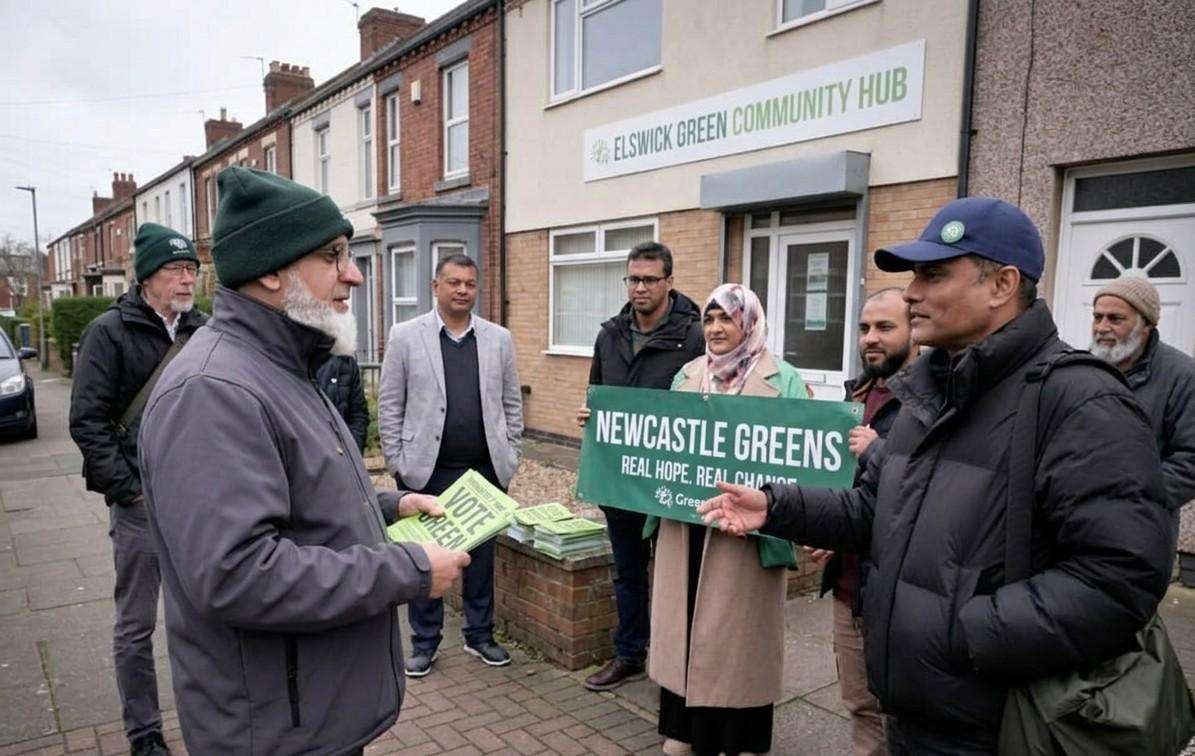
Community leaders and activists in these areas point to more than just foreign policy as the catalyst. Halimah Begum, a community advocate now standing for the Greens, told a journalist that the Home Secretary’s recent announcement to double the eligibility period for Indefinite Leave to Remain from five to ten years was a "breaking point" for many British-Bangladeshi families. She noted that such policies make many long-term residents feel viewed as "perpetual immigrants" rather than citizens. This sentiment is echoed in mosques and community hubs, where the discourse has shifted from climate change as a global issue to its local impact on the ancestral homes of many British Muslims, further cementing the Green Party's appeal.
Looking ahead to the May 7 elections, the "Muslim Vote" group and other independent networks have signaled they will back Green candidates in key council seats and the Tower Hamlets Mayoral race. This strategic endorsement follows the Green victory in the Gorton and Denton by-election, proving that the party can now win in diverse, working-class urban centers. For Labour, the risk is no longer just a "protest vote" but a permanent loss of geographic territory. As Reform UK moves quickly with a "leaflets-only" high-speed campaign in outer London, the Greens are winning the ground war of door-to-door engagement in the inner boroughs, suggesting a future where the two-party system is increasingly irrelevant in the capital.