




.svg)
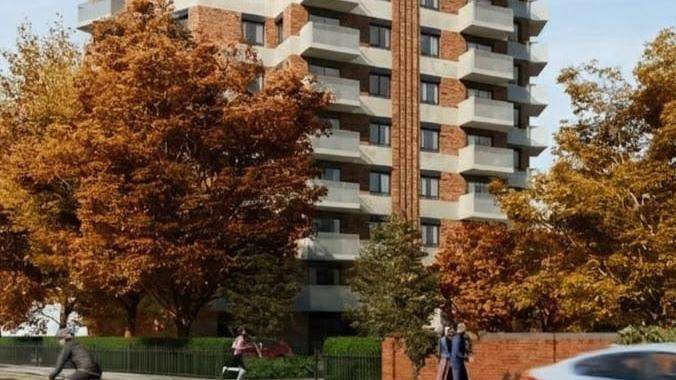
A new affordable housing project in West London, managed by the Women's Pioneer Housing Association (WPHA), has ignited a fierce public debate after confirming it will accept applications from male-born individuals who identify as women for its 102-flat development, Brooke House, in Ealing. The decision places the organisation at the heart of a national controversy over the definition of 'woman' in single-sex provisions, especially in the wake of a pivotal UK Supreme Court ruling earlier this year.
The Women's Pioneer Housing Association, which oversees approximately 1,000 properties across West London with the stated mission of providing safe, secure, and affordable housing for single women, now appears to describe the Brooke House scheme as "women-led" rather than strictly "women-only."
Who Is Eligible? Policy Details Unveiled
The official criteria for the waiting list at Brooke House will welcome a diverse group of applicants, including those who are female by birth, individuals holding a Gender Recognition Certificate (GRC), and transgender women who are either planning or have completed gender reassignment. However, in a move that signals an attempt to maintain a female-centred environment, the policy explicitly excludes men who cross-dress. Furthermore, any individual with a documented history of violence against women or children is barred from applying, reinforcing the association's commitment to resident safety. The policy also notes a distinction for those born female: transgender men—those born female who now identify as male—cannot apply for the scheme. Interestingly, residents who transition from female to male after moving into the block would not face eviction, and male family members of eligible residents are permitted to live at the site.
Criticism and The Gender-Critical Stance
The move has drawn heavy criticism from numerous women's rights and 'gender-critical' groups, who argue that the inclusion of male-born individuals fundamentally undermines the concept of single-sex safe spaces intended specifically for natal women, particularly those who have experienced domestic abuse or are seeking housing security away from biological males. Critics contend that for vulnerable women, the presence of individuals with male biology, irrespective of their gender identity, can compromise their sense of safety, privacy, and dignity.
This opposition frequently highlights the biological differences between sexes, arguing that allowing any male-born applicants, even those with a GRC, conflicts with the original intention of women-only services created to mitigate male pattern violence and protect the female sex. The criticism is amplified by the fact that the WPHA's own history is rooted in supporting single women, many of whom faced acute housing and economic insecurity, a struggle critics believe should be reserved for those of the female sex.
WPHA’s Policy Contrasts with Recent National Shifts
The WPHA's decision runs counter to the policy changes recently adopted by other major national institutions following a landmark ruling by the Supreme Court in July. The court determined that the terms "sex," "man," and "woman" within the Equality Act 2010 refer to biological sex. This judgement prompted organisations like the Girl Guides (Girlguiding) to cease accepting transgender women as members. Girlguiding is currently facing legal action over its previous policies, which a concerned mother claimed were "illegal and unsafe" due to their allowance of biological males as members and volunteers. Similarly, the Women's Institute (WI) has also since barred transgender women from joining its ranks. Despite these national shifts towards adhering to biological sex definitions, the Women's Pioneer Housing Association has maintained an approach that allows trans women to apply for the coveted affordable housing.
Housing Crisis and the WPHA's Commitment
At the block's topping-out ceremony earlier this year, Tracey Downie, the chief executive of Women's Pioneer Housing, defended the project's importance, stating the organisation "has worked for more than 100 years with single women... and we strongly believe that providing more good-quality, affordable homes for women is critically important, particularly during this cost-of-living and energy crisis."
The leader of Ealing Council, Peter Mason, threw his support behind the development, emphasising the urgent need for such accommodation. "The 102 new flats being built at Brook House will provide a safe, secure, genuinely affordable place to call home for some of the hundreds of women on the waiting list for social housing in our borough," Mason said, noting that London's housing crisis "disproportionately impacts women, who still face a gender pay gap that sees them on average earn less than men."
Brooke House, with its studio and one-bedroom flats, echoes the style of the association's other properties, which are often converted Victorian and Edwardian buildings. While the WPHA asserts it is "more than just 'bricks and mortar'" and strives to support its residents’ independence, the decision to include male-born applicants guarantees that the Ealing development will remain a flashpoint in the national discussion surrounding sex, gender identity, and the provision of single-sex accommodation.