





.svg)
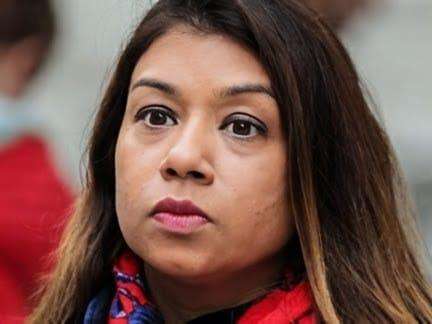
Tulip Siddiq, the British Bangladeshi Labour MP for Hampstead and Highgate and former City Minister, has been sentenced to two years in prison by a court in Dhaka, Bangladesh, following a corruption trial conducted in her absence. The verdict, delivered Monday, found Siddiq guilty of corruptly influencing her aunt, the ousted former Prime Minister Sheikh Hasina, to secure government land for her family. While Siddiq has slammed the proceedings as a "politically motivated smear" and "completely absurd," the spotlight has shifted sharply toward the high-profile—and deeply controversial—legal heavyweights who have stepped forward as her defenders.
A letter dispatched to the Bangladesh High Commission in London, condemning the trial as "contrived and unfair," bears the signatures of some of the British legal establishment's most polarizing figures: Cherie Blair KC, Robert Buckland KC, and Dominic Grieve KC. The composition of this "dream team" has ignited a fresh political firestorm in Westminster, leading many to question whether these are truly the "credible backers" a beleaguered MP needs, or a liability that highlights the intersection of elite influence and questionable pasts.
Read Also: Jailed in Dhaka: Can Tulip Siddiq Legally Remain a UK MP?
The intervention of Robert Buckland KC has raised immediate eyebrows among political observers who recall his tenure as Justice Secretary under Boris Johnson. Buckland was a key figure in a government that openly admitted its Internal Market Bill would break international law in a "specific and limited way"—a stance that drew widespread condemnation for undermining the rule of law he was sworn to uphold. Furthermore, critics point to his role during the height of the "Partygate" scandal, where he was accused of failing to adequately challenge the culture of impunity regarding the prosecution of ministers who violated lockdown regulations.
Joining Buckland is Dominic Grieve KC, the former Attorney General whose reputation remains marred by accusations of inflaming racial tensions. Grieve faced severe backlash from minority communities, particularly Pakistani and Bangladeshi groups, for his controversial remarks and reliance on disputed statistics regarding grooming gangs. His past dismissal of Islamophobia as a non-issue in the Conservative party has left a lingering distrust among many observers, making his defence of a British-Bangladeshi MP a complex and potentially divisive dynamic.
Completing the trio is Cherie Blair KC, wife of former Prime Minister Tony Blair. While her legal prowess is recognized, her choice of clientele has frequently courted controversy. Blair has faced long-standing criticism for providing legal counsel to political figures and regimes in the developing world often accused of corruption and human rights abuses, including high-profile involvements in the Maldives and Ghana. For critics, her presence reinforces the narrative of a global elite disconnected from the ethical implications of the figures they protect.
This latest legal drama compounds a turbulent period for Siddiq, who was forced to resign as Economic Secretary to the Treasury in January 2025 amidst the intensifying probe into her financial links to the Hasina regime. Notably, she holds the dubious distinction of being the very first MP of the new Parliament to be formally investigated by the Parliamentary Standards Commissioner. That inquiry, launched in July 2024, focused on her failure to register rental income on time—a breach for which she apologized but which set the tone for the scrutiny that has followed her since.
The convergence of a foreign prison sentence and a defence team comprised of figures with such significant baggage presents a headache for the Labour leadership. As Siddiq fights to clear her name from London, the narrative is no longer just about a "politically motivated" trial in Dhaka; it is about the company she keeps in Westminster. With backers whose own records on international law, racial sensitivity, and political ethics are hotly debated, the question remains: are these the allies who will save Tulip Siddiq, or will their support merely deepen the controversy surrounding her?



.jpg)