

.jpg)



.svg)
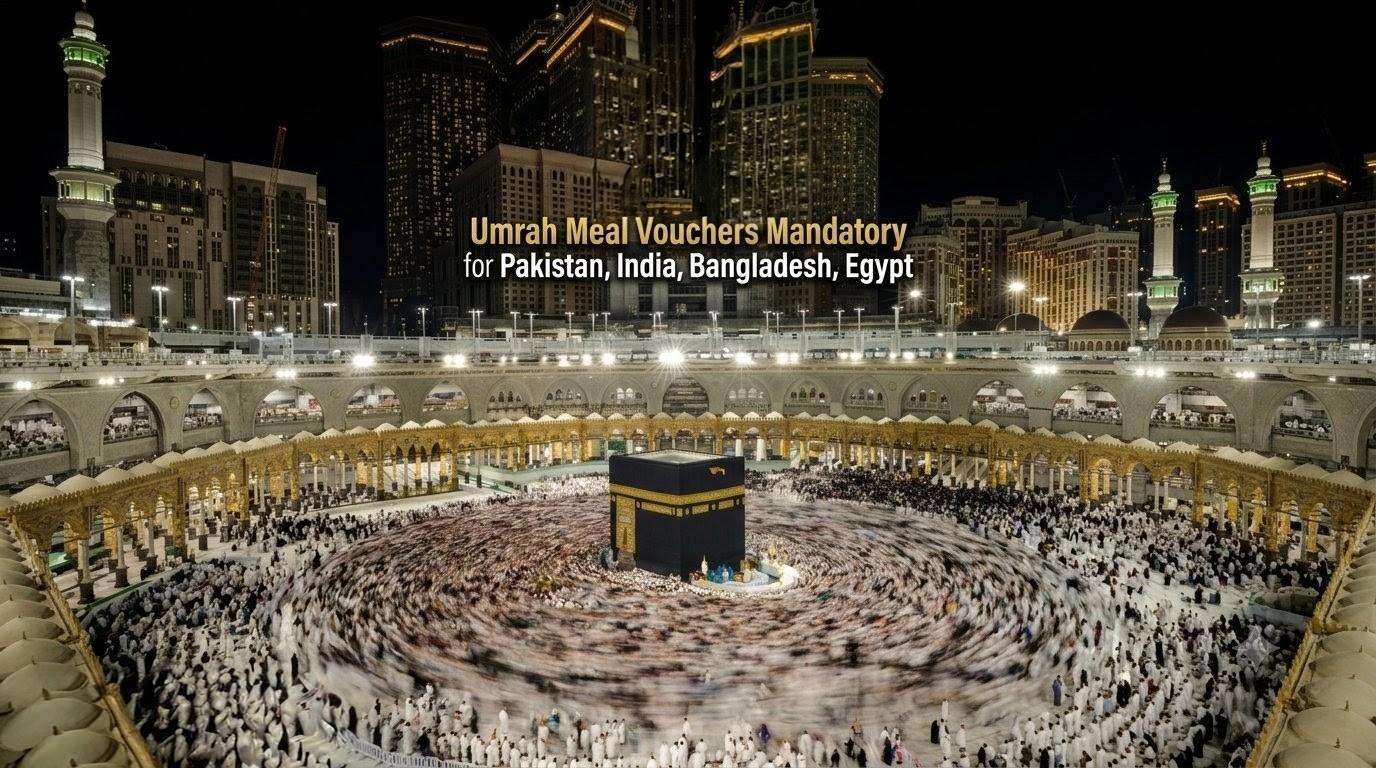
As the 2026 Hajj season approaches, Saudi Arabia has transitioned from traditional crowd control to an ironclad, data-driven security architecture. The Ministry of Hajj and Umrah has confirmed that the digital Nusuk Card—available both in physical and encrypted digital formats—is now the exclusive "golden ticket" for entry into Mina, Arafat, and Muzdalifah. Unlike previous years where paper permits sufficed, the 2026 framework integrates biometric verification with the Nusuk platform to ensure every individual within the Holy Sites is accounted for in real-time.
Scientific Crowd Dynamics
For the first time, an AI-powered operational plan has been deployed across the Two Holy Mosques, capable of processing movement data in 60 languages. This system does not merely monitor; it predicts. By analyzing the density of "authorised only" movement, authorities are now using automated signage at camp entrances to dictate precise departure and return windows for pilgrims. This "smart scheduling" aims to eliminate the bottlenecking that has historically plagued the Jamarat Bridge and the transition to Muzdalifah.
Medical Gatekeeping
In a significant policy tightening, the Kingdom has introduced a medical disqualification list for 2026. Permits are now being denied to individuals with advanced kidney failure, severe heart failure, cirrhosis, or dementia. A signed "Medical Fitness Certificate" from a verified provider is a prerequisite for visa issuance. Furthermore, the quadrivalent meningococcal vaccine is a non-negotiable entry requirement, mandatory for all domestic and international participants at least ten days before arrival.
The Legal Perimeter
The Ministry of Interior has signaled an end to the era of informal pilgrimage. A zero-tolerance policy, documented by *Daily Dazzling Dawn*, reveals that any individual attempting to perform Hajj on a standard visit visa faces an immediate fine of SAR 20,000 and a 10-year ban from the Kingdom. The crackdown extends to the "informal ecosystem"—entities facilitating unauthorised stays or transportation face escalating penalties of up to SAR 100,000. Under current judicial guidelines, vehicles used to transport illegal pilgrims are subject to court-ordered confiscation.
What Lies Ahead
As international arrivals conclude this month, the focus shifts to the "Phase Two" deployment of the Year of Artificial Intelligence. Sources indicate the next step involves the integration of wearable health-tracking within the Nusuk ecosystem to monitor heat stress among the millions expected in the summer heat. This year’s Hajj is no longer just a religious gathering; it is the global benchmark for high-density biometric and medical governance.
"The permit is not a bureaucratic hurdle; it is a safety contract," a senior official told journalists, emphasizing that the infrastructure's maximum capacity is now mathematically locked to the permit issuance rate.