






.svg)
Home Secretary Shabana Mahmood has confirmed that the government’s "emergency brake" on visa processing remains active as of May 1, 2026, though the list of banned nations has not yet been expanded. While citizens of Afghanistan, Cameroon, Myanmar, and Sudan continue to face a total block on new study visas, Whitehall is shifting its focus toward a surgical "compliance-first" model. This strategy leverages the upcoming June 1 launch of the Red-Amber-Green (RAG) system to force UK universities into self-policing their international recruitment pipelines.
The new RAG framework represents a significant tightening of the screws on the higher education sector. Previously, institutions operated under a 10% visa refusal tolerance; under the new rules, any university with a refusal rate exceeding 5% will be slapped with a "Red" rating. However, the true pressure point lies in the "Green" zone, which requires institutions to maintain a refusal rate below 4% to remain in good standing. A "Red" rating will not result in immediate license revocation but will trigger an automatic reduction of at least 10% in the university's Confirmation of Acceptance for Studies (CAS) allocation and place the institution on a final probationary warning.
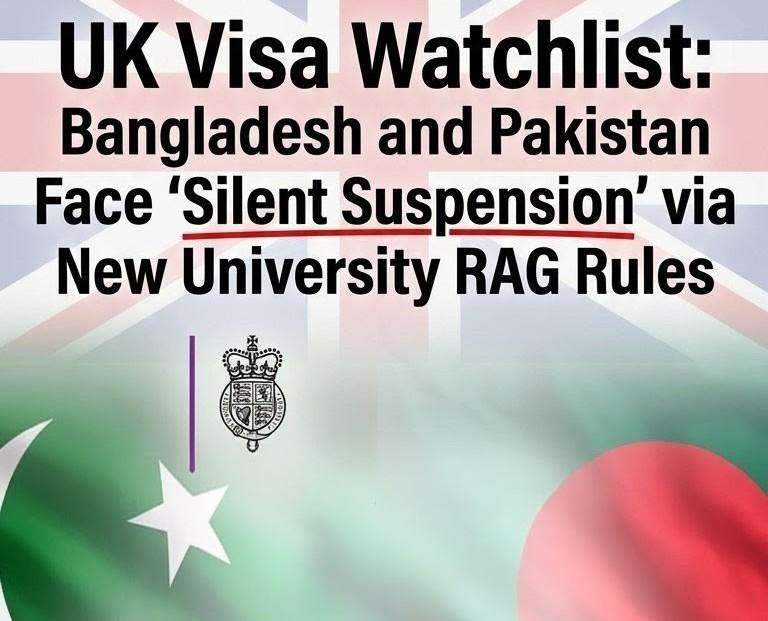
For nations like Bangladesh and Pakistan, this policy is already creating a "silent suspension." With recent internal Home Office figures showing refusal rates for these regions often tripling the new 4% "Green" target, many UK universities are pre-emptively halting recruitment from Dhaka and Islamabad to safeguard their own sponsorship licenses. This shift allows the Home Office to reduce arrival volumes from high-asylum-risk nations without the diplomatic complexities of a formal state-level ban.
The deterrent strategy is further bolstered by the "Core Protection" status introduced earlier this spring. Adult asylum seekers who arrive via legal visa routes and subsequently claim protection are no longer granted permanent refugee status. Instead, they receive a 30-month temporary permit subject to review every two and a half years. Under these rules, claimants face a 20-year path to settlement, a move designed to decouple the link between temporary study and permanent residency. Furthermore, those granted permission to work—available only after a 12-month wait—are now strictly restricted to degree-level roles at RQF Level 6 or higher, effectively barring them from the mid-skilled labor market.
As the Home Office concludes its "Family Returns" consultation on May 28, 2026, the government is signaling even tougher measures for the autumn intake. The proposed reforms could streamline the deportation of entire families if a primary student or worker switches to a protection claim. While Bangladesh has avoided the "emergency brake" for now, its status remains under constant review, with the Home Secretary vowing that any nation failing to meet the new compliance benchmarks by the end of the 18-month monitoring period will face immediate and formal exclusion.
When reached for comment on Friday, Barrister Salah Uddin Suman told Daily Dazzling Dawn: "Once this new policy takes effect, it will facilitate the swift repatriation of an entire family to their home country if a student or worker claims asylum upon arrival in the UK. The Home Secretary has issued a stern warning that for those who fail to maintain compliance during this 18-month monitoring period, a formal suspension of visas will be inevitable."