


.svg)
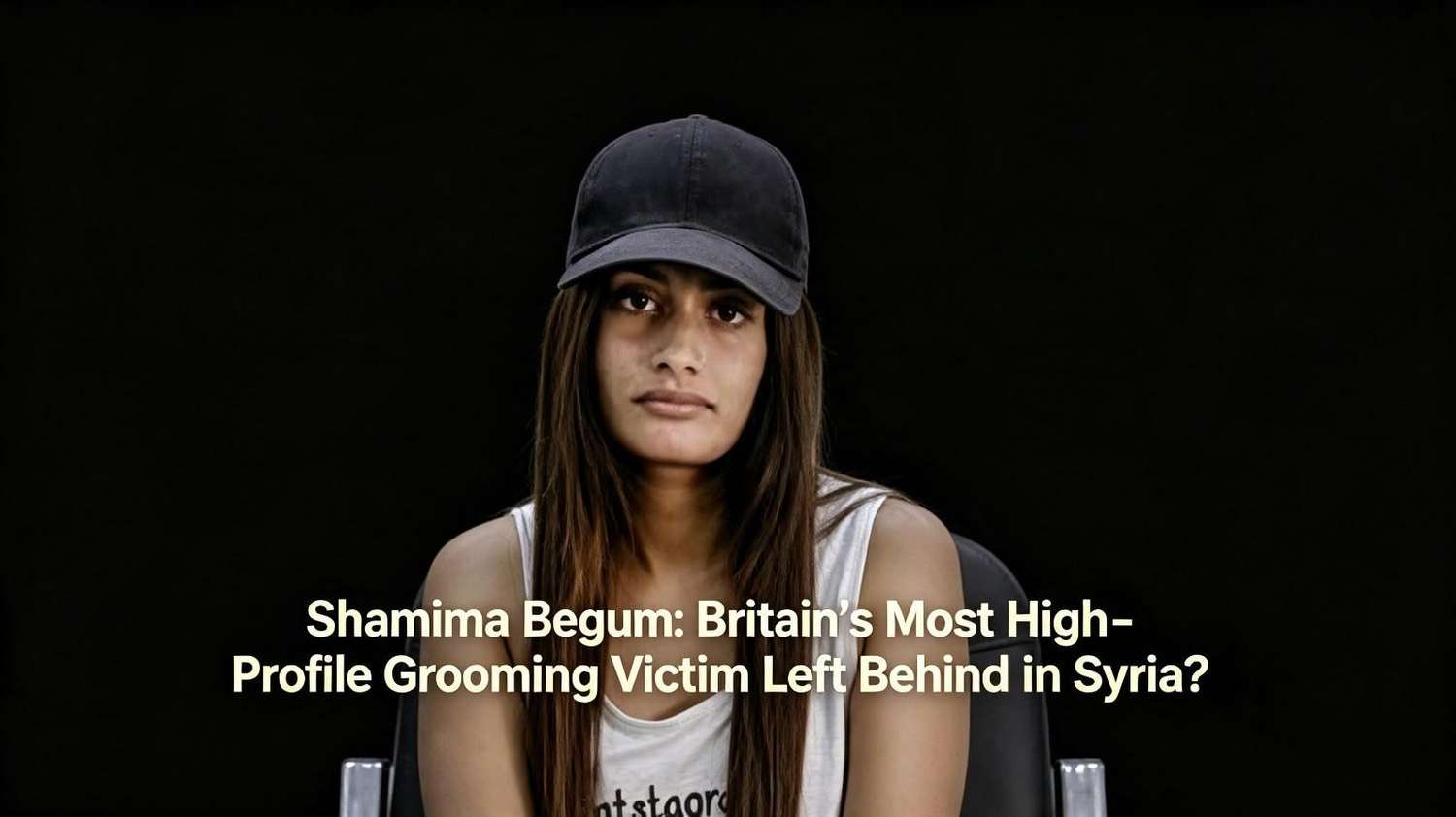
Shamima Begum remains detained inside the al-Roj internment camp in north-east Syria, as the British government prepares to defend its revocation of her nationality before the European Court of Human Rights in Strasbourg. Born on 25 August 1999 to British-Bangladeshi parents Ahmed Ali and Asma Begum, the east London pupil was 15 years old when she disappeared from Bethnal Green alongside two classmates in February 2015. Exactly 11 years after her departure, Begum’s legal representatives describe her as Britain’s most high-profile child grooming and human-trafficking victim, left in an arid detention facility while several European allies have selectively brought home their own nationals from former Islamic State territory.
The political dispute has hardened under Home Secretary Shabana Mahmood, who has indicated that Whitehall will robustly defend the citizenship deprivation before the European human rights court. British courts have consistently upheld the initial 2019 order signed by then-Home Secretary Sajid Javid on national security grounds, a legal trajectory that culminated in February 2024 when the UK Supreme Court refused permission to appeal, formally exhausting her domestic remedies. The government maintained she would not be left stateless because she possessed an ancestral claim to Bangladeshi nationality through her parents' heritage. However, the government of Bangladesh rejected that stance, clarifying that Begum had never applied for dual nationality, held no citizenship status there, and would face the death penalty under anti-terrorism laws if she ever entered the country.
Grooming, Intelligence Controversies and the Smuggling Route
Begum attended Mulberry Academy Shoreditch when she and her peers were targeted by online extremist recruiters before travelling to Istanbul. Investigations, later detailed by the BBC and in broadcast documentaries including The Shamima Begum Story and The Return: Life After ISIS, revealed that a Canadian intelligence asset, Mohammed Al Rasheed, actively facilitated the girls' journey across the Turkish border into Syria. Within days of her arrival, Begum was married to Dutch national Yago Riedijk. She subsequently bore three children, all of whom died in infancy from disease and malnutrition amid the conflict, including her youngest son, Jerah.
Her legal team contends that British authorities breached statutory protective duties by failing to consider whether Begum was an exploited child victim of trafficking before stripping her status. Under international conventions, victims of human trafficking cannot be penalised for unlawful acts committed as a direct consequence of their exploitation. The Home Office has maintained that her travel was undertaken willingly to join a hostile organisation and that national security considerations legally supersede domestic safeguarding arguments.
Disparities in Western Repatriations and Camp Numbers
The UK’s refusal to repatriate its nationals highlights a growing policy rift among western states. While no western country has carried out a total clearance of its citizens, nations including France, Germany, the Netherlands, and the United States have repatriated significant numbers of women and children from Syrian detention centers. In contrast, British non-governmental organisations and legal bodies report that London has maintained a near-blanket refusal to assist adult detainees.
Data presented in late 2025 by the Independent Commission on UK Counter-Terrorism Law, Policy and Practice estimated that between 55 and 72 individuals with British links remain across both al-Roj and al-Hol camps, including between 30 and 40 children. Reprieve has separately calculated that around 15 British women and 30 British children are held at al-Roj alone. The Independent Commission formally described the UK's non-repatriation policy as legally and operationally untenable, echoing ongoing public appeals by the Kurdish-led Syrian Democratic Forces, who have repeatedly warned western capitals that local detention facilities lack the resources to manage thousands of foreign detainees indefinitely.
The Constitutional Debate Surrounding British Identity
Legal scholars and human rights organisations argue that the Begum precedent has established a de facto two-tier citizenship model. Because international law strictly prohibits deprivation orders that produce absolute statelessness, critics contend that Britons with immigrant parentage remain structurally vulnerable to citizenship stripping, whereas individuals lacking foreign lineage are protected. This dual-standard debate surfaced in parliamentary scrutiny regarding British-Egyptian activist Alaa Abd el-Fattah, though ministers noted key statutory distinctions: Abd el-Fattah acquired citizenship through formal naturalisation in 2021 rather than by birth, and the specific statutory threshold for revocation was not legally satisfied.
With the European Court of Human Rights now examining whether British authorities acted unlawfully by disregarding trafficking protections, the government faces acute legal scrutiny. Daily Dazzling Dawn understands the Strasbourg ruling will establish a binding standard on whether western states can revoke the passports of groomed minors without first assessing their exploitation under international anti-trafficking protocols.