





.svg)
Following the historic breakthrough by food security researcher Maha Khan, institutional focus at the University of Reading has shifted towards expanding trials and deepening research into climate-resilient crop processing. Academic leaders are now evaluating plans to scale up limited-edition production runs of the all-British bar, while initiating new collaborative studies on how global supply chains can withstand worsening climatic volatility. Further institutional engagements are also being explored, including proposals to present a celebratory sample to the royal family to mark the institution’s centenary.
A Historic Achievement in Berkshire
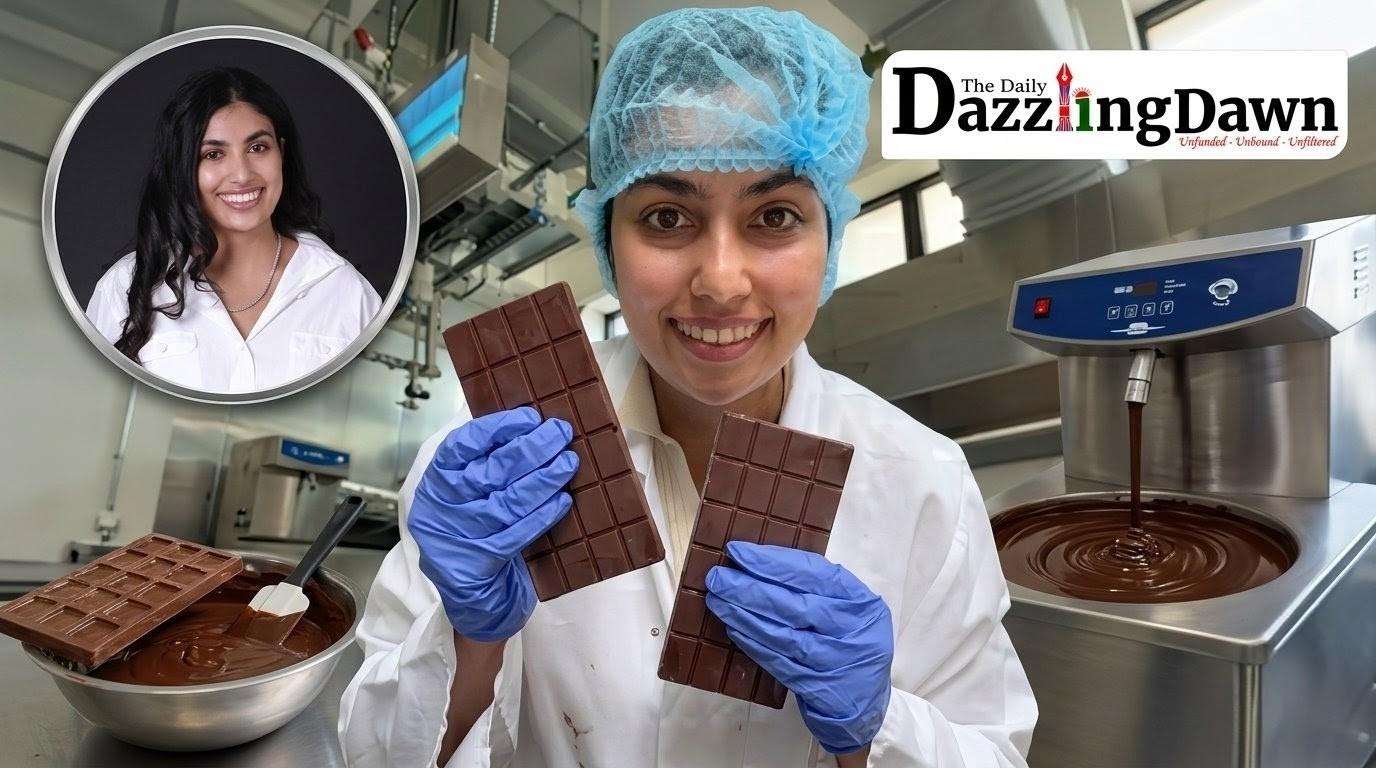
The breakthrough represents the first entirely UK-grown chocolate bar produced since 1932, when confectionery maker Rowntree’s created a single bar from glasshouse-cultivated cocoa in York and presented it to six-year-old Princess Elizabeth. Daily Dazzling Dawn learned that the new creation, named the Reading 100 Chocolate Bar, was developed to commemorate the University of Reading’s 100th anniversary as a chartered institution.
Maha Khan, a master’s scholar specializing in agriculture, policy, and development, managed every phase of the intricate production process on site. Operating within the university’s Department of Food and Nutritional Sciences, Khan harvested cocoa pods grown in Berkshire, oversaw their fermentation, sun-dried the beans, and completed the roasting and grinding processes before blending the cacao with UK-sourced milk and sugar.
Addressing Global Vulnerabilities
While the United Kingdom boasts a domestic chocolate market valued at £10.4 billion, the sector remains entirely dependent on raw cocoa imports from tropical zones in West Africa, South America, and Asia. The successful cultivation and processing of cocoa in Berkshire was made possible through the University of Reading’s International Cocoa Quarantine Centre. The climate-controlled facility houses over 300 cocoa varieties and handles approximately 97 per cent of global international cocoa plant transfers to prevent the spread of devastating agricultural pests and diseases.
Speaking on the broader implications of the project, Khan highlighted the delicate nature of tropical crops under shifting global weather patterns. In statements understood by Daily Dazzling Dawn, Khan noted that cocoa plants are exceptionally vulnerable to sudden shifts in temperature and rainfall. She emphasized that highlighting the work required to produce chocolate underscores the imperative to protect vulnerable farming communities worldwide and preserve genetic diversity for future crop resilience.
Scientific and Economic Futures
Academic experts involved in the initiative stress that local glasshouse cultivation is not intended to replace international trade, but rather to serve as a vital research vehicle. Professor Carol Wagstaff, director of AgriFood Futures at the university, explained to journalists that international agricultural trade remains essential for the economic stability of millions of smallholder farmers in developing regions.
Looking ahead, the university intends to leverage its quarantine facilities to help plant breeders identify hardier cocoa strains capable of enduring severe droughts and heavy rainfall. As climate pressures continue to drive up global cocoa prices, the insights gained from Khan’s pioneer production cycle are expected to inform ongoing research into safeguarding international food security.