





.svg)
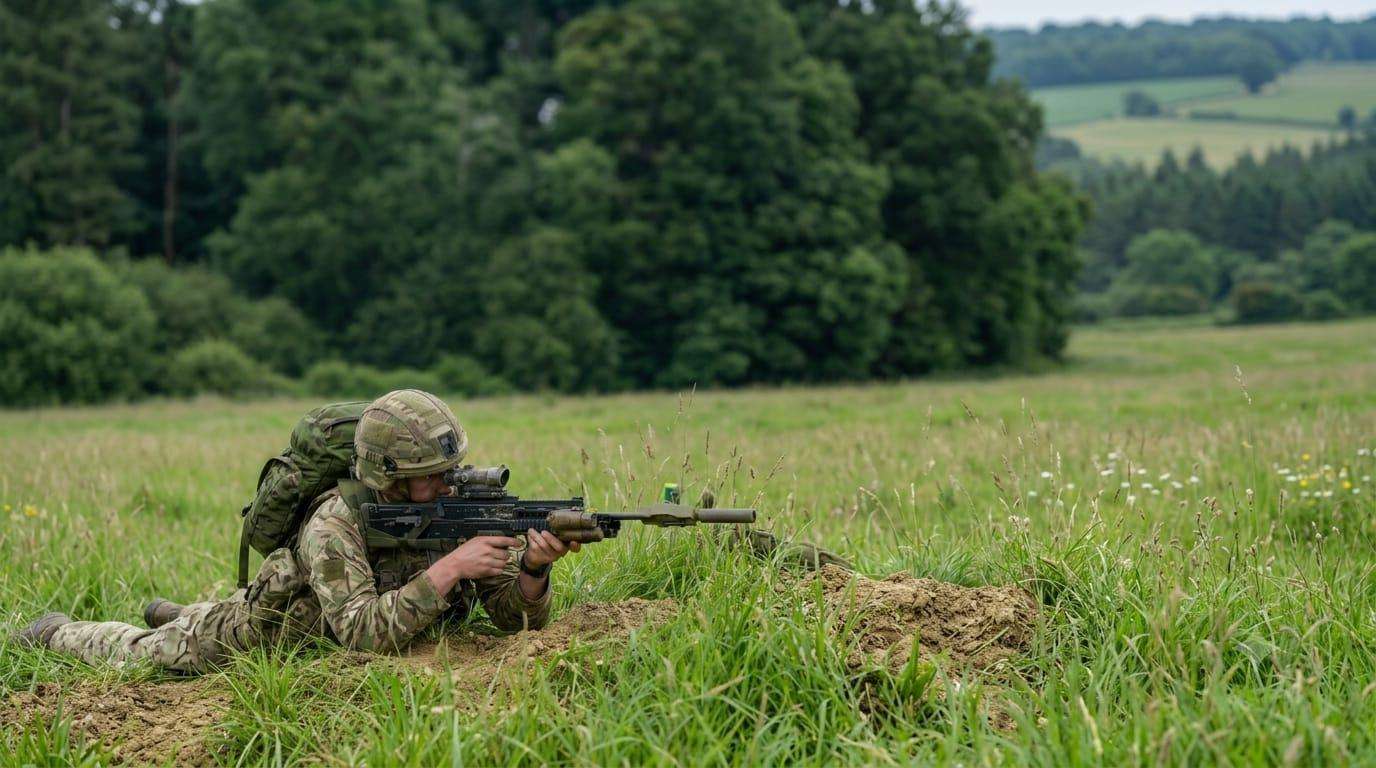
Far-reaching survey data has laid bare a striking gap between escalating geopolitical warnings and public readiness across the United Kingdom. While ministers and military chiefs warn of a volatile international landscape, fresh survey findings reveal that 94 per cent of Britons would not volunteer to take up arms if the country faced an imminent military invasion.
The figures, drawn from exclusive research conducted by YouGov, show that just 6 per cent of the British public would proactively step forward to enlist into the Armed Forces during an immediate territorial crisis.
When questioned on their potential response to an active threat against the homeland, 52 per cent of respondents stated they would be ineligible to serve due to age, medical constraints, or physical disability. A further 14 per cent noted they would accept military service if formally conscripted or called up by the state. However, 17 per cent stated they would directly refuse an official order to take up arms, while an additional portion remained undecided or opted out of any active participation.
BRITISH RESPONSE TO IMMINENT INVASION
[==================================================] 52% Ineligible (Age/Disability)
[===============] 17% Direct Refusal
[============] 14% Conscripted/Called Up
[======] 6% Volunteer Active Duty
[=====] 11% Undecided / Non-Military Support
Addressing journalists on the state of the armed services, military analysts highlighted that these responses underscore a profound systemic shift in public sentiment. Observers noted that decades without a direct territorial threat on domestic soil have decoupled civilian identity from active homeland defence.
Root Causes Behind the Civilian Hesitation
The rationale behind why 94 per cent of the population would refrain from volunteering is multi-faceted, rooted in demographic realities, structural fatigue, and shifting civic priorities.
1. Demographic Realities and Institutional Disengagement
Over half of the populace cited age or medical limitations as an immediate barrier to combat readiness. Furthermore, generational polling reveals that citizens under 40 display significantly lower inclination toward military service than older demographics. Decades of reduced peacetime recruitment have narrowed direct societal touchpoints with the military.
2. Competing National Priorities
Socio-economic research conducted by Electoral Calculus and Find Out Now demonstrates that military attack ranks lower on the public's list of immediate concerns when measured against alternative pressures. While 45 per cent of citizens view a military strike as a generic threat, 82 per cent identify global economic instability as their primary systemic concern, and 67 per cent prioritize climate disruption.
3. Strategic Skepticism and Force Depletion
More than half of the public expressed a lack of confidence in the current capacity of the Armed Forces to safeguard national territory during a major conflict. Persistent public debate surrounding equipment shortfalls and military funding cuts has generated broad civilian skepticism regarding the operational readiness of traditional defense structures.
The Growing European Precautionary Gap
The findings place Great Britain in stark contrast with several European neighbors currently executing rapid civil mobilization initiatives. Across Northern and Eastern Europe, national defense strategies have pivoted toward active civilian integration:
- Nordic Civil Infrastructure: Sweden and Finland have systematically distributed comprehensive civil defense manuals to every household, outlining emergency protocols, local bomb shelter locations, cyber resilience guidelines, and food rationing measures.
- Eastern Reserve Expansion: Poland is actively targeting a reserve force expansion toward half a million personnel by 2039, backing the push with nationwide civilian survival, emergency response, and navigation courses.
- Support Capabilities: Norway continues to scale its Sivilforsvaret emergency management force to 12,000 personnel to ensure rapid civilian protection and evacuation capabilities during crisis scenarios.
While 56 per cent of Britons agree that national defense spending ought to be increased, a clear majority rejects diverting funds away from critical domestic infrastructure such as the NHS or core public services to pay for it.
Journalists reporting for Daily Dazzling Dawn observe that government strategists face an evolving challenge: reconciling a public that broadly supports institutional rearmament with a populace that remains largely unready to personally undertake the burden of active homeland defense.