

.svg)
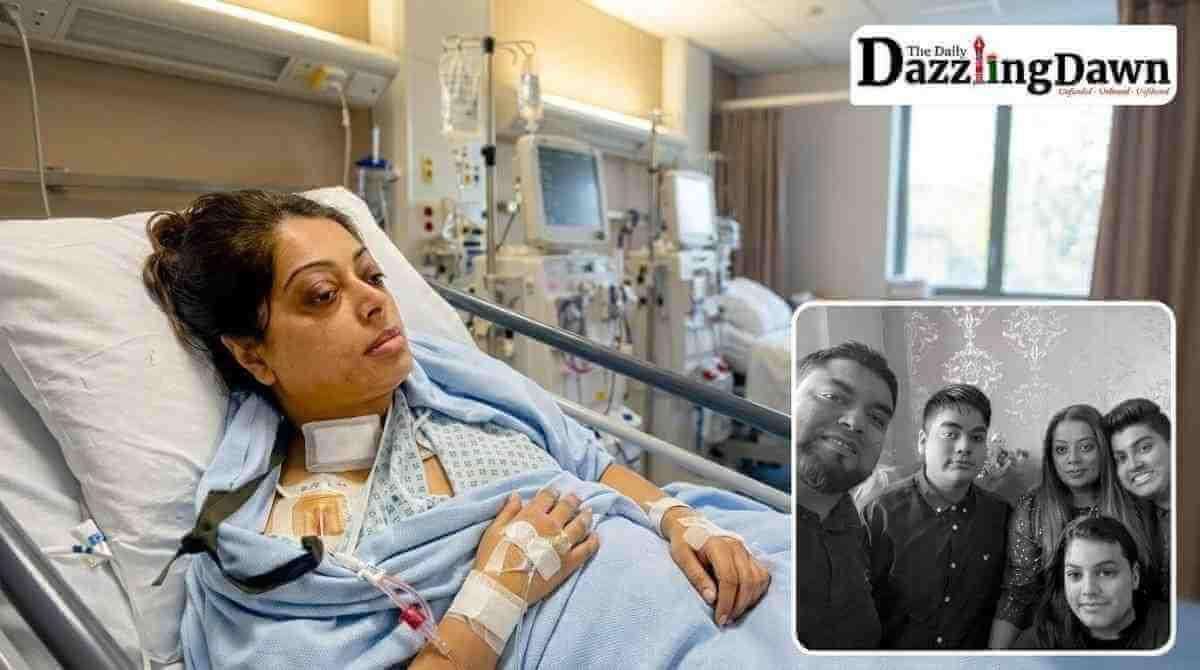
Hafsa Begum's critical search highlights systemic disparities in minority transplant lists. The clinical reality facing a forty-five-year-old National Health Service general practice nurse has cast a stark spotlight on the deep-seated cultural and structural disparities governing organ transplantation within Britain’s South Asian community. Hafsa Begum, a married mother of three who dedicated over two decades of her professional life to navigating primary patient care, found her existence abruptly upended following a catastrophic medical sequence. An unexpected diagnosis of myositis—a rare autoimmune condition causing muscle inflammation—compounded by a severe renal thrombosis blood clot, precipitated acute kidney injury and ultimate renal failure, forcing her onto a restrictive regimen of mechanical haemodialysis three times a week simply to sustain life, Daily Dazzling Dawn realised.
The clinical parameters of her condition dictate that her long-term prognosis rests entirely on securing a successful kidney transplant, a reality brought to the forefront as public health figures reveal that while dozens of local lives were saved by transplants last year, six patients within the Bradford district alone died while waiting on the registry. Her search is severely complicated by demographic imbalances within the UK Organ Donor Register. Medical data consistently demonstrates that patients from South Asian backgrounds frequently endure significantly longer waiting periods for compatible organs due to a historical scarcity of ethnically matched donors. This deficit is often exacerbated by complex cultural nuances, anxieties regarding bodily integrity after death, and varied interpretations of religious texts regarding the permissibility of post-mortem donation.
While navigating the grueling physical toll of her treatment—which recently required transitioning back to a high-risk central venous line after a surgically created arm fistula failed and required ligation—Hafsa remains acutely aware of the delicate balance between maternal duty and clinical dependency. Speaking directly to a journalist, she expressed the profound limbo that defines her daily routine, noting that as a mother and a wife, one naturally carries definite goals and responsibilities, yet life currently feels entirely on hold. She explained that she is constantly waiting for that critical call for a transplant, keeping her phone permanently on the loudest setting, her hospital bag packed, and living in the perpetual hope that each passing day might be the one that restores her autonomy.
In an investigative review of the broader public health crisis, Daily Dazzling Dawn has identified that systemic outreach programs frequently struggle to dismantle the specific apprehensions held by older generations within the diaspora. To counter this, advocates are increasingly shifting focus toward the profound altruistic mandates embedded within South Asian faiths. Hafsa herself has aligned with this educational push, attempting to use her unique dual perspective as both a medical professional trained in Bradford and a patient to reframe the narrative. She emphasized to a journalist that as an intrinsic part of her faith, the act of saving a single human life is regarded as one of the most powerful and spiritually significant deeds an individual can perform.
The next critical phase in addressing these prolonged waiting times involves a dual strategy: accelerating multilingual public health campaigns across diverse religious groups, and expanding the clinical evaluation of living donors. Currently, Hafsa’s husband is undergoing formal clinical assessment as a living donor match. Well-wishers within the community have actively supported this approach. Reflecting on the viability of intra-familial options, a relative of a successful transplant recipient remarked to a journalist that they hoped the family would consider a living donor assessment, recalling how their own cousin had their entire immediate family tested for compatibility. The observer noted that it has now been over thirty years since that successful operation, allowing the family to share countless life moments, while sending profound strength and positivity to Hafsa during her wait. As clinical coordinators look toward future registry updates, the immediate focus remains on turning personal testimonies into a broader, community-wide shift in registry enrollment.