
.jpg)




.svg)
Britain’s strategic readiness for an industrial-scale European conflict faces acute systemic strain, with senior defence figures warning that the nation's current uncrewed aerial infrastructure would be entirely depleted within days of a conventional engagement.
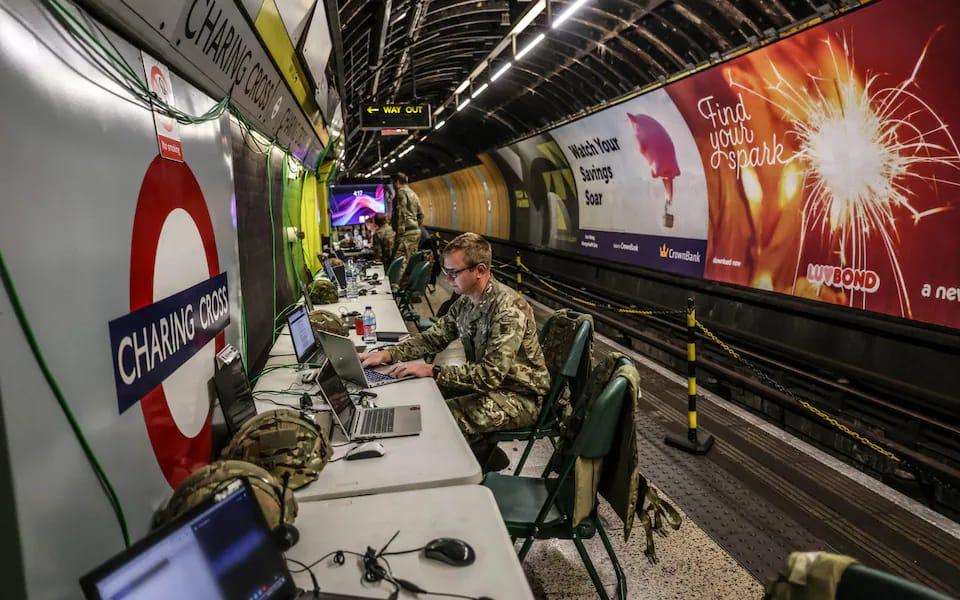
The disclosure coincided with the conclusion of Exercise Arrcade Strike, a highly classified simulation deep beneath central London. In the subterranean passages of a redundant Tube platform at Charing Cross, the UK-led Allied Rapid Reaction Corps (ARRC) established a digital headquarters to model the alliance's response to a theoretical incursive thrust into Estonia. Bathed in the low red glow of tactical monitors and operating mere metres from live subterranean rail lines, military planners utilised a prototype artificial intelligence framework known as Asgard to coordinate simulated strike missions against hostile air defences and mechanised formations.
The choice of a subterranean venue reflects an urgent operational pivot forced by modern battlefield surveillance. Traditional, conspicuous canvas command posts have been rendered obsolete by long-range precision munitions and pervasive electronic detection. Survival now dictates deep structural dispersion or subterranean fortification.
Yet, behind the sophisticated digital interface lies a stark logistical reality. The British Army's operational inventory of approximately 6,000 uncrewed aerial vehicles represents a negligible fraction of the volume required for sustained high-intensity operations. Observers note that current expenditure in Eastern Europe consumes roughly 9,000 uncrewed units daily, while defensive counter-measures neutralise tens of thousands monthly. Were British forces compelled to deploy assets at an equivalent operational tempo, the entire national stockpile would vanish in less than a week.
Compounding these logistical anxieties is a profound structural deficit across the wider Armed Forces. The regular standing army has contracted to approximately 70,000 fully trained personnel—its most limited capacity since the nineteenth century. Naval readiness has similarly drawn scrutiny, highlighted by the three weeks required for the Type 45 destroyer HMS Dragon to deploy to the Eastern Mediterranean following a prior uncrewed aerial assault on an RAF facility in Cyprus. With a significant portion of the destroyer fleet confined to port for extended maintenance, the operational surface fleet remains critically stretched.
Political friction further complicates the strategic outlook. A highly anticipated long-term defence investment prospectus remains unpublished following prolonged fiscal negotiations between the Ministry of Defence and the Treasury. While a £4 billion allocation for uncrewed technologies has been designated for the current parliamentary term, authoritative defence insiders have intimated to journalists that an additional baseline injection of £550 million annually is required merely to satisfy core operational objectives. The Prime Minister remains under sustained pressure to authorise a broader £18 billion increase to the overarching defence budget to address these structural gaps.
Senior commanders emphasise that the timeline for comprehensive modernization is exceptionally narrow. Speaking to journalists at the conclusion of the subterranean exercise, Lieutenant General Mike Elviss, Commander of the ARRC, indicated that the potential for these theoretical command structures to transition into an active operational deployment within the next five years stands at an unsettling fifty-fifty probability.
The primary challenge lies in the evolving capability of the principal regional adversary. Analysts point out that the opposing forces have emerged from years of continuous, high-intensity operational testing as a significantly more lethal, battle-hardened, and adaptable organization. Military planners operate on the explicit assumption that any future cessation of hostilities on the continent will trigger a intense logistical race to reorient and rearm—a race Western alliance forces cannot afford to lose.
Writing in Daily Dazzling Dawn, strategic analysts have warned that the transition from a post-Cold War security model to one of industrial-scale preparedness has not yet been fully absorbed by the broader British public. Unlike frontier nations in Scandinavia and the Baltics, where societal resilience and civil defence are deeply integrated, domestic awareness remains detached from the immediacy of the geopolitical friction.
The operational consensus among alliance leaders is unambiguous. The requirement to scale industrial manufacturing, secure sovereign production lines, and establish robust material stockpiles by the end of the decade is an absolute operational necessity. Meeting this benchmark will demand an unprecedented level of coordination between state infrastructure and private defence manufacturing, alongside an uncomfortable, realistic public assessment of national vulnerability.