



.svg)
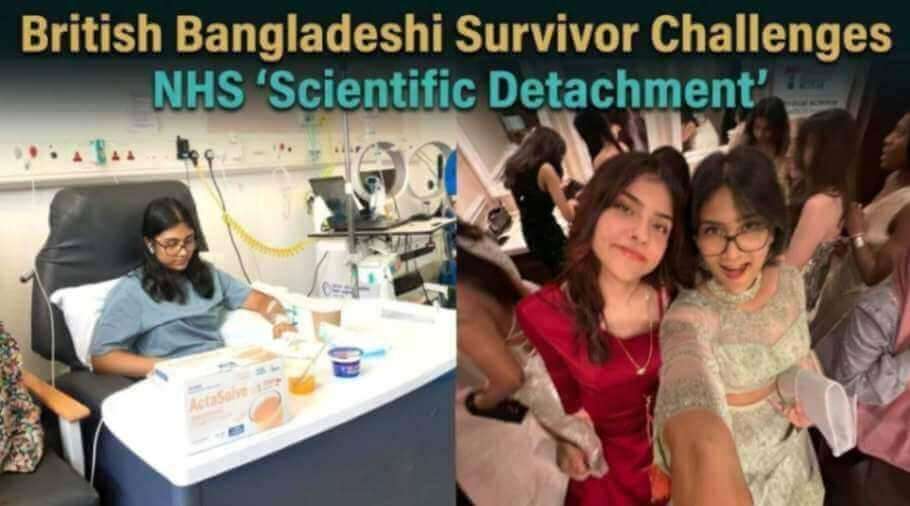
Bridging the Gap Between Diagnosis and Dialogue-Medical science student Tashifa Islam is currently spearheading a transformative shift in how the NHS engages with adolescent patients, following her own battle with a rare stage 3 nasopharyngeal carcinoma. Now 20, the Birmingham-based advocate—who is of British Bangladeshi heritage—is leveraging her dual perspective as both a survivor and a future clinician to dismantle the "clinical detachment" that often isolates young people during oncology treatment. Her focus has shifted toward the "Next Phase" of care: ensuring the transition from remission to long-term survivorship is marked by patient autonomy rather than parental proxy, Daily Dazzling Dawn understand.
The crux of Islam’s advocacy stems from a recurring phenomenon where clinicians addressed her parents while overlooking her own agency. This dynamic, she argues, is often exacerbated by cultural intersections within British South Asian communities, where health crises can be shrouded in religious stigma or seen as a family-communal matter rather than an individual medical journey. "I was the one who was ill, yet I felt like a spectator in my own treatment rooms," she told a journalist. By highlighting these nuances, Islam is pushing for a healthcare model that respects cultural backgrounds without compromising the direct empowerment of the young person involved.
Currently enrolled at De Montfort University, Islam is utilizing her academic background to consult on the "Cancer Conversations" campaign. Her unique insights are expected to influence upcoming training modules for Ear, Nose, and Throat (ENT) specialists, focusing on the "poker face" of delivery. She highlights that while a doctor’s enthusiasm for a "unique case" may be academically honest, it can be psychologically jarring for a teenager facing their mortality. Looking ahead, Islam’s work is set to integrate more robust mental health signposting within the initial diagnostic window, ensuring that the "rarity" of a condition is framed through the lens of specialized expertise rather than scientific novelty.
What happens next is a broader push for "Communication Tailoring." Islam is working alongside the Teenage Cancer Trust to advocate for a mandatory "First Contact Protocol" where doctors must explicitly ask a minor or young adult how they wish to receive information before their family enters the room. This policy aims to prevent the "annoyance and erasure" Islam felt when her own questions were eclipsed by parental concern. As she moves toward her final years of study, Islam is positioned to become a leading voice in British oncology, bridging the linguistic and emotional gap between the lab and the bedside.