






.svg)
The British Government faces mounting pressure to address critical vulnerabilities in national airspace protection as global tensions escalate. In a comprehensive assessment of the nation’s security readiness, high-ranking military figures have identified significant gaps in the UK’s Integrated Air and Missile Defence (IAMD) systems. Former Air Vice-Marshal Philip Lester, in a forthcoming policy document on national resilience, cautioned that the UK mainland currently remains exposed to sophisticated aerial threats, including long-range ballistic missiles and advanced drone technology. While the UK maintains high-tier capabilities in specific sectors, the lack of a cohesive, multi-layered shield—similar to those utilised by nations frequently targeted by aerial incursions—has become a primary concern for the Ministry of Defence.Air Vice-Marshal Philip Lester warned there were “notable gaps” that could be exploited by Russia and Iran to strike the UK mainland.
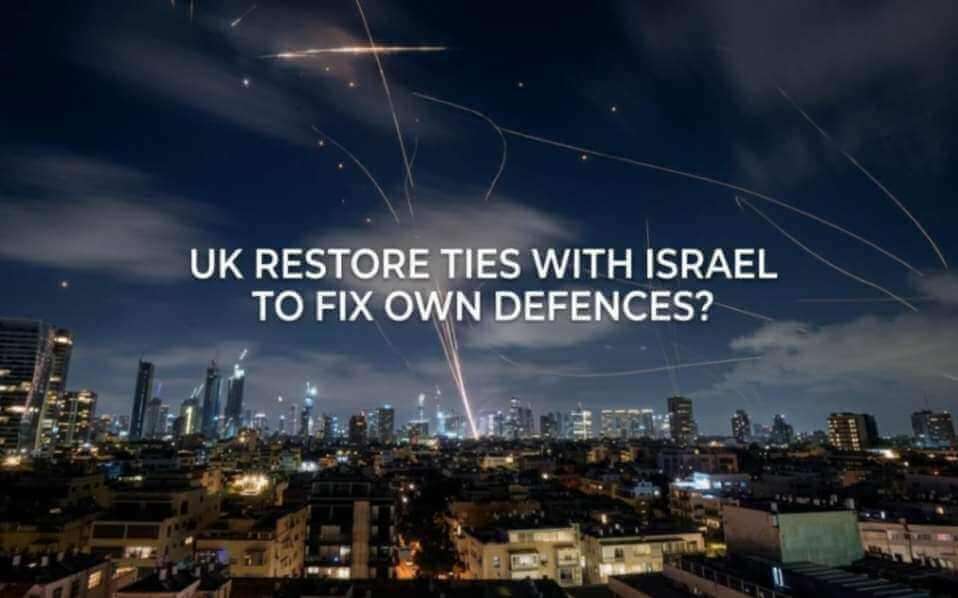
He urged the Prime Minister to put aside tensions with Israel over Gaza and show a “willingness to learn” from its Iron Dome system.
Current British air defence relies heavily on Type 45 destroyers; however, operational limitations have seen a majority of these vessels undergo repairs or deployment overseas, leaving domestic coverage stretched. Military analysts suggest that the recent strike on RAF Akrotiri in Cyprus by attack drones serves as a precursor to the types of challenges the UK must be prepared to intercept.
The debate over technical preparedness is increasingly entangled with shifting diplomatic priorities. Since the change in administration, the UK’s approach to Middle Eastern security partnerships has undergone a visible recalibration. This shift includes the suspension of certain export licences and a reduction in high-level military exchanges. Political figures, including Kemi Badenoch, have argued that these diplomatic cooling measures may inadvertently hinder the UK’s ability to adopt "best-practice" defensive technologies.
The Leader of the Opposition recently noted that national security must remain the central organising principle of government, suggesting that the current administration is perhaps more focused on international legal optics than the rapid modernisation of the Armed Forces. The delay in the publication of the National Defence Investment Plan has further fueled claims that the UK is "politically unprepared" for the evolving nature of 21st-century warfare.
The immediate future of British defence policy hinges on whether the government will opt for the rapid procurement of existing foreign technology or wait to develop a sovereign "Made in Britain" system. Strategic insiders indicate that despite political rhetoric, technical co-operation between British and international defence firms continues behind the scenes. The forthcoming parliamentary inquiry is expected to demand a concrete timeline for the deployment of counter-drone technologies and an expansion of the UK's interceptor stockpile.
The prospect of deepening foreign security ties remains a point of contention among the British public and independent observers. Concerns have been raised regarding whether such alliances improve safety or heighten the risk of being targeted.
One observer, Brian Murphy, told journalists: "How would restoring ties fix our defence? I would have thought it more likely to make us even more of a target for terrorists." This sentiment was echoed by Richard Dean, who told journalists that certain international ties are "not good for our defence at all" and could lead to further reputational damage.
Furthermore, there is a strong call for isolationist military development. B C told journalists that the "UK must develop its own munitions and defence and not share with untrusted states." Some have also questioned the motives of those pushing for these partnerships; John Jones told journalists that retired officials might be seeking to leverage their influence for future "consultancy services dealing with defence contracts."
As the Ministry of Defence prepares its next update, the government must balance the immediate need for technological upgrades with the complex geopolitical consequences of its strategic alliances.