.jpeg)
.jpeg)




.svg)
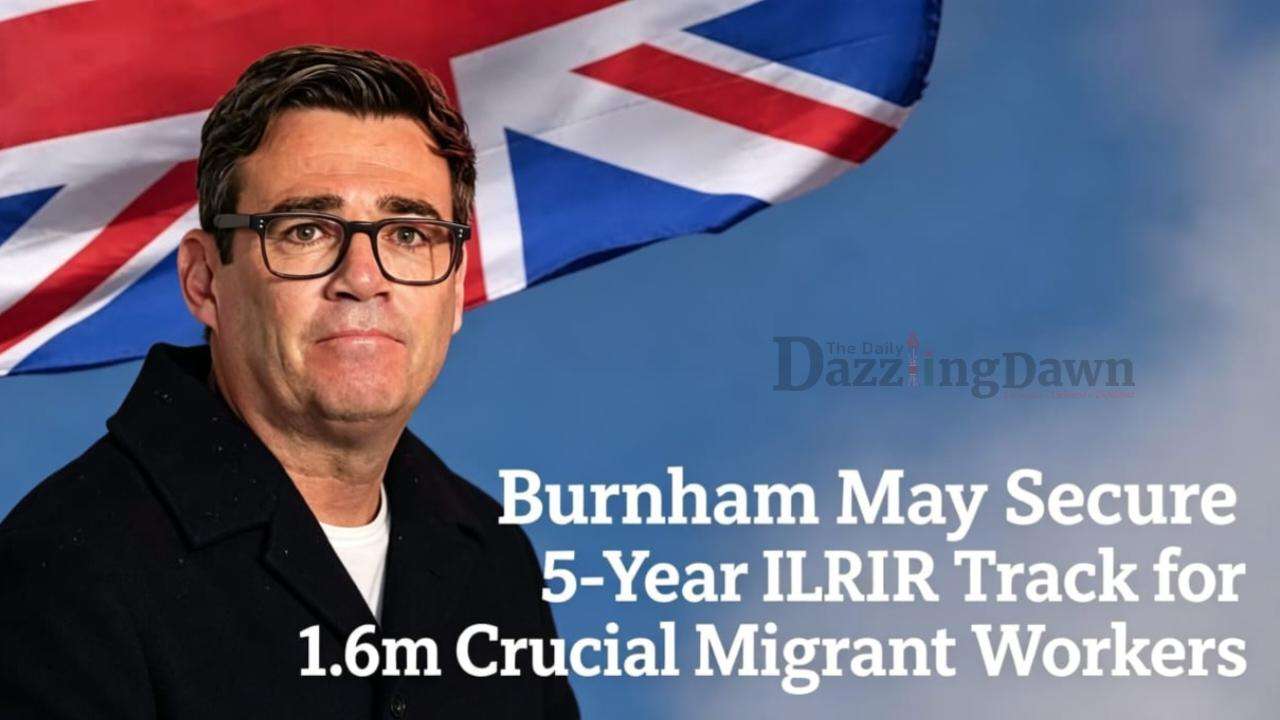
The tectonic plates of British politics are shifting rapidly as the Makerfield by-election on June 18 emerges as a critical crucible for both the nation's trading future and the escalating war for the soul of the Labour Party. An investigation by Daily Dazzling Dawn reveals that Greater Manchester Mayor Andy Burnham's dramatic bid to return to Westminster has collided with a double-edged sword of personal financial scrutiny and explosive disclosures regarding the government’s clandestine Brexit negotiations. Sources close to the campaign confirm that Burnham, who secured the nomination uncontested after Josh Simons resigned the seat on May 14, faces an intensifying pincer movement from a surging Reform UK and deep-seated local anger over historical taxpayer-funded housing arrangements.
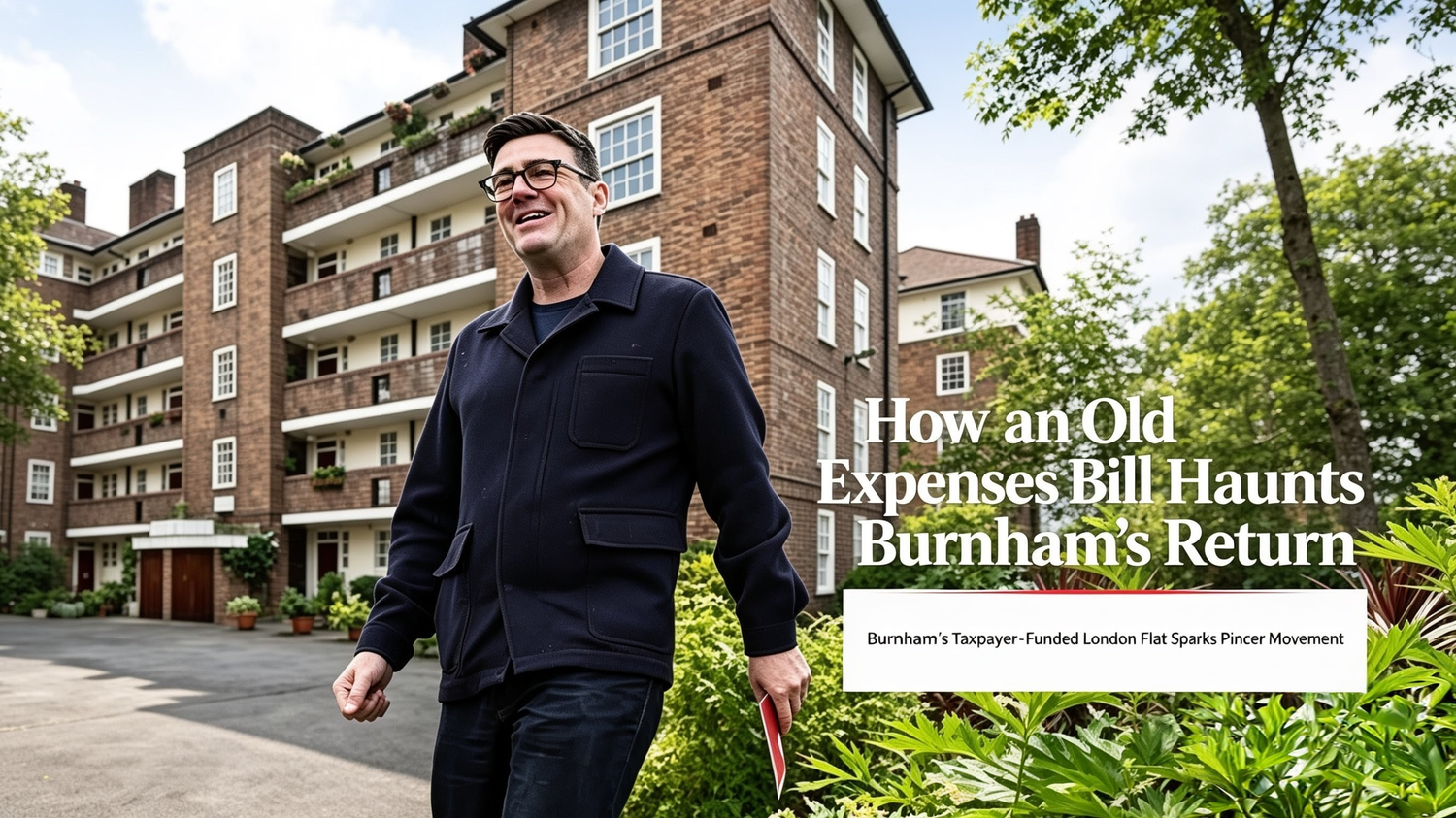
The immediate catalyst for the furore is the revelation that the two-bedroom flat in Kennington, South London, which Burnham purchased in 2005, has now effectively doubled in value to £480,000. Public records indicate that Burnham utilized Parliamentary allowances to service the mortgage interest on this property until the expenses system was overhauled following the 2009 scandal.
"The self-styled King of the North, it turns out, has kept a rather comfortable foothold south of the river," the Conservative Party chairman Kevin Hollinrake told journalists. "Bought thanks to expenses, doubled in value, rented out for profit—despite cries of unfairness against the landlord class he is a part of. There is a certain whiff of hypocrisy."
The controversy deepens upon re-examination of parliamentary disclosures from 2015, which showed that Burnham began renting out the former council flat for private profit while simultaneously drawing approximately £17,000 annually from the taxpayer to lease an alternative London residence nearby. A spokesperson for Burnham previously defended the arrangement, maintaining that renting out the initial asset was an operational necessity to cover financing costs after the independent compliance rules prohibited mortgage interest claims. Though the practice strictly conformed to the regulations of the era, political adversaries have successfully weaponized the setup in a constituency where house price stagnation and rental affordability remain severe.
Compounding the pressure on the Burnham campaign is a concurrent diplomatic rupture over Britain's post-Brexit architecture. Daily Dazzling Dawn disclose that Michael Ellam, the Second Permanent Secretary leading the UK’s European Union "reset" talks, recently presented a confidential proposal to Brussels seeking access to the EU single market for goods. Under the proposed framework, the UK offered dynamic regulatory alignment on manufactured and agricultural goods to stimulate moribund domestic growth.
However, senior European diplomats have confirmed that the European Commission late on Friday decisively rebuffed Ellam’s overture. The sticking point remains absolute: Brussels refuses to unbundle the "four freedoms" of the single market, informing British negotiators that a single market for goods is impossible without a commitment to the free movement of people and contributions to the EU budget—conditions explicitly barred by Labour’s election manifesto.
This diplomatic impasse has severely exposed Burnham’s strategic flank in Makerfield, a traditionally working-class, pro-Brexit constituency. A Survation poll conducted between May 18 and May 22 reveals a statistically dead heat, placing Burnham on 43 percent and Reform UK’s candidate, local plumber Robert Kenyon, on 40 percent. The narrow three-point lead sits well within the margin of error, reflecting an 18-point swing away from Labour following local council elections earlier this month where Reform UK secured 24 out of 25 seats in the broader Wigan borough.
Kenyon has aggressively seized on the dual narrative of the London property portfolio and the European alignment talks, framing Burnham as a metropolitan careerist using the constituency as a mere stepping stone to challenge a weakened Prime Minister.
The political calculus extends far beyond the June 18 ballot box. Senior party insiders acknowledge that the Makerfield vote is a proxy war for the eventual succession to Sir Keir Starmer. A recent private poll of party members indicated that 61 percent would back Burnham in a hypothetical leadership contest against the incumbent Prime Minister. However, to mount that challenge, Burnham must first win the seat and subsequently resign his mayoral office under the English Devolution and Community Empowerment Act 2026, triggering a separate mayoral by-election in Greater Manchester.
With nominations officially closing at 16:00 on May 26, the Burnham campaign is entering an urgent damage-control phase. The candidate attempted to defuse the European policy divide by stating there remains a "long-term" case for rejoining the EU, but insisted he would not advocate for it during this local campaign.
The opposition has refused to let the matter rest. Conservative trade spokesman Andrew Griffith told journalists that the issue is non-negotiable.
> "Whether Burnham likes it or not, Brexit is the elephant in the room in this by-election," Griffith told journalists. "On something as profound as to whether the Parliament he wants to be elected to should decide our own laws rather than hand them to Brussels, he must get off the fence. No supposed 'straight talker' can fudge this for the next four weeks."As the campaign enters its final month, the outcome hinges on whether voters view Burnham as an experienced heavyweight capable of delivering regional investment, or as an emblem of a detached Westminster political class.
The disconnect between the government's official public positions and its diplomatic maneuvers continues to widen. Cabinet Office officials insist that an ambitious package of measures, including a sanitary and phytosanitary veterinary agreement, could add up to £9 billion annually to the UK economy by 2040. Yet, the total rejection of the single market for goods by Brussels indicates that the Prime Minister's objective of placing Britain "at the heart of Europe" cannot be achieved without structural compromises on border control that the electorate has previously rejected.
For Burnham, the immediate challenge is defensive transparency. His advisors are well aware that any further disclosures regarding his property portfolio or conflicting statements on European integration could definitively close the narrow gap in the polling data, upending his carefully choreographed return to frontline national politics.


.jpg)