



.svg)
In a landscape of shifting digital influence, the street has become the final stage for a new breed of algorithm-driven disruption, Daily Dazzling Dawn realised.
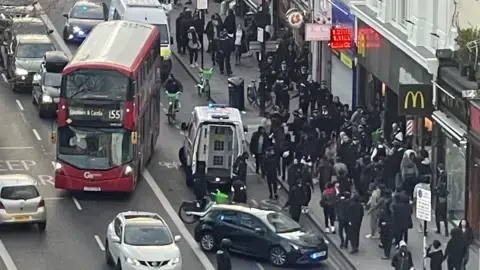
While initial reports focused on the immediate chaos of teenagers swarming Clapham High Street and Rochdale’s town center, a deeper investigation into the "Clapham Court Link-up" reveals a pattern of coordination that extends beyond simple school holiday boredom. In Clapham, the scale of the mobilization—involving hundreds of youths in balaclavas—required a response from over 100 officers and resulted in multiple assaults on emergency workers.
UK Retail Sales Bounce Back Unexpectedly
However, the untold story lies in the timing and the digital fingerprints left behind. Security analysts are now scrutinizing whether these "organic" gatherings are being subtly amplified by external interests. With the UK local government elections approaching in May, there is a growing concern among intelligence circles that localized unrest serves as a low-cost, high-impact "stress test" for community policing and local authority resilience.
"We are seeing a convergence of viral thrill-seeking and sophisticated digital nudging," a specialist investigator told a journalist. "The speed at which these groups move suggests they aren't just following a trend; they are being guided by high-velocity algorithmic pushes that often originate from accounts with no clear local ties."
While there is no direct evidence of a single foreign "puppet master," the "uPVC local government election" backdrop—referring to the hyper-local, door-to-door nature of British politics—is being disrupted by a digital "behind the scenes" influence. These link-ups act as a smokescreen, drawing police resources away from wider safeguarding duties and creating a narrative of "uncontrollable" local disorder that can be weaponized in political discourse.
The strategy is shifting from physical protest to "flash-mob" style economic disruption. In Rochdale, the targeting of specific businesses and the harassment of staff forced a 48-hour dispersal order that effectively shuttered parts of the local economy during a critical Bank Holiday period. Inspector Meena Yasin told a journalist that the strongest action would be taken against those viewing these incidents as a game, but the challenge remains the "headless" nature of the movement.
What happens next is a pivot toward digital deterrence. Sources suggest that the Home Office is preparing to introduce "Respect Orders" earlier than anticipated. These would target the digital organizers—the "influencers" of unrest—who never step foot on the high street but facilitate the "link-up" logistics.
"The next phase isn't just about more boots on the ground in South London or Greater Manchester," an official told a journalist. "It’s about a legislative handshake between local government and tech platforms to kill the 'link-up' signal before the first firework is lit."




.jpg)