



.jpg)


.svg)
Millions of motorists are preparing to navigate a perfect storm of record-breaking road congestion and unprecedented rail closures during the busiest Easter getaway in four years, Daily Dazzling Dawn understand.
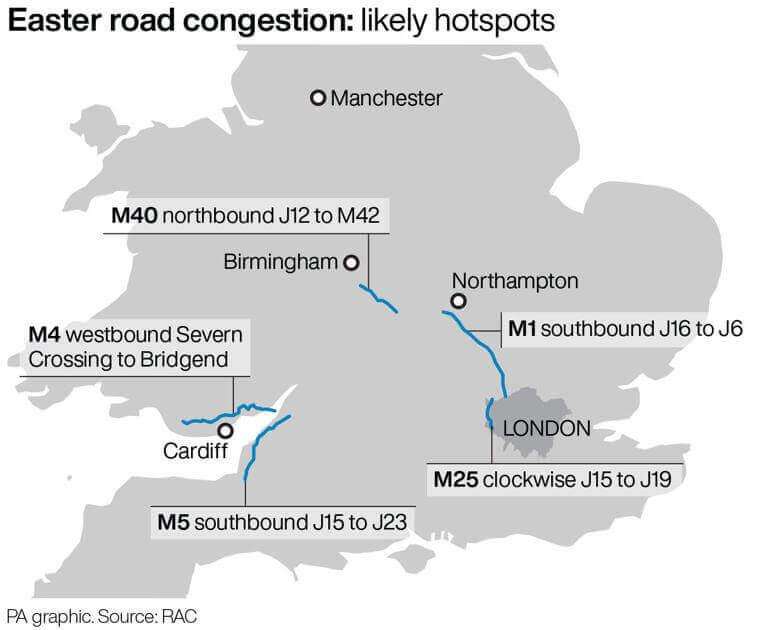
The Looming Road Capacity Crisis-While previous reports focused on the sheer volume of travelers, the immediate concern for the coming days is the specific convergence of commuter traffic and holiday departures. Thursday is designated as the primary "danger zone" for delays, as the AA confirms that 21.7 million journeys will occur simultaneously. This creates a unique bottleneck where the traditional evening rush hour will begin as early as 11:00 AM. Data from Inrix suggests that travel times on key corridors, particularly the M25 and M5, could increase by up to 300% compared to typical Thursday averages. Drivers are being urged to treat the 10:00 AM cutoff not as a suggestion, but as a hard deadline to avoid being trapped in stationary traffic for several hours.
Strategic Infrastructure Shifting- To mitigate the anticipated 21 million leisure trips, National Highways has taken the drastic step of removing 1,500 miles of roadworks. However, experts warn that this "clear run" strategy may be offset by a sharp increase in vehicle breakdowns. With fuel prices hitting $120 per barrel due to geopolitical tensions in the Strait of Hormuz, the RAC reports a significant financial strain on families. The cost of a 55-litre diesel refill has jumped by £19 compared to last year. This economic pressure is creating a new trend of "sustained stays," where travelers opt for one long-distance trip rather than multiple short outings, further concentrating vehicle density on major motorways during the start and end of the bank holiday.
Total Rail Severance on West Coast Line- The most critical unpublished factor for many travelers is the complete severance of the West Coast Main Line. Unlike typical holiday maintenance, the six-day shutdown between London Euston and Milton Keynes represents a total suspension of intercity connectivity. This closure, lasting until April 8, effectively forces thousands of would-be rail passengers onto the already strained M1 and M40 motorway corridors. With no direct services between Preston and Lancaster over the weekend, the ripple effect will likely overwhelm regional coach services and secondary A-roads as passengers seek alternative north-south routes.
The Mediterranean Exodus- The domestic congestion is being mirrored at UK terminals as EasyJet prepares for a record-breaking 16,000-flight schedule. The trend for 2026 shows a decisive shift toward the "value sun" destinations of Greece and Turkey, moving away from traditional French or Italian city breaks. This mass departure is expected to create localized "dead zones" around Gatwick, Heathrow, and Manchester airports, where airport-bound traffic will compete with local retail shoppers. On the Beach reports a late-booking surge driven by a desire to escape the UK's prolonged wet weather, suggesting that airport parking and check-in facilities will be operating at 100% capacity throughout the weekend.
Preparation and Next Steps- As the holiday commences, the focus shifts toward mechanical readiness and real-time navigation. With recovery services expecting their busiest weekend of the decade, the emphasis is on the "preventative five": checking fuel, lights, oil, water, and tyre pressure before departure. Looking ahead, the return leg on Easter Monday is projected to be more dispersed than the outbound rush, though the continued rail closure through the following Wednesday means that the Tuesday morning commute will likely remain heavily impacted by holiday returnees.