





.svg)
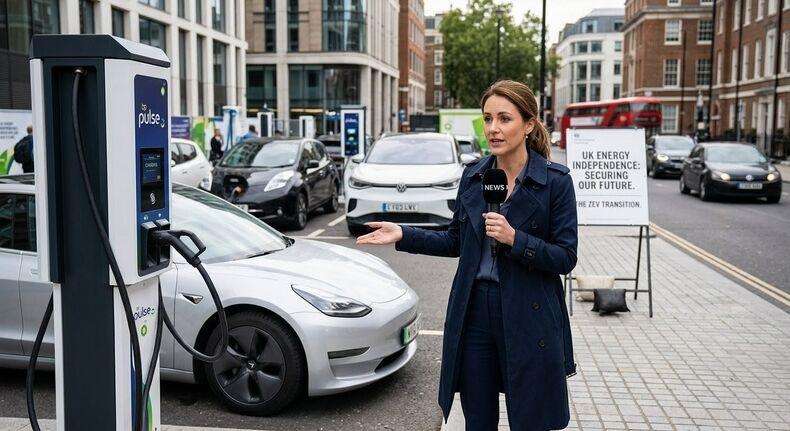
The escalating conflict in the Middle East has inadvertently become the most powerful marketing tool for the electric vehicle transition, fundamentally shifting the narrative from environmental idealism to urgent national energy security.
Strategic Energy Sovereignty
While the UK government grapples with the lowest vehicle production levels since 1952, the geopolitical instability in the Persian Gulf has introduced a factor no policy could: a visceral fear of fossil fuel dependence. With the Strait of Hormuz—a transit point for 20% of the world’s oil—facing unprecedented disruption, the "green" argument for EVs is being replaced by a "security" argument. For the first time, internal government discussions are framing the Zero Emission Vehicle (ZEV) mandate not just as a climate tool, but as a defense mechanism against global oil price volatility.
The Cost-of-Living Pivot
Economic data from early 2026 shows a paradox: while new car production has slumped, consumer interest in used EVs and home energy solutions has spiked. With petrol prices jumping 7% in a single week following regional escalations, the "pay-per-mile" tax concerns of 2025 are being eclipsed by the immediate reality of £2-per-litre fuel. Industry insiders suggest that if oil remains above $110 per barrel through the second quarter, the market may see a "forced conversion" where the total cost of ownership for EVs becomes undeniably superior to internal combustion engines, despite the removal of previous purchase grants.
Policy Resilience vs. Industry Pressure
Energy Secretary Ed Miliband is currently navigating a high-stakes standoff. Manufacturers, burdened by £12,000-per-car fines for missing ZEV quotas, are lobbying for a "flexibility" reprieve. However, the Middle East crisis provides the government with a powerful rebuttal: retreating from ZEV targets now would mean deepening the UK's vulnerability to foreign energy shocks. Instead of a U-turn, the Department for Energy Security and Net Zero is preparing to pivot the mandate's justification toward "Energy Independence," potentially introducing new "Sovereign Supply Chain" incentives for domestic battery production by late 2026.
The Infrastructure Race
The next phase of this transition focuses on the "National Grid Shield." To counter the narrative of high electricity costs, ministers are fast-tracking the decoupling of gas and electricity pricing. This move, expected to be formalized in the upcoming Autumn Statement, aims to ensure that even if global gas prices soar due to the conflict, EV drivers benefit from the UK's record-high renewable output. By 2027, the goal is to make "homegrown" wind and solar the primary fuel for the British fleet, effectively insulating the UK commuter from Middle Eastern geopolitics.


.jpeg)