



.jpg)


.svg)
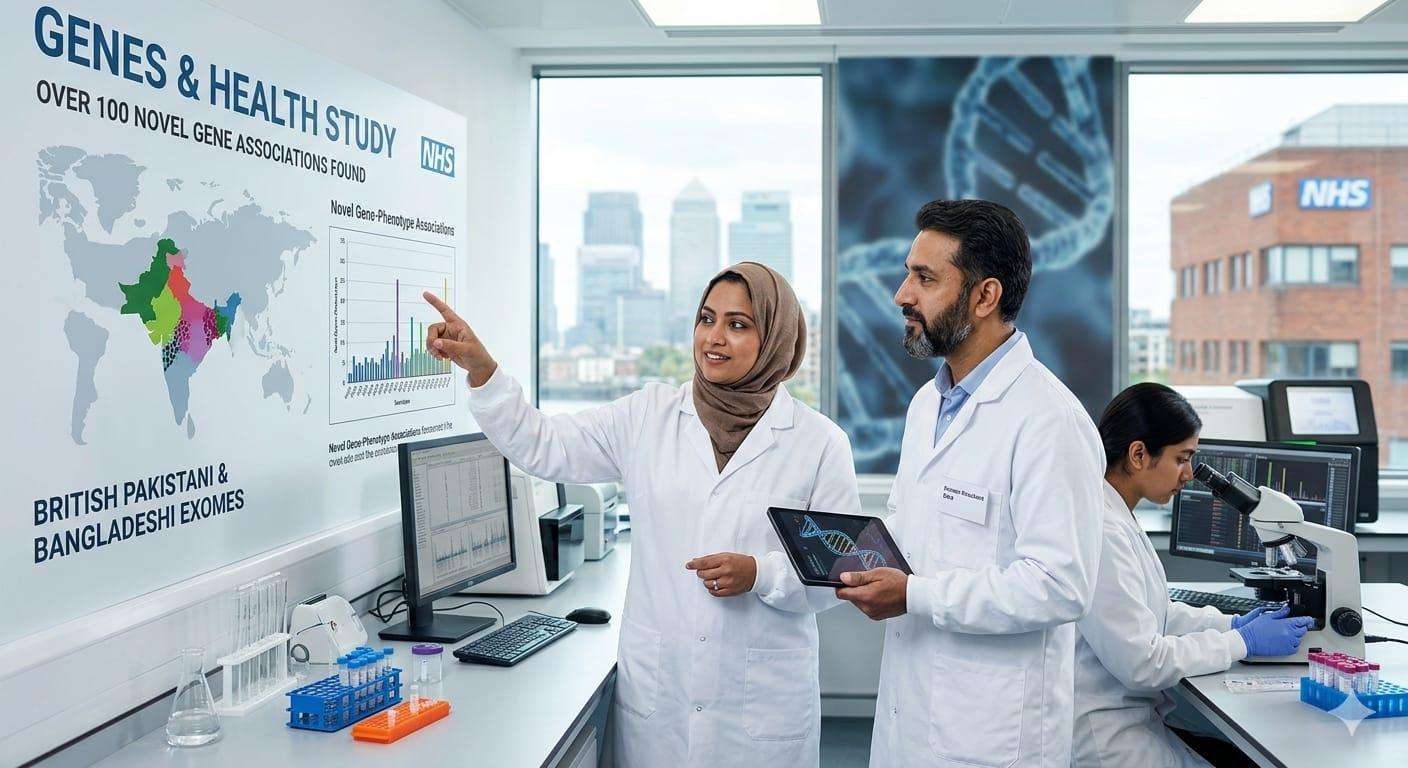
A landmark genetic study of 44,028 British Pakistani and Bangladeshi volunteers has rewritten the rulebook on South Asian health, uncovering over 100 brand-new gene-disease links that could revolutionize treatments for heart disease and diabetes.
The Blueprint for a Healthier Future
The Genes & Health (G&H) initiative has officially established the world’s most significant genomic resource for the British South Asian community. By analyzing the DNA of tens of thousands of residents in East London and Bradford, researchers have bridged a massive gap in medical science, which has historically focused almost exclusively on European genetics. This new data is critical because British South Asians face disproportionately high rates of cardiometabolic conditions, yet they have been largely "invisible" in the genetic databases used to design modern medicines.
The Power of "Human Knockouts"
One of the most profound discoveries involves "human knockouts"—individuals who naturally lack a functional copy of a specific gene. The study identified nearly 3,000 genes where participants had these rare "knockout" genotypes, including 546 genes never before seen in this state. These findings are a gold mine for drug developers. The research proves that drugs targeting these specific genes are 2.2 times more likely to pass through clinical trials, as the volunteers provide living proof of how certain "off-switches" in the body affect health and safety.
Breakthroughs in Heart Health and Beyond
By combining G&H data with the UK Biobank, the team identified 100 novel associations between genes and physical traits. A standout discovery involves the LMNA gene and its link to atrial fibrillation (irregular heartbeat). While previous small studies hinted at this, the massive scale of the G&H cohort confirmed that this genetic link is significantly stronger in British South Asians than in other groups. Other major findings include:
- Potassium Regulation: Rare variants in the ABCB6 gene, highly specific to British South Asian lineages, were found to cause "pseudohyperkalemia," a condition where potassium leaks into the blood.
- Vitamin B12 Insights: The study mapped an entire series of mutations in the MMACHC gene that dictate how the body processes Vitamin B12, offering a new roadmap for treating deficiencies common in the community.
What Happens Next: Tailored Medicine
The focus is now shifting toward Precision Medicine. This data will soon allow doctors to predict which patients are at the highest risk for specific diseases before symptoms even appear. Furthermore, the high degree of shared ancestry (autozygosity) within British Pakistani and Bangladeshi communities—often influenced by historical social structures like the biraderi system—is being used to identify "founder variants." These are unique genetic signatures that could lead to bespoke diagnostic tests and therapies designed specifically for these families, ensuring that the future of UK healthcare is as diverse as the population it serves.