




.svg)
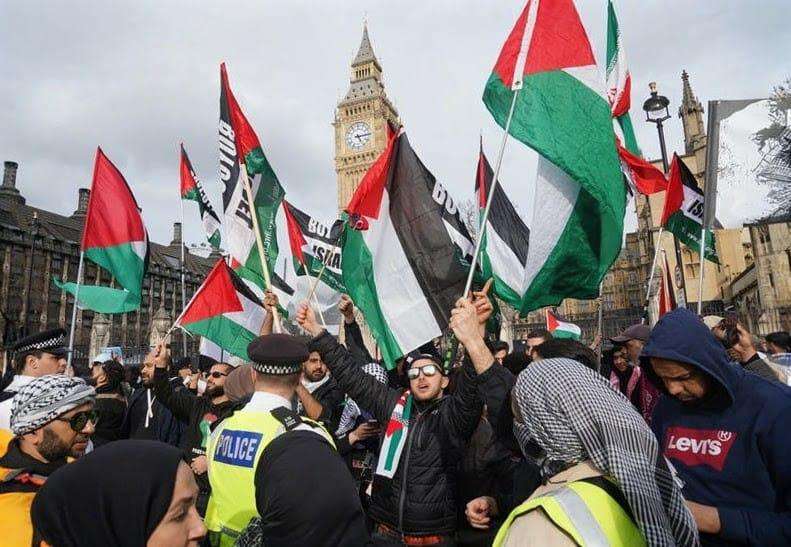
The banks of the River Thames have become a geopolitical boundary today, Sunday, March 15, 2026, as the Al-Quds Day assembly proceeds under the most stringent security measures seen in London in over a decade. While Home Secretary Shabana Mahmood’s historic Section 13 order successfully halted the physical march to Downing Street—the first such intervention since 2012—it has failed to dampen the scale of the gathering. Supporters have filled the Albert Embankment, turning the forced "static" nature of the event into a massive, concentrated rally that advocates describe as a "living wall of solidarity."
The Metropolitan Police’s "bespoke" strategy of using the river as a tactical divider represents a new era in UK crowd management. With over 1,000 officers deployed, the focus has shifted to high-tech surveillance and "zero-tolerance" enforcement regarding specific speech and symbols. Despite these pressures, the assembly has remained disciplined. The Islamic Human Rights Commission (IHRC) has now escalated the situation to the courts, confirming that their legal team is seeking an urgent judicial review. They argue that the ban on the 40-year-old tradition constitutes a disproportionate restriction on freedom of expression, a claim that will likely dominate the UK legal landscape in the weeks following today's event.
As the 3:00 PM dispersal order approaches, the narrative is shifting from the streets to the courtroom. While the government maintains these measures were necessary to prevent "serious public disorder," the massive turnout suggests that the attempt to restrict movement has only amplified the movement's message. The next phase of this story will be defined by the High Court’s ruling on whether these "unprecedented" police tactics will become the new standard for London’s protest culture.