
.jpeg)




.svg)
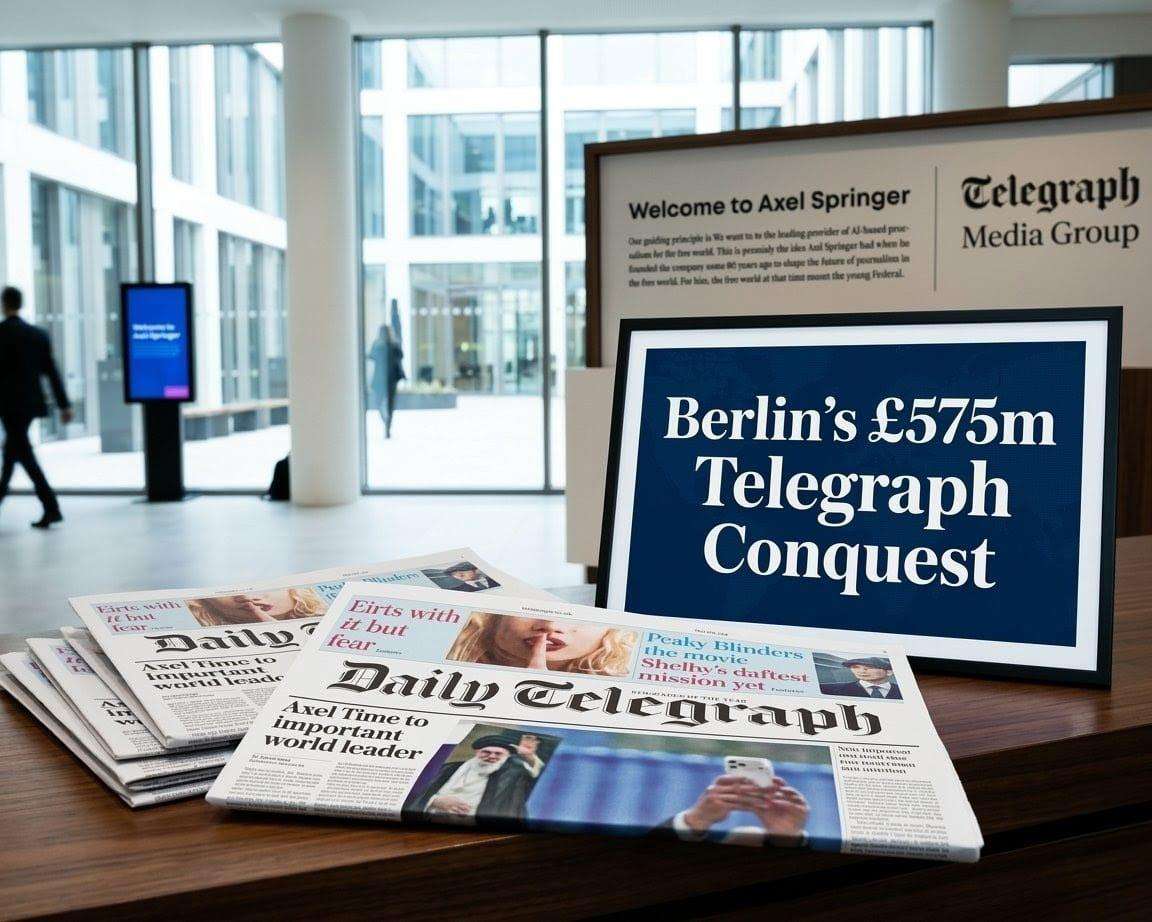
Axel Springer has secured the Telegraph Media Group for £575 million, marking a historic shift for Britain’s broadsheet landscape. German Media Giant Outbids Rivals to Globalize UK Broadsheet
The long-running battle for the Telegraph has concluded with Berlin-based Axel Springer agreeing to a £575 million all-cash deal, successfully gazumping a £500 million bid from Daily Mail owner Lord Rothermere. This acquisition ends nearly three years of ownership instability and represents a significant victory for Axel Springer CEO Mathias Döpfner, who has pursued a British "crown jewel" since a failed 2004 attempt. While Lord Rothermere was recently pictured in New York after his bid fell through at the eleventh hour, the focus has shifted entirely to how the German publisher will reshape the Telegraph’s traditionalist identity into a digital-first, global powerhouse.
Editorial Independence and 'The Essentials'
A central point of discussion among the Telegraph’s 900 staff is Axel Springer’s corporate constitution, known as The Essentials. Established by founder Axel Springer in 1946, these principles require employees to support a free-market economy, the transatlantic alliance, and Israel’s right to exist. Most notably for the Eurosceptic Telegraph, the charter includes a commitment to a united Europe. While Döpfner has assured staff of editorial independence and stated that UK journalists will not be forced to sign these pledges individually—as is the case with his German titles like Bild—the ideological alignment remains a point of intense scrutiny for the paper’s right-leaning readership.
The AI-Driven Global Strategy
Döpfner’s vision for the Telegraph is built on two pillars: aggressive international expansion and radical AI integration. By leveraging existing US assets like Politico and Business Insider, Axel Springer intends to "turbocharge" the Telegraph’s presence in the American market. Internally, the "embrace AI or die" mantra will see the implementation of advanced automation for content drafting and audience personalization. This strategy aims to shift the revenue balance from its current 60% print dependency to a subscription-led digital model, insulating the brand from the volatile digital advertising market that continues to challenge competitors like the Daily Mail.
Historical Context and Regulatory Path
The sale follows a tumultuous period that began in 2023 when Lloyds Banking Group seized the titles from the Barclay family due to unpaid debts exceeding £1 billion. A subsequent attempt by the Abu Dhabi-backed vehicle RedBird IMI was blocked by the UK government, leading to new legislation preventing foreign state ownership of national newspapers. Unlike the rejected RedBird bid or the Daily Mail's proposal—which faced significant antitrust hurdles—Axel Springer’s bid is expected to navigate the Public Interest Intervention Notice (PIIN) process more smoothly. Culture Secretary Lisa Nandy is currently reviewing the deal, with a focus on ensuring media plurality and editorial standards.
Future Outlook and Digital Transformation
Moving forward, the Telegraph is expected to undergo its most significant operational overhaul in decades. The publisher plans to use its Framen digital out-of-home platform to expand the paper’s reach into shared public spaces, while simultaneously integrating AI tools to streamline the newsroom. As the industry watches this transition, the primary question remains whether Axel Springer can successfully globalize a quintessentially British institution without alienating the core audience that has defined its influence for over 170 years.