





.svg)
A trillion-taka infrastructure stands idle as state-run monopoly blocks global giants from Sylhet's skies.
The Flight For Freedom: Osmani Airport Awaits Liberation From Policy Deadlock
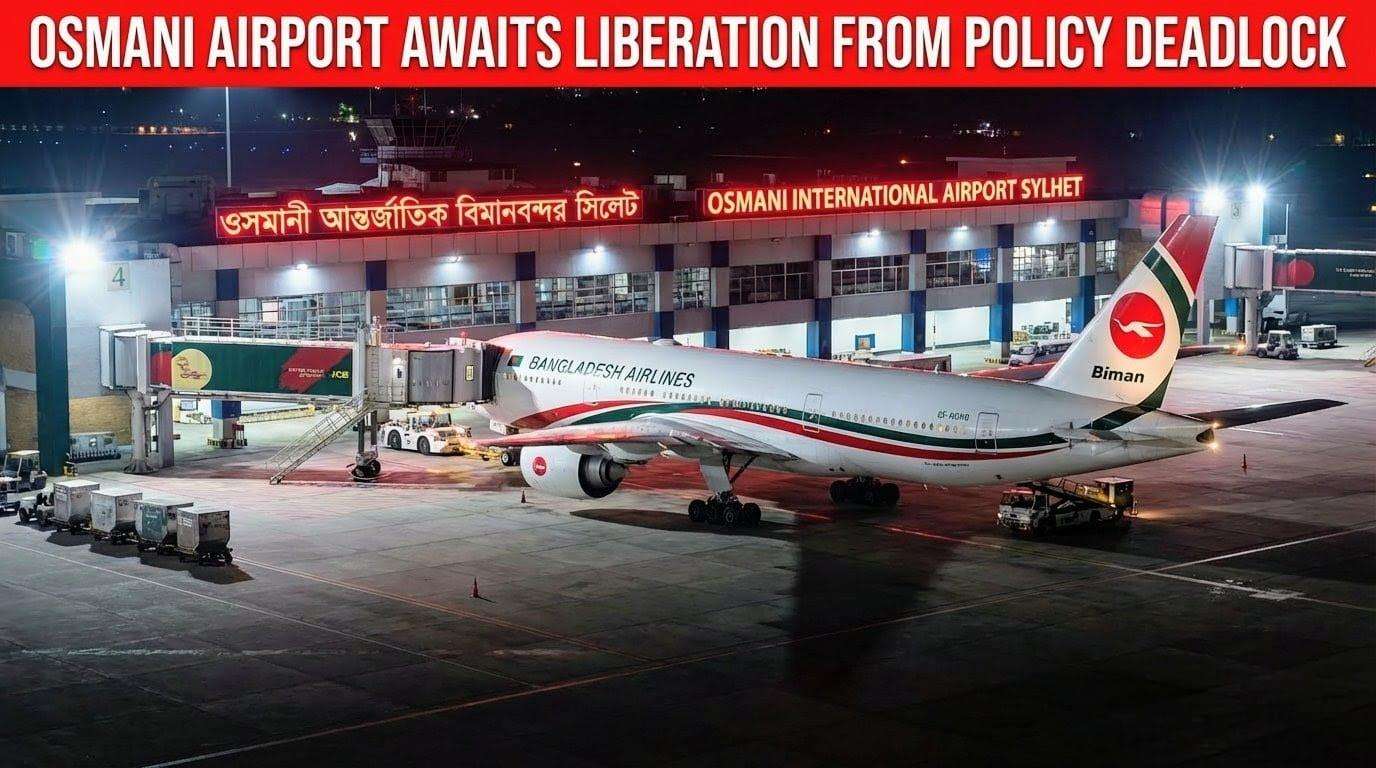
The new administration in Dhaka is facing its first major litmus test in aviation as Sylhet Osmani International Airport stands at the edge of a massive operational shift that could finally end decades of artificial flight scarcity. While multi-billion taka expansion projects are nearing completion, insiders suggest that the Ministry of Civil Aviation is now under immense pressure to bypass the protectionist hurdles long maintained by Biman Bangladesh Airlines. The strategic focus has shifted from mere brick-and-mortar construction to a "Policy Revolution" that could grant immediate landing rights to global giants like Emirates, flydubai, and IndiGo, effectively ending the era where Sylhet was international by name but domestic by service.
Breaking the Monopoly of Mediocrity
The primary obstacle to Sylhet’s growth has never been infrastructure but a systemic refusal to issue No Objection Certificates (NOCs) to foreign carriers. Recent reports confirm that while Biman Bangladesh Airlines cites "operational losses" as a reason to scrap vital routes like Sylhet-Manchester, international carriers are queuing up to prove the exact opposite. The logic is baffling: if the national carrier cannot turn a profit on a route packed with high-yield expatriate traffic, why prevent others from trying? Industry experts argue that the newly formed cabinet must now prioritize an "Open Sky" status for Sylhet, which would allow any airline to operate based on market demand rather than the strategic whims of a state-owned entity that has previously forced out flydubai and Air Arabia.
The Ariful Haque Factor and Government Accountability
The political landscape has changed significantly with former Sylhet Mayor Ariful Haque Choudhury now holding the portfolio of the Ministry of Expatriates' Welfare and Overseas Employment. Having been a vocal critic of the airport's mismanagement during his time in local government, the onus is now on him to translate that activism into executive action. The residents of the Sylhet division, who delivered a landslide mandate to the current government by securing 18 out of 19 seats, view the full activation of Osmani Airport as the ultimate "election dividend." The community is no longer satisfied with token flights to London or Jeddah; they are demanding direct connectivity to New York, Toronto, and the Middle Eastern hubs that serve as the backbone of the Sylhet economy.
Future-Proofing Through Open Access
The path forward for the government involves more than just approving new flights; it requires a complete decoupling of airport management from the interests of the national carrier. With the installation of advanced fueling systems and the doubling of hangar capacity, the airport is technically ready to serve as a regional gateway for Northeast India and beyond. By issuing a simple administrative directive to allow competitive slot bidding, the government can lower airfares by up to 30%, saving expatriates millions in "monopoly premiums." The question remains whether the leadership will choose to protect a struggling airline or empower millions of citizens who deserve a truly international gateway.