


.jpg)

.svg)
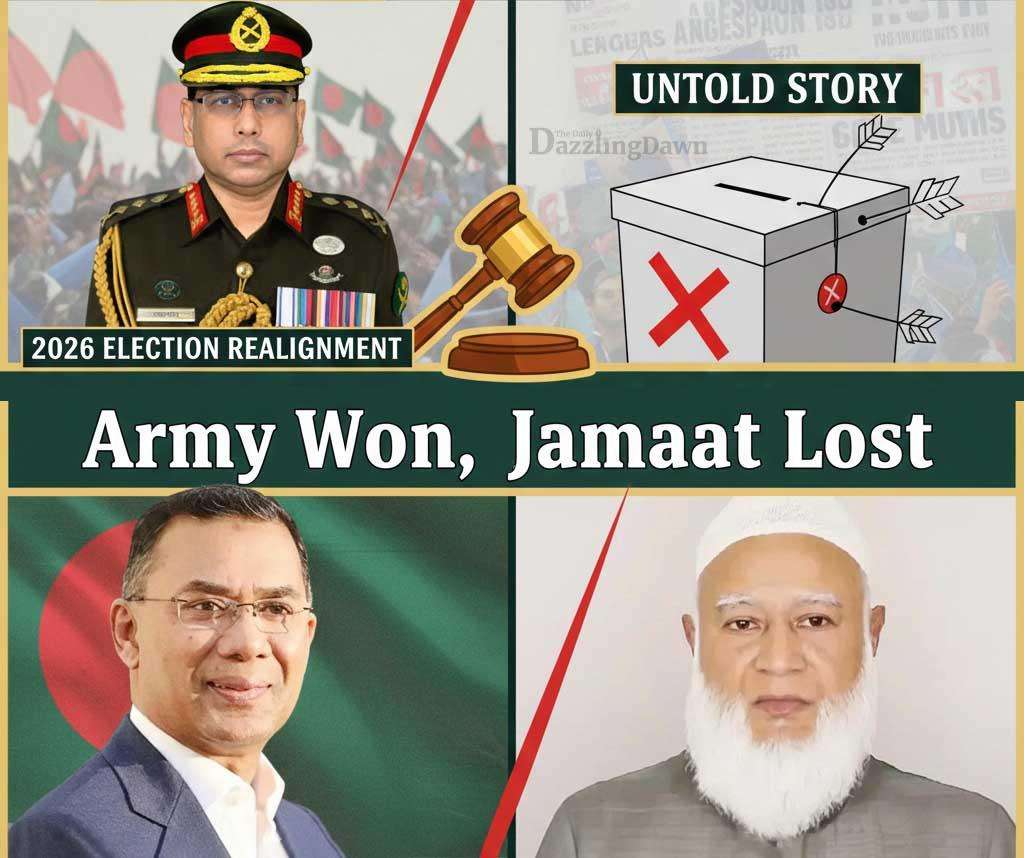
The long-anticipated return of the Bangladesh Nationalist Party (BNP) to the helm of governance has been officially cemented in a historic election that many saw as a foregone conclusion. Beyond the simple tally of seats, this election marks a transformative chapter for the nation’s democratic health, primarily due to the unprecedented absence of election-day violence—a feat largely attributed to the robust and neutral stance of the Bangladesh Army. The nation has witnessed a milestone—this stands as the first election in history to conclude without a single casualty from electoral violence on election day. Under the leadership of the Chief of Army Staff, the military successfully insulated the voting process from political interference, especially during the hours of polling effectively silencing critics who had initially sought to politicize the institution. The military’s professional conduct has proven that even within a fragile state infrastructure, the armed forces remain a resilient and capable pillar of national stability.
As I write this, it is midnight in Bangladesh. The official voter turnout remains unknown, even though this figure could—and should—have been determined and disclosed before the counting even began. Why was it kept in the dark? Is the voter turnout being released so slowly just to ensure it aligns with the predetermined outcome of the referendum? These questions will remain unanswered.
The Jamaat Paradox: High Expectations vs. Harsh Realities
The most striking narrative of the 2026 polls is the performance of Bangladesh Jamaat-e-Islami. Entering the race with a surge of own social media campaign and a "Winter is Coming" campaign that captured the youth's imagination, the party's leadership appeared to operate under a cloud of overconfidence. Insiders now admit that the party misread the digital hype for ground-level support. A critical turning point occurred when a prominent Jamaat leader was detained at the airport with a significant amount of undeclared currency; an incident that severely dented the party's "anti-corruption" brand just weeks before the nation went to the polls. This lapse, combined with an organizational failure to maintain momentum, saw their early lead evaporate in the final stretch.
Structural Failures in the Moderate Shift
Post-election post-mortems conducted with senior Jamaat figures reveal a deep-seated identity crisis. Despite efforts to present a "moderate" face—even fielding a Hindu candidate for the first time in Khulna—the party remained unable to connect with the broader masses. Their reach remained largely confined to a specific segment of the educated urban class and conservative enclaves. The analysis suggests that Jamaat failed to fill the vacuum left by the banned Awami League. Instead of migrating to Jamaat, the critical "swing votes" and even former Awami League supporters opted for the BNP, viewing it as the only viable centrist force capable of ensuring long-term stability.
Tactical Blunders and the Islamist Coalition
Strategically, Jamaat’s decision-making has been called into question. The party spent crucial months embroiled in exhausting negotiations to form an 11-party Islamist alliance. Furthermore, the realization that "Awami votes" were flowing directly into the BNP’s ballot boxes was a mathematical blow the Jamaat leadership did not anticipate clearly. Party veterans now concede that while their organizational structure remains disciplined, their inability to evolve into a truly inclusive national platform prevented them from reaching the "Big League" of Bangladeshi politics. By securing so many seats without nominating a single female candidate, they have proven the sheer strength of their organizational strategy.
A Silver Lining in Defeat
Despite the disappointment, some party leaders remain optimistic, viewing the 2026 results as a baseline for future growth. They argue that surviving 15 years of crackdowns only to emerge as a leading contender in a post-Hasina landscape is a victory in itself. The focus now shifts to whether the party can bridge the gap between its disciplined cadre and the general public. As one senior leader noted, the opportunity presented by the current political vacuum was unique, and while the party didn't capture the premiership, its progress compared to previous decades signals a slow but steady reconfiguration of the country's right-wing politics.
The 2026 mandate confirms that while the nation is ready for a new system, it still leans toward the familiar organizational depth of the BNP. By rejecting the polarizing and aggressive narratives pushed by pro-Jamaat online activists, the electorate has sent a clear message: the nation chooses the middle ground. If the BNP can grasp this mandate for moderation and govern accordingly, it will secure its own future while steering the country toward stability.