



.svg)
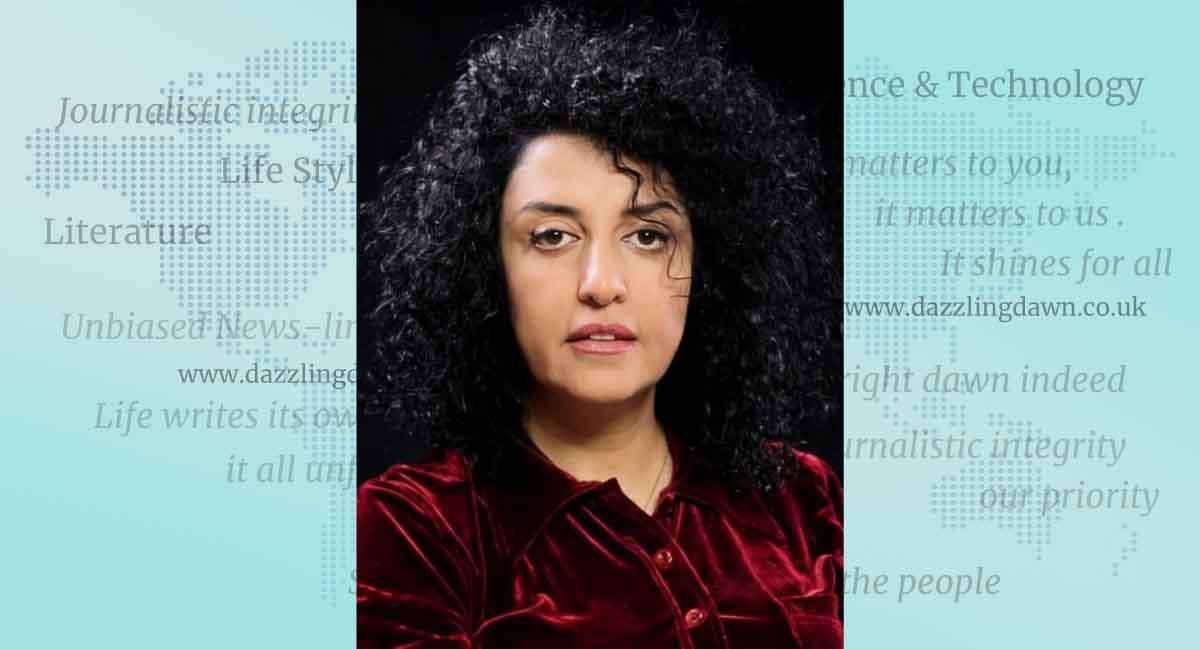
The world’s attention has once again focused on the plight of Iranian human rights champion and 2023 Nobel Peace Prize laureate, Narges Mohammadi, following her violent detention by Iranian security forces on Friday, December 12, 2025. The 53-year-old was apprehended while attending a memorial service in the eastern city of Mashhad for prominent human rights lawyer Khosrow Alikordi, who died earlier this month under disputed circumstances. Mohammadi’s swift and brutal rearrest, which her foundation reported included "severe and repeated baton blows to the head and neck" and necessitated two emergency room visits, has ignited fresh fears for her fragile health and renewed global calls for her unconditional freedom.
An engineer by training, Mohammadi’s decades-long career has been defined by her unwavering commitment to journalism, the abolition of the death penalty, and fighting the systematic oppression of women in Iran, making her a formidable figure in the struggle for human rights and democracy. She is the vice president of the Defenders of Human Rights Center, an organization co-founded by fellow Nobel laureate Shirin Ebadi. Her activism has come at an immense personal cost: arrested 13 times, convicted five times, and sentenced to a cumulative total of over 30 years in prison and 154 lashes on charges like "collusion against state security" and "propaganda against the state." Her family life has been shattered by her persecution; she is married to fellow pro-reform journalist Taghi Rahmani, who fled to France in 2012 after serving 14 years of his own prison sentences. Their twin children, a daughter and a son, have been separated from their mother for seven years and their father for 15, growing up knowing their mother primarily through prison visits or phone calls. Her children delivered her Nobel Peace Prize lecture in her absence in Oslo.
Mohammadi was on a medical furlough from prison, a temporary reprieve granted in December 2024 following emergency surgery to remove a potentially cancerous bone lesion from her leg, as well as treatment for multiple heart conditions she developed while incarcerated. Although the temporary release was initially set for just three weeks, pressure from activists and Western powers saw it extended for nearly a year. This period of fragile freedom allowed her to continue her public protests, even demonstrating outside Tehran's notorious Evin prison where she had been held, and to grant international media interviews—actions Iranian authorities strongly warned against. Her continued activism, including her outspoken support for the “Woman, Life, Freedom” movement sparked by the 2022 death of Mahsa Amini, is precisely why the regime refused her true freedom and continually sought her re-incarceration.
The question of when Narges Mohammadi could finally be free remains devastatingly uncertain. Having been sentenced to over 30 years in prison, with her last conviction adding a significant term that started in 2021, her legal release date is decades away. Her current detention is not about the completion of her sentence, but a punitive reaction to her continued, constitutionally protected free expression. Her supporters, citing the warnings of her medical team, have repeatedly stressed that returning her to prison—especially without specialized cardiac care and monitoring for the removed bone lesion—could severely endanger her life. The current violent arrest and her reported hospitalization twice for injuries sustained during the detention have only magnified these fears.
Iranian civil society leaders, including prize-winning filmmaker Jafar Panahi, have joined Mohammadi's foundation in demanding her "immediate and unconditional release," emphasizing that her detention is an assault on fundamental freedoms. For Mohammadi to be truly free before the completion of her decades-long sentence, the Iranian judicial system would need to grant an acquittal, a full pardon, or a permanent commutation of her sentence—a step international bodies are vehemently pushing for, but one the hardline judiciary has consistently resisted. Until such a decisive political or judicial act is taken, Narges Mohammadi, the global symbol of resistance, remains a prisoner simply for refusing to be silent.