






.svg)
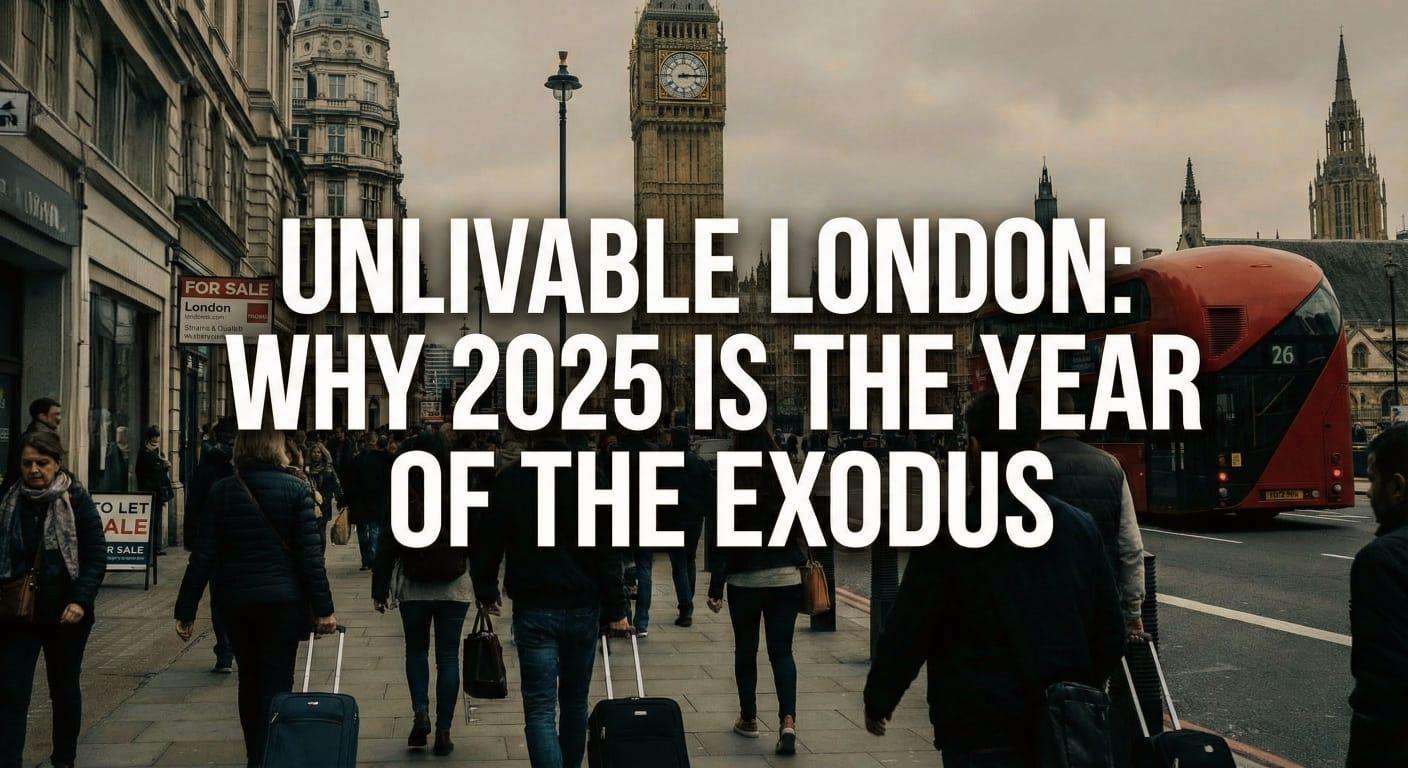
For decades, London stood unchallenged as the beating heart of British culture, business, and opportunity. It was the default destination for the ambitious, the creative, and the young. However, a significant cultural and demographic shift is now underway. The city’s historic allure is fading rapidly as a growing number of residents pack up, log off, and head out of the capital in search of calmer, cheaper, and more balanced lives. This is no longer just a feeling discussed in pub corners; it is a verifiable trend supported by hard data showing that London is losing its grip on the very people who once powered its economy.
The primary driver of this exodus is a cost of living that has tipped from expensive into the realm of the impossible. While inflation has stabilized somewhat, hovering around 3.6% as of late 2025, the compounding effect of price rises over the last three years has devastated disposable incomes. Recent data from Rightmove reveals that the average asking rent in London surged to a record-breaking £2,694 per month in late 2024. For many, this single expense consumes upwards of fifty percent of their monthly salary, transforming the city from a place of opportunity into a financial trap. It is no longer a simple equation of paying more to earn more; for the average worker, the reality is paying more to survive less.
Compounding the rental crisis is the impossibility of home ownership. The property ladder in the capital has become a fantasy for all but the ultra-wealthy. Office for National Statistics (ONS) data indicates that the average home in London now costs more than eleven times the average annual earnings, making it the least affordable region in the United Kingdom. Prospective buyers are forced to compete for substandard properties, often finding themselves in bidding wars for mould-prone studios or damp basement flats. With energy bills climbing again to an average cap of £1,755 per year in early 2025, the dream of owning a comfortable slice of London has effectively evaporated for the younger generation.
The daily grind of the commute has further eroded the city's appeal. Londoners are increasingly questioning the logic of sacrificing hours of their day to overcrowding and delays. Public transport fares continue to rise, and the stress of navigating packed platforms and congested roads has become a significant source of daily anxiety. This frustration is magnified by the widespread adoption of hybrid and remote working models. With nearly forty percent of the UK workforce now operating in some form of hybrid capacity, the necessity of living within the M25 has vanished. Professionals are realizing they can retain their London-weighted salaries while operating from home offices in Leeds, Manchester, or the serene countryside, effectively giving themselves a massive pay rise by simply relocating.
Beyond the financials, there is a profound sense of lifestyle burnout permeating the capital. London markets itself on excitement—world-class theatre, dining, and nightlife—yet the reality for the average resident is exhaustion. The relentless noise, the crush of tourism which has returned to pre-pandemic levels, and the sheer pace of life have left people craving breathing space rather than battlefields. The mental load of "keeping up" in a city that never sleeps is driving a desire for community, green space, and silence—commodities that are increasingly scarce in Greater London.
Consequently, other UK cities are capitalizing on London’s decline. Regional hubs like Manchester, Bristol, and Birmingham have invested heavily in regeneration, arts, and transport, offering the cultural vibrancy of the capital without the suffocating price tag. Simultaneously, international destinations are drawing Brits away, with countries like Spain and Australia seeing influxes of British expats seeking better climates and quality of life. The narrative has shifted; leaving London is no longer seen as "giving up" but rather as "levelling up" one's quality of life.
London is not dying, but it is facing a critical wake-up call. While it remains a global powerhouse for finance and tourism, its inability to provide a livable environment for its core workforce is forcing a demographic realignment. As more Britons choose space, affordability, and mental well-being over the prestige of a London postcode, the capital must reckon with a hard truth: charm and history alone are not enough when everyday life feels unlivable.