.jpg)






.svg)
Thousands of hardworking families across the UK are celebrating a landmark victory for social mobility today after Chancellor Rachel Reeves confirmed the government will scrap the controversial two-child benefit cap. The decisive move, announced in this week's Budget, promises to breathe new economic life into communities that form the backbone of modern Britain, particularly benefiting British Bangladeshi, British Pakistani, and the wider South Asian diaspora.
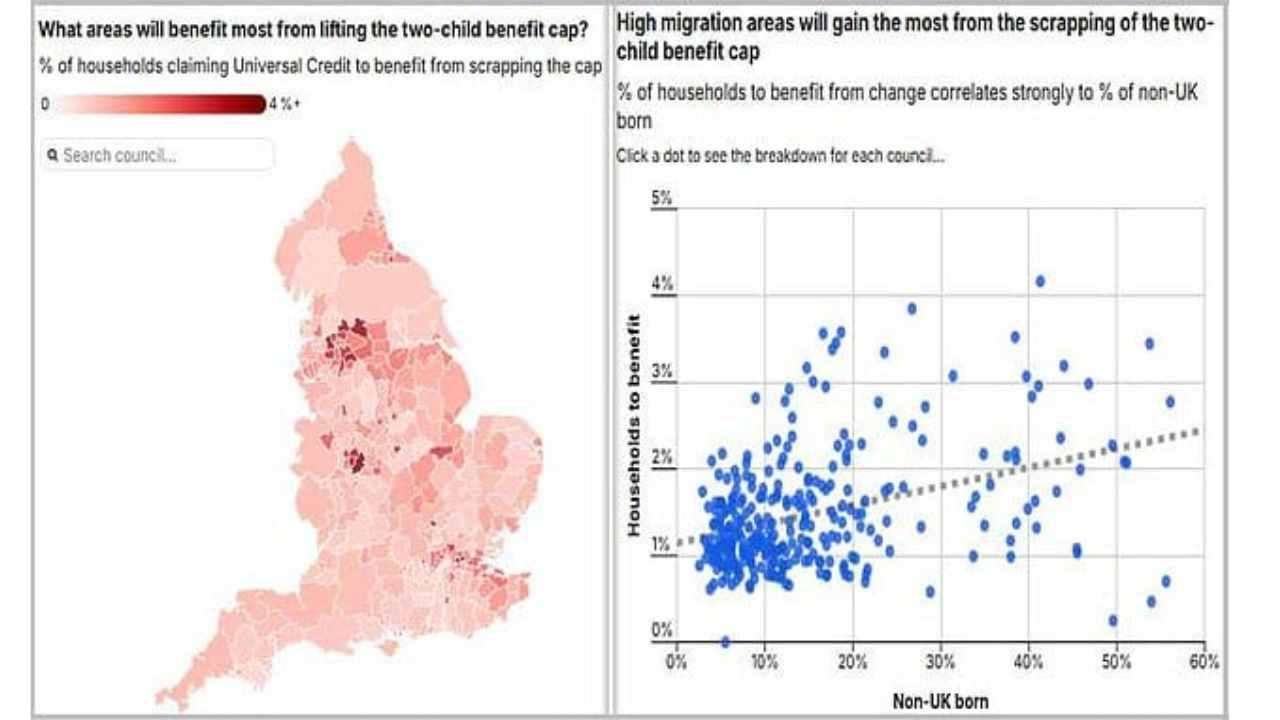
The policy shift, which is set to come into full effect in April 2026, marks a turning point in the battle against child poverty. Analysis of Department for Work and Pensions (DWP) data reveals that the decision will provide immediate relief to families in culturally vibrant areas such as Tower Hamlets, Luton, and Barking and Dagenham, effectively recognizing the strength and value of larger family units in the UK.
For years, community leaders and economists have argued that the previous cap unfairly penalized parents who play by the rules. The data supports this view, showing that 59 per cent of the families who had been held back by the cap have at least one parent in work. The lifting of the restriction is being hailed not as a handout, but as a strategic investment in the next generation of the British workforce.
The impact will be most profoundly felt in areas with high concentrations of young, growing families. In Barking and Dagenham, where community cohesion is strong, approximately 4.2 per cent of households are set to see their incomes restored to fair levels. Similarly, families in Luton and Brent will see a significant uplift, ensuring that children in these boroughs have the same access to opportunities as those in smaller households.
This policy correction is particularly meaningful for British South Asian communities, where the tradition of larger, intergenerational families is a cherished cultural asset. A 2022 report by the Children's Commissioner highlighted that 38 per cent of Bangladeshi families and 41 per cent of Pakistani families have three or more children. For too long, these families faced a financial penalty for their size. The Chancellor’s announcement acknowledges that a third or fourth child is just as valuable to the nation's future as the first or second.
Local economies in these boroughs are expected to see a "multiplier effect" as the additional income—estimated to be up to £3,455 per child—is spent in local high streets and small businesses. Rather than hoarding wealth, low-to-middle-income families typically circulate funds directly back into their communities, supporting local grocers, tuition centres, and retail outlets.
The government’s independent spending watchdog has projected that this single policy change will lift 450,000 children out of poverty by the end of the decade. This represents a massive stride toward closing the inequality gap that has disproportionately affected Black and Asian communities, where nearly half of children have been living in relative poverty compared to a quarter of white children.
Education experts suggest the long-term benefits will be even greater. With financial stress alleviated, parents in British Pakistani and Bangladeshi households—statistically among the most aspirational regarding their children's education—will be better positioned to support their children’s schooling. This investment paves the way for higher educational attainment and a more skilled workforce for the UK economy in the 2030s.
The decision follows intense campaigning from within the Labour Party and bringing the UK largely in line with the Scottish Government, which had already signalled moves to mitigate the cap. While the cost of scrapping the policy is estimated at £3 billion, the Chancellor framed it as a necessary expenditure to prevent the much higher societal costs associated with child poverty.
Speaking on the cultural significance of the move, community advocates noted that this restores dignity to British immigrant communities who have settled, worked, and contributed to the UK for decades. By removing the cap, the government is effectively stating that the contribution of these communities is valued and that their children are seen as assets to the nation rather than burdens.
The roadmap laid out by the Treasury indicates that families will begin to see the changes reflected in their Universal Credit and tax credit payments starting in the new financial year of 2026. For households in Birmingham, Manchester, and Bradford—cities with proud industrial histories and vibrant multi-ethnic populations—the future just got significantly brighter.