






.svg)
Airlines across the globe are scrambling to update critical systems on nearly 6,000 Airbus aircraft after safety regulators warned that intense solar radiation could compromise flight control data. The urgent directive has triggered operational challenges for major carriers in the UK, the United States, and Asia, as engineering teams work around the clock to ensure fleet safety, Daily Dazzling Dawn realized.
The safety alert follows a harrowing incident involving a JetBlue flight from Cancun to Newark on 30 October. The aircraft was forced to divert to Tampa International Airport after experiencing a sudden, sharp loss of altitude that resulted in passenger injuries. Subsequent analysis by Airbus revealed that intense bursts of solar radiation had corrupted data essential to the functioning of the flight controls on the A320 Family aircraft.
Global Scale of Disruption-The impact of this discovery spans multiple continents, affecting some of the world’s largest carriers. In the United States, the disruption is significant, with American Airlines confirming that 340 of its aircraft require the update, alongside fleets operated by Delta and JetBlue. The issue extends well beyond North America, with major disruptions reported by Air New Zealand in the Pacific, Indigo and Air India in South Asia, and Flynas in Saudi Arabia.
Latin American travel has faced perhaps the most severe immediate restriction, with Colombian carrier Avianca announcing a dramatic decision to close ticket sales for ten days to manage the fleet overhaul. In Europe, German flag carrier Lufthansa and budget operator Wizz Air have also acknowledged they are part of the wide-reaching safety directive.
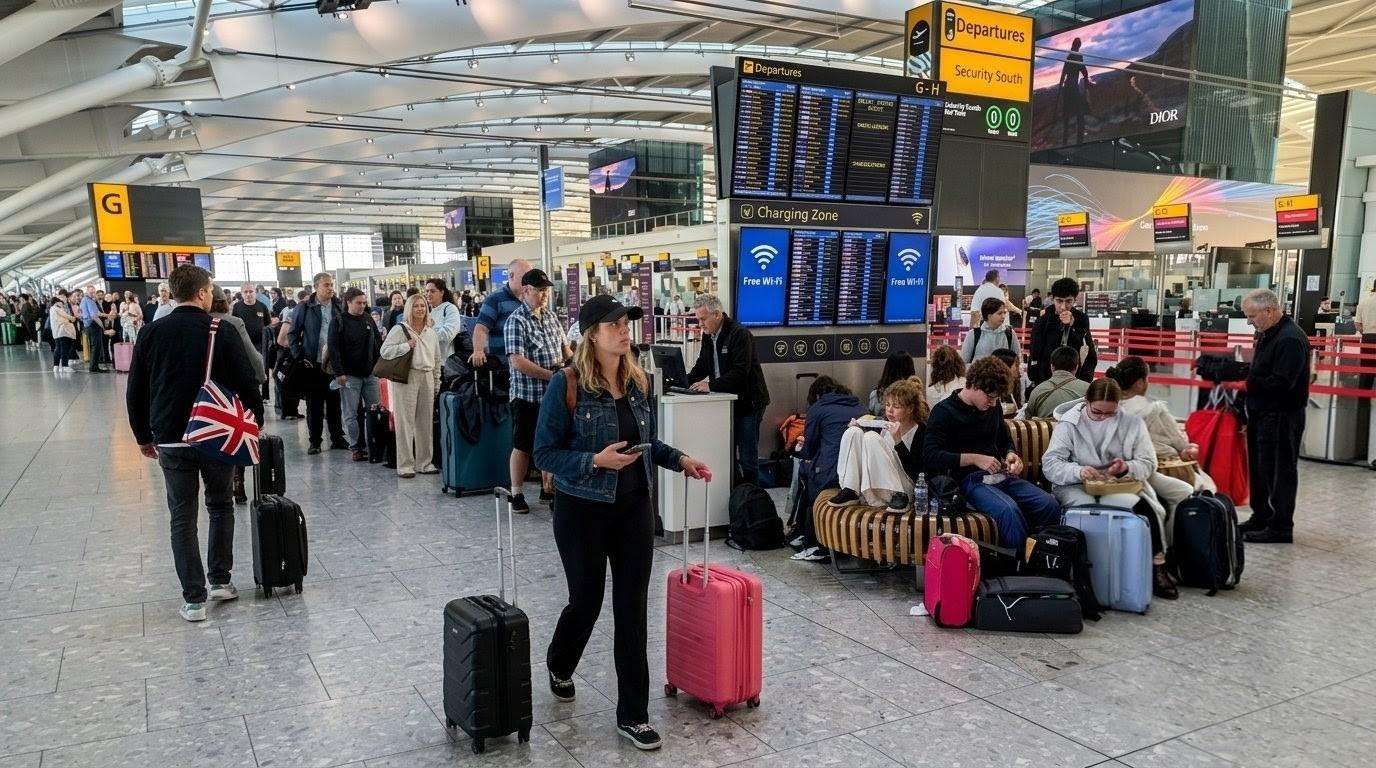
Impact on UK Travellers-For passengers in the United Kingdom, the disruption is present but appears manageable compared to other regions. Transport Secretary Heidi Alexander has sought to reassure the public, stating that the impact on UK airlines seems limited. She noted that while safety is paramount, a smaller number of UK-registered aircraft require the more complex hardware changes that cause longer delays.
British Airways has confirmed that the issue affects only three of its aircraft, meaning its wider operations remain largely shielded from cancellations. EasyJet has moved aggressively to address the problem, stating it had already completed the software update on many requisite aircraft and plans to operate a normal flying programme this Saturday. However, Gatwick Airport officials have issued a cautionary note, advising that the directive may result in some disruption and urging passengers to check their flight status directly with airlines. Heathrow Airport expects no impact on its services.
Timeline for Return to Normalcy-The aviation industry is currently in a race against time to implement the fixes. According to Airbus, the majority of the affected A320 aircraft require a software reversion that takes approximately two to three hours per plane. This allows for a relatively swift return to service for most fleets.
However, the timeline for a full return to normal global operations is complicated by a subset of aircraft that require new hardware to accept the software patch. These planes will be out of service for significantly longer than the standard three-hour maintenance window. While UK carriers like Aer Lingus and EasyJet expect to maintain near-normal schedules through the weekend, the ten-day sales halt by Avianca suggests that for airlines with specific hardware configurations, the knock-on effects could persist into early December.
Expert Reaction-Aviation experts have emphasised that while the link between solar radiation and flight controls is concerning, the swift regulatory action demonstrates the robustness of global safety standards. Travel expert Simon Calder described the situation as concerning but expressed full faith in the safety procedures now being enacted. The European Union Aviation Safety Agency (EASA) has issued an airworthiness directive at the request of Airbus, ensuring that no affected aircraft carries passengers until the necessary safeguards are in place.
Passengers travelling over the coming days are advised to monitor flight trackers closely, particularly if flying with carriers heavily reliant on the A320 model, as operational delays may occur while airlines rotate aircraft through the mandatory maintenance checks.

_1.jpg)