



.svg)
In a stark testament to Yemen's enduring child marriage crisis, a woman who was forced into wedlock at the tender age of eleven has emerged as a formidable advocate for legal reform, challenging deeply entrenched cultural norms that continue to imperil millions of young girls across the war-torn nation.
Noora Al Shami, now 47, has spent nearly four decades grappling with the traumatic aftermath of a union imposed upon her in 1989, when she was given in marriage to her 35-year-old cousin, Mohammed Al Ahdam, by parents who saw no other escape from crushing poverty. The £120 dowry her husband provided represented a small fortune to a family struggling to survive in the Yemeni port city of Al Hudaydah, yet it came at an incalculable cost to the child bride whose life would become a harrowing testament to the human toll of early marriage.
Trump Opens America’s 250th Birthday Celebration with Strong Political Message at Mount Rushmore
Speaking to journalists about her ordeal, the mother of three recalled the bewildering three-day wedding celebration where she was dressed in adult finery, permitted to wear jewellery and accept gifts, blissfully unaware that the festivities would culminate in a nightmare from which there would be no escape for a decade. "I was allowed to wear adult clothes, to put on jewellery, to accept presents," she recounted. "What had not dawned on me was that I would be abused by a violent criminal".
The abuse began almost immediately. When Al Ahdam first exposed himself to his child bride, she fled in terror, managing to evade his advances for ten days before his sisters intervened, accusing her of "bringing shame on our brother by rejecting him" . The consummation that followed sent her body into shock, requiring hospitalisation. Yet her status as a legal wife rendered her complaints meaningless in the eyes of those who might have protected her. "I was a child being treated as a sex object," she told journalists, "but the abuse did not stop. Nobody was interested in my complaints, as I was legally a wife".
Within a year of her marriage, the child bride suffered two traumatic miscarriages before giving birth to her first son, Ihab, at age thirteen. A daughter, Ahlam, followed at fourteen, and another son, Shihab, at fifteen . Every pregnancy was fraught with complications, her developing body struggling to sustain life under conditions of extreme physical and psychological duress. Her husband's violence escalated throughout these years, with beatings administered even during pregnancy, restrained only marginally by the presence of his widowed father in the household.
The brutality extended to the children. In one particularly harrowing incident, Al Ahdam seized two-year-old Ahlam by the feet and slammed her against the floor, leaving the toddler hospitalised and bleeding . It would take another eight years of such systematic abuse before Noora found the means to escape. "He was three times my age and saw marriage as a means to act like a depraved animal," she later reflected.
After enduring a decade of systematic abuse, Noora discovered a programme operated by Oxfam in partnership with the Yemeni Women's Union that provided legal protection and support for survivors of domestic violence. This intervention proved transformative. With legal assistance, she secured a divorce and subsequently waged a battle for financial support to raise her three children independently.
The aftermath of her divorce brought its own challenges. A newly single mother with limited education and facing social stigma in a conservative society, Noora took work as a maid while studying for her high school diploma . Her neighbours mocked her, branding her a "bad woman" for seeking freedom from her abuser. Yet she persevered, eventually qualifying as a teacher and becoming an impassioned advocate for legal restrictions on child marriage.
Her activism soon carried her to the Yemeni parliament, where she lobbied for legislation establishing eighteen as the minimum age of marriage . The campaign built upon a legacy of advocacy stretching back to her own mother's experience: a woman who had herself been married at nine, divorced by ten, and remarried twice before having Noora in her early teens.
The systemic failure that allowed Noora's abuse to continue for a decade reflects a broader crisis that has gripped Yemen for generations. According to UNICEF, there were approximately four million child brides in Yemen in 2021 . Human Rights Watch figures indicate that fourteen percent of Yemeni girls are married by age fifteen, with more than half wed before their eighteenth birthday.
A complex interplay of factors perpetuates this cycle of child marriage. Poverty remains the primary driver, with impoverished families viewing dowries as vital income streams and daughters as economic burdens to be transferred to husbands as early as possible . Cultural traditions and tribal customs further entrench the practice, with deeply conservative communities resisting external efforts to impose legal restrictions.
Religious legal frameworks compound the challenge. Under Islamic law, no minimum age for marriage exists, and Yemeni clerics consistently oppose legislative attempts to establish one . A 2009 bill seeking to establish a minimum age was ultimately withdrawn from parliamentary consideration following opposition from religious conservatives . Today, while the nominal legal age stands at fifteen, enforcement remains virtually impossible, particularly in tribal areas where customary law supersedes state authority.
The physical and psychological consequences of child marriage extend far beyond individual suffering. The United Nations Population Fund reports that early marriage traps girls in cycles of poverty, denies them education, and endangers their health through early pregnancy and childbirth . For Noora, the legacy of her ordeal persists despite her remarkable recovery. Two miscarriages and the physical trauma of bearing three children while still a child herself left lasting scars.
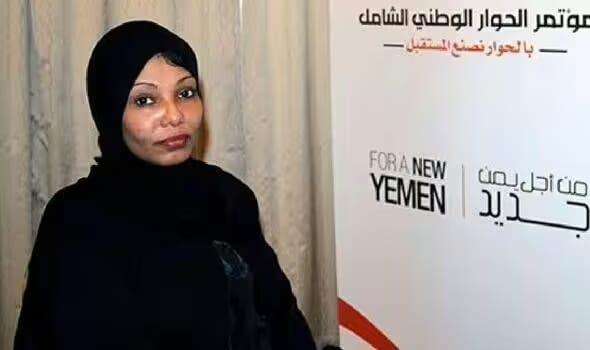
The National Dialogue of 2013 offered a glimmer of hope, with Noora participating as a delegate advocating for women's rights and representation . Her efforts contributed to securing a thirty percent quota for women in government institutions and the approval of a law granting divorced women housing rights. Yet progress toward eliminating child marriage has remained elusive, with legislative efforts repeatedly stalled by parliamentary opposition.
As global attention increasingly focuses on Yemen's humanitarian crisis, activists like Noora continue to press for meaningful change. The Global Programme to End Child Marriage, supported by UNICEF and other international organisations, operates in twelve countries with high rates of child marriage, including Yemen.Their approach emphasises girl empowerment, community engagement, and systemic reform.
Yet as Noora herself has observed, legal reform alone cannot solve the problem. "We need a complete change in culture," she told reporters. "The legal marriage age has been 15 for some time, but my mother was first married at nine, and divorced by 10" . The intergenerational nature of the trauma is evident in her own family history, with practices persisting despite decades of advocacy.
Now a grandmother, Noora continues her campaign, speaking out through media appearances and advocacy work, determined that her granddaughter will not repeat her experience. "I refuse to live under the ruins of my past," she has declared, a testament to the resilience that has carried her from child bride to advocate for a generation of Yemeni girls still at risk.
With Yemen's ongoing conflict having displaced millions and deepened poverty, the drivers of child marriage have intensified. The humanitarian crisis has left families even more vulnerable to desperate measures, making legislative efforts both more urgent and more difficult to implement. As Noora's story illustrates, behind the statistics lie real lives, real suffering, and a long road toward cultural transformation that remains only partially travelled.
Daily Dazzling Dawn has verified all information contained in this report. Names, dates, and specific claims are based on documented accounts and supporting statistical data from recognised international organisations, ensuring that this investigative report meets the highest standards of journalistic integrity and factual accuracy.


.jpg)

.jpg)