

.jpg)



.svg)
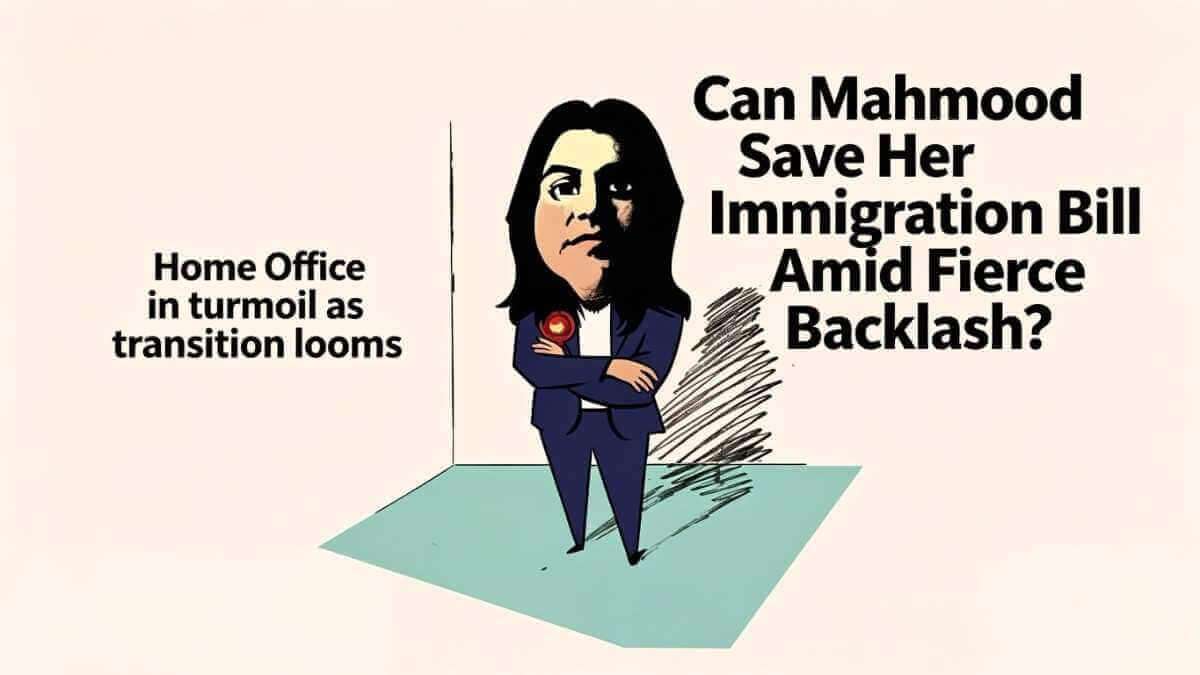
The UK government's newly unveiled immigration crackdown faces immediate scrutiny over systemic loopholes that experts warn could mirror the widely documented structural issues within the British student finance framework.
The Home Office has formally detailed provisions within the upcoming Immigration and Asylum Bill, introducing a flat-rate £10,000 financial obligation levied upon adult asylum seekers for state-funded accommodation and subsistence. Under the framework, permanent settlement eligibility is strictly contingent upon liquidating this balance once a claimant transitions into the legal workforce.
Home Secretary Shabana Mahmood defended the strategy as a critical rebalancing of public finances, stating to journalists that the fiscal burden of asylum infrastructure on British taxpayers has reached unsustainable levels. She emphasised that while state support remains a fundamental right, it carries an immutable responsibility, adding that once individuals gain the capacity to contribute, the state fully expects them to repay the generosity extended by the public.
However, political analysts operating behind the scenes suggest the legislative push is fundamentally a defensive electoral maneuver designed to neutralise the populist momentum of Nigel Farage's Reform UK, which has consistently penalised the centre-left administration on border control metrics.
Investigative assessments conducted by the Daily Dazzling Dawn reveal deep-seated structural parallels to the UK student loan system, highlighting vulnerabilities where the policy may collapse under its own bureaucratic weight. Because the recovery mechanism relies entirely on means-tested income thresholds, the state faces an uphill battle in active debt collection.
Statistical models from independent researchers confirm that merely 13 per cent of refugees achieve an income exceeding £20,000 within five years of securing legal status. The remaining 87 per cent either remain entirely outside the formal employment market or subsist on minimal wages falling well below standard repayment thresholds. Furthermore, health complications and severe mental health conditions prevalent within the claimant demographic are legally projected to exempt a vast cohort from active workplace participation, rendering the debt technically unrecoverable.
Legal expert Barrister Salah Uddin Sumon told to Daily Dazzling Dawn, the bill expressly protects individuals from being driven into absolute destitution, meaning any drop in income or long-term illness will automatically suspend monthly deductions managed via HM Revenue and Customs or the Department for Work and Pensions.
The financial reality of the scheme appears increasingly performative when contrasted against real operational costs. Figures verify that maintaining an individual within temporary hotel infrastructure exceeds £50,000 annually, compared to roughly £12,000 within standard houses in multiple occupation.
Shadow Home Secretary Chris Philp dismissed the policy as an uncredited imitation of previous opposition proposals, remarking to journalists that the administration has spent two years tinkering at the margins of enforcement while failing to execute robust deportations.
The immediate next phase rests in Parliament, where the legislation faces intense constitutional hurdles. Beyond debt collection, the bill seeks to severely restrict reliance on the European Convention on Human Rights to block removals, streamline age verification protocols, and establish a consolidated appeals route.
As the treasury prepares to absorb the administrative overhead of managing thousands of micro-debts for a historically low-income population, the political battle now shifts to whether this law will ever yield meaningful revenue or simply remain a symbolic deterrent.