




.svg)
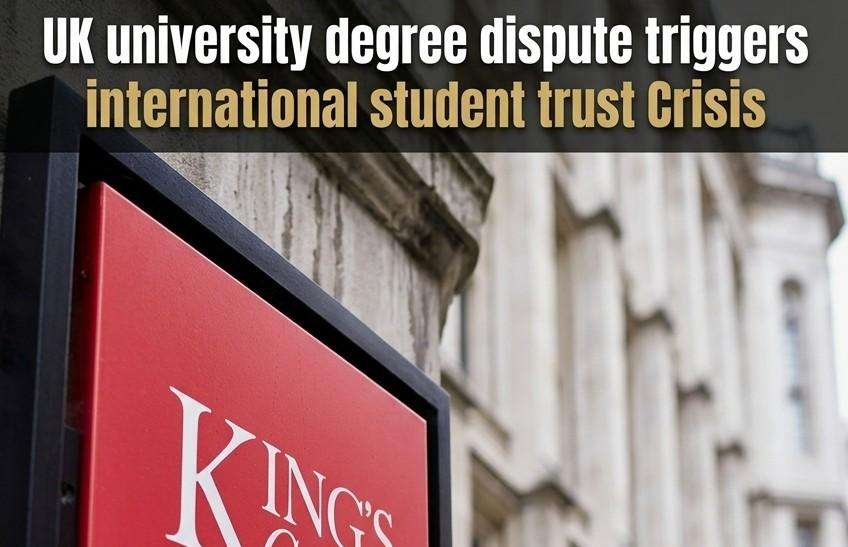
A high-stakes legal challenge mounted against King's College London has illuminated a growing anxiety among international scholars regarding the institutional transparency and marking integrity of prestigious British universities.
As exclusive investigations by Daily Dazzling Dawn reveal, the impending High Court judicial review proceedings spearheaded by 23-year-old Business Management alumna Ceana Agbro have evolved into a critical bellwether case. The dispute holds significant weight for families from India and other non-domestic markets, who collectively inject vast capital into the United Kingdom’s higher education sector on the implicit expectation that academic assessments remain transparent, consistent, and fair. With elite universities aggressively expanding their international recruitment footprints, the profound administrative flaws exposed in this litigation present systemic questions about the basic consumer rights of overseas students paying premium tuition fees.
The conflict originated when the university's internal portal displayed a definitive calculation positioning the undergraduate for a coveted First-Class Honours degree based on an apparent 70 percent average. Following subsequent systemic updates, the classification declined, pulling her overall qualification down to an upper second-class, or 2:1 degree. When challenged, internal administrative staff initially assured the student via email that her top marks were secure and that the downward shift was merely a digital aberration. However, just days before her scheduled graduation ceremony, the university administration shifted its stance entirely, stating that the lower classification was correct because a peer-review component had been omitted from the original calculation.
A deeper look into the verified evidence reveals severe institutional delays and admitted system failures that have further intensified the legal dispute. Academic records confirm that university representatives eventually conceded the peer-review digital portal had been erroneously hidden from the student’s profile throughout the full module duration, completely obscuring the feature from her account and blocking her from monitoring the moderation process. Compounding this procedural unfairness, statutory data requests submitted under Subject Access Regulations languished for 226 days—vastly exceeding the legally mandated 30-calendar-day compliance window. Furthermore, internal university appeal verdicts were heavily disrupted, with the Stage 1 academic appeal concluding 12 days past the standard university window, and the Stage 2 academic appeal extending to an overdue closure a staggering 112 days delayed.
Faced with a projected £25,000 bill for external legal representation, the graduate elected to pursue the High Court action independently. She noted that her isolating effort is driven by a desire to protect the wider student community from arbitrary procedural anomalies. "I want people to understand this isn't even about the grade – it's about the process and it's been unjust," she told journalists, adding, "I'm doing this for the students before me and after me — I don't want it to happen to anyone else."
The institution has consistently defended its academic hierarchy while expressing regret over the fractured communications. A university spokesperson told journalists: "We take all matters relating to student grades and academic appeals very seriously to ensure fairness for all of our students and we have sincerely apologised for the error in email correspondence that occurred, however this error is separate from and does not affect the outcome of investigated procedures." The administration added that the underlying evaluation had been thoroughly examined, firstly through their own robust internal processes and secondly by the Office of the Independent Adjudicator for Higher Education, which ultimately upheld the university's position.
The case now moves into a definitive phase as formal Judicial Review filings arrive before the bench. With a rescheduled graduation date looming, the immediate next steps will see the High Court determine whether King's College London's broken regulatory timelines and hidden portal mechanisms constitute structural prejudice. The upcoming decision is set to establish a clear judicial precedent for how far British universities can rely on automated or peer-led marking metrics when a student's international career trajectory hangs in the balance.