





.svg)
As the 2026 Hajj season approaches its spiritual zenith, the operational landscape in Medina and Makkah has shifted toward a sophisticated integration of high-tech accessibility and stringent preventative medicine.
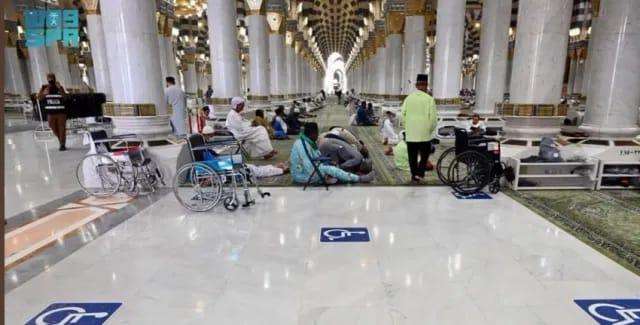
In an exclusive investigation into the final stages of Hajj preparations, it has been revealed that the Prophet’s Mosque in Medina is moving beyond basic assistance to a fully integrated "barrier-free" ecosystem. This year’s strategy is characterized by the deployment of specialized electric vehicle fleets and an intricate network of dedicated transit corridors designed to isolate vulnerable pilgrims from the primary crowd surges.
The General Authority for the Care of the Affairs of the Prophet’s Mosque confirmed to journalists that these "mobility arteries" are now synchronized with real-time crowd-density sensors. This allows for the dynamic rerouting of manual and electric wheelchairs to ensure that elderly and disabled worshippers can reach the heart of the mosque without navigating the traditional bottlenecks of the central prayer halls.
Beyond physical hardware, the introduction of multilingual digital orientation is setting a new standard for international diplomacy within the holy sites. Interactive maps, triggered by localized QR codes, now provide real-time guidance in 23 languages, effectively removing the communication barriers that historically complicated emergency responses and personal navigation for non-Arabic speakers.
While the focus in Medina remains on movement, the broader administrative mandate has pivoted toward an uncompromising health defense. A spokesperson for the Ministry of Health told journalists that the granting of Hajj work permits is now strictly tethered to a ten-day immunization window. Specifically, all personnel—ranging from security forces to logistical contractors—must demonstrate proof of the meningococcal vaccine. This mandate is designed to create a "human firewall" against potential outbreaks during the mass gatherings, with the added requirement of updated COVID-19 boosters and seasonal influenza shots to ensure the resilience of the workforce.
The logistics of this health drive have been decentralized to ensure 100% compliance. Medical units have been embedded directly within military and university institutions, allowing workers to be vaccinated at their duty stations. This proactive "workplace-first" medical strategy is a direct response to the projected heat index, which experts suggest could reach 48°C, necessitating a workforce that is not only vaccinated but also physically optimized for extreme endurance.
For the pilgrims themselves, the narrative of Hajj 2026 is one of digital precision and physical preparation. Seasoned observers and religious guides have noted that the coming weeks will see an unprecedented reliance on the "Nusuk" digital ecosystem. The next phase of the operation involves the strict enforcement of time-slotted entries for the Rawdah at the Prophet’s Mosque, a measure intended to prevent the heat-related exhaustion that often occurs during prolonged outdoor queuing.
Reporting for the Daily Dazzling Dawn, the focus now shifts to the "last mile" of the pilgrimage journey. With 3.1 million seats allocated across 12,000 flights, the transition from arrival gates to the prayer rugs of Medina is being managed with surgical accuracy. The integration of 74 high-capacity escalators in Mina and the deployment of field guidance teams in the central area of Medina suggest that the 2026 season will be defined by a "zero-friction" philosophy, prioritizing the safety of the believer over the traditional challenges of the desert climate.