





.svg)
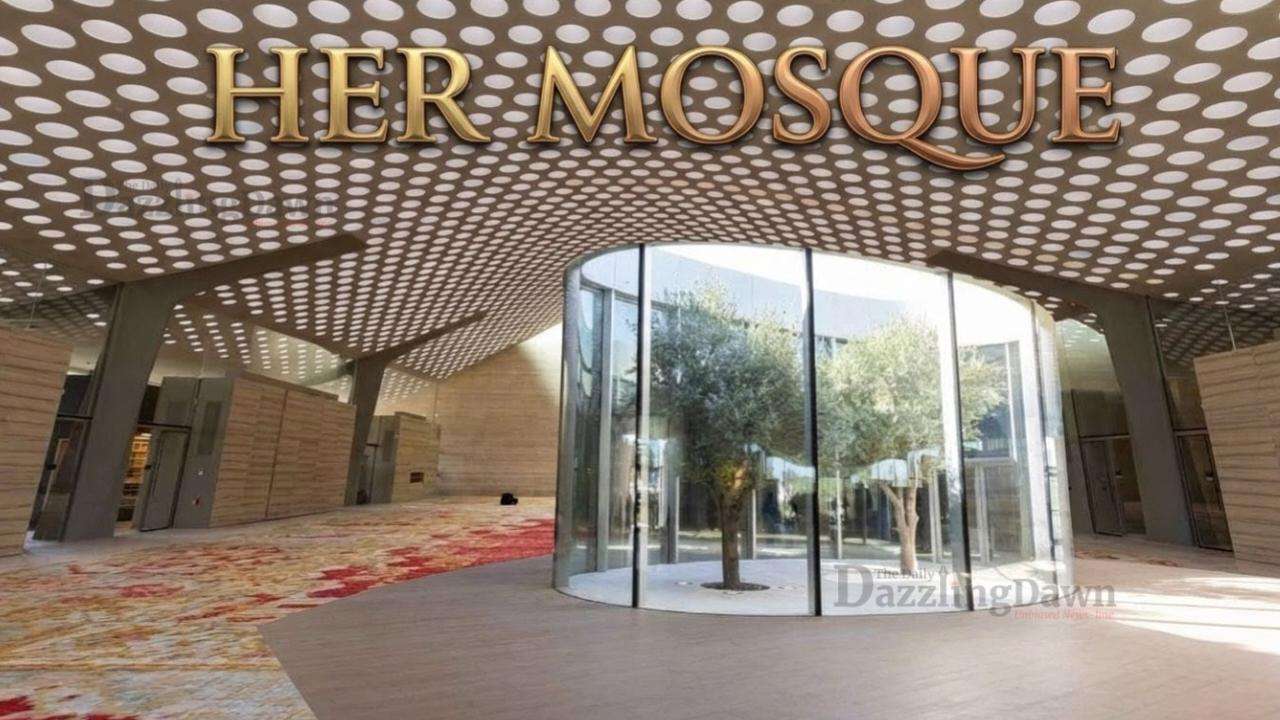
As Ramadan 2026 begins, the world's first purpose-built women-only mosque is unveiling never-before-published initiatives that transform how women engage with faith, high-tech architecture, and global scholarship.
The Living Architecture of Faith
While the world initially saw Al-Mujadilah as a structural marvel, the architectural narrative has evolved far beyond its 5,500 light wells and New Zealand wool carpets. This year, the mosque’s centerpiece—a 39-meter steel-mesh kinetic minaret—has become a viral symbol of the "modern Mu'adhin." Unlike traditional static towers, this structure features a motorized speaker cluster that physically ascends the tower five times daily to broadcast the Adhan before descending back into the tranquility of the lush gardens. This "human-less ascent" is a meticulously designed tensegrity structure that mirrors the mosque’s philosophy of elevating women’s voices through a blend of technology and sacred art.
Ramadan Intensives and Intellectual Sovereignty
Inside the 4,600-square-meter complex, the 2026 Ramadan schedule has moved past basic workshops into "Intellectual Sovereignty" sessions. Under the theme "Muslim Women Navigating Theology, Ethics, and Society," the center is hosting the second Jadal Summit. This isn't just a prayer group; it is a multidisciplinary research engine that recently brought over 100 delegates from five continents to Doha. Current unpublished initiatives include the "Being Muslim Support Circle" specifically for female converts and "Jadal Talks"—a TEDx-style format where scholars present peer-reviewed research on how classical Islamic law applies to 21st-century ethics, AI, and climate change.
The Unseen Economy of Knowledge
A major development not widely reported is the 2026 Memorandum of Understanding signed between Al-Mujadilah and Qatar’s Ministry of Social Development and Family. This partnership, witnessed by founder Sheikha Moza bint Nasser, is launching an aggressive awareness campaign to revive the historical "lost narratives" of female Islamic role models. By utilizing the 8,000-volume specialized library, the center is currently digitizing rare texts authored by women from early Islamic eras, aiming to create the world’s largest open-access digital archive of female-authored religious scholarship by the end of this year. Additionally, the mosque has quietly launched "More Muslim," a narrative audio documentary podcast that blends storytelling with historical reflection to "correct stereotypes" through women's lived experiences.
Next Phase: Global Research Clusters
What is happening next marks a shift from a local mosque to a global institute. Al-Mujadilah is currently finalizing its first "Research Clusters"—collaborative teams of international scholars who will convene in Doha this summer to publish new frameworks on women's health and legal ethics. For the remainder of Ramadan 2026, the mosque is expanding its "Tarawih Terrace," a specialized outdoor area that now utilizes a recycled irrigation micro-cooling system. This allows up to 1,300 worshippers to pray in open-air comfort despite rising desert temperatures, ensuring that women are no longer guests in a "side annex," but the primary focus of the spiritual landscape.