




.svg)
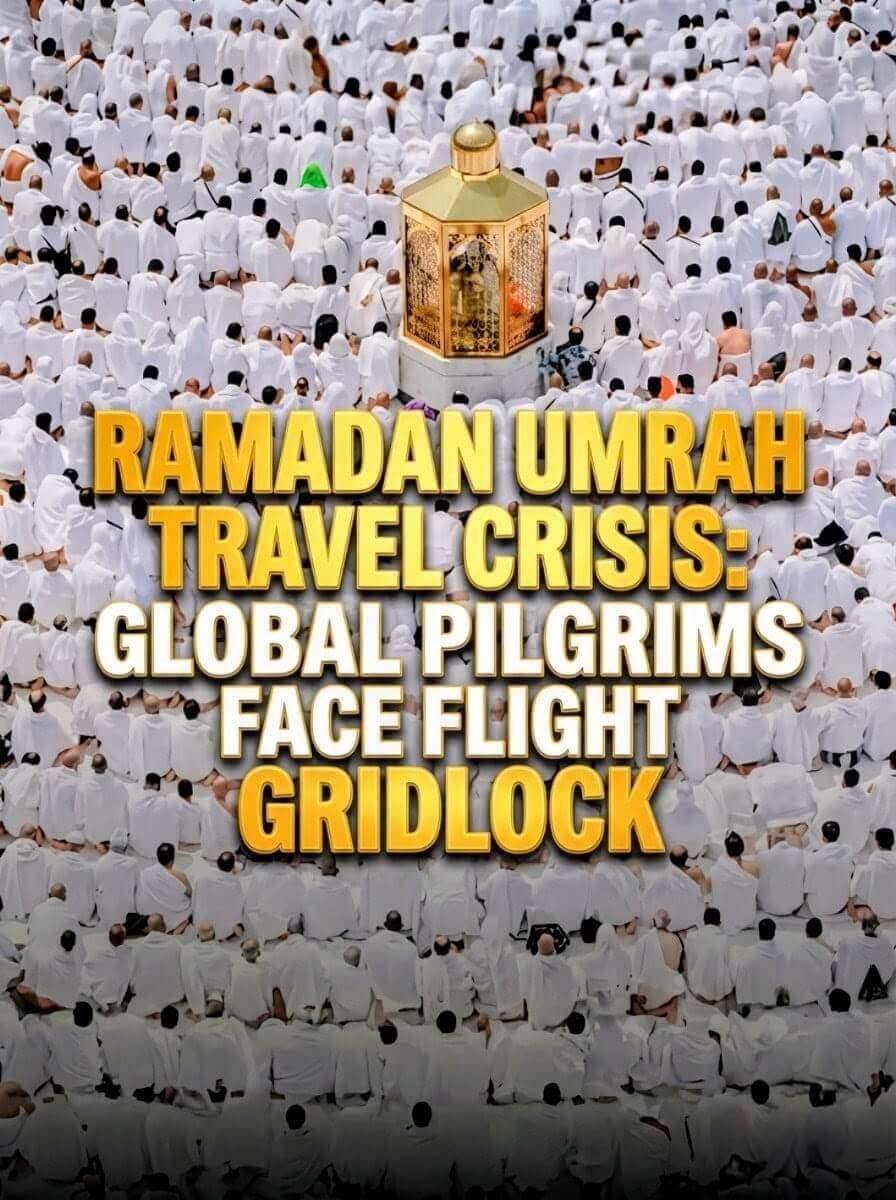
The spiritual peak of Ramadan has been met with unprecedented logistical challenges as escalating regional tensions trigger a massive suspension of international aviation.
The sudden closure of major transit hubs in Abu Dhabi, Dubai, and Doha following military developments on March 1, 2026, has left an estimated 58,000 pilgrims navigating a landscape of canceled flights and mounting uncertainty. For Western pilgrims from the UK, USA, and Europe, the situation is particularly complex due to the heavy reliance on Gulf carriers and the shifting security directives issued by their respective home government's, Daily Dazzling Dawn understand.
Urgent Safety Directives for British and Western Nationals- The British government issued a critical update on March 2, 2026, advising all nationals currently within Saudi Arabia to stay at home or remain in their accommodations due to reported missile activity in the wider region. This directive marks a significant shift in the safety profile for the millions of devotees currently observing the holy month. While Makkah and Madinah themselves remain physically secure, the surrounding airspace has become a primary concern for international regulators. Travelers from the United States and Europe are being urged by consular officials to register their presence via emergency notification systems and avoid attempting to reach airports until flight resumes are officially confirmed by carriers.
The Financial Strain of Canceled Ramadan Journeys- For those who have already paid for flights, hotels, and visas but are now grounded, the path to a refund is dictated by "Force Majeure" clauses. Most major airlines, including Etihad and Emirates, are currently offering hotel accommodations to transit passengers stranded in hubs, but those yet to depart from London, New York, or Paris face a different hurdle. Travel experts suggest that standard insurance may not cover "acts of war" unless specific "War Risk" riders were purchased. Travelers are advised to keep all receipts and digital records of cancellations, as the surge in fuel surcharges—projected to add between $500 and $800 to future tickets—will make rebooking a significant financial burden.
Global Response and the Land Route Alternative- While Western pilgrims wait for clear skies, other nations are implementing emergency repatriation strategies. Indonesia has mobilized its Hajj Affairs Office to guarantee the safety of its 3,000 stranded citizens, while approximately 200 Iraqi pilgrims successfully returned home via overland bus routes from Medina. In India, the Maharashtra State Minorities Commission is petitioning for federal intervention to assist 5,000 stranded devotees. However, for UK and USA pilgrims, land routes are not a viable option, leaving them entirely dependent on the reopening of the high-altitude corridors over the Gulf or the implementation of "long-haul" bypass routes that add up to five hours of flight time.
Future Outlook for the Last Ten Days of Ramadan- The immediate focus for Saudi authorities and the Ministry of Hajj and Umrah is the management of the "Ashras," the final ten days of Ramadan, which typically see the highest influx of visitors. Current indicators suggest that new departures from the West may be halted through the first week of March to prioritize the evacuation of those already in the Kingdom. Prospective pilgrims are being told to monitor the Nusuk app incessantly for real-time updates. The global Muslim community now faces a period of "sabr" (patience) as diplomatic efforts work to de-escalate the regional friction that has momentarily severed the path to the Kaaba.