






.svg)
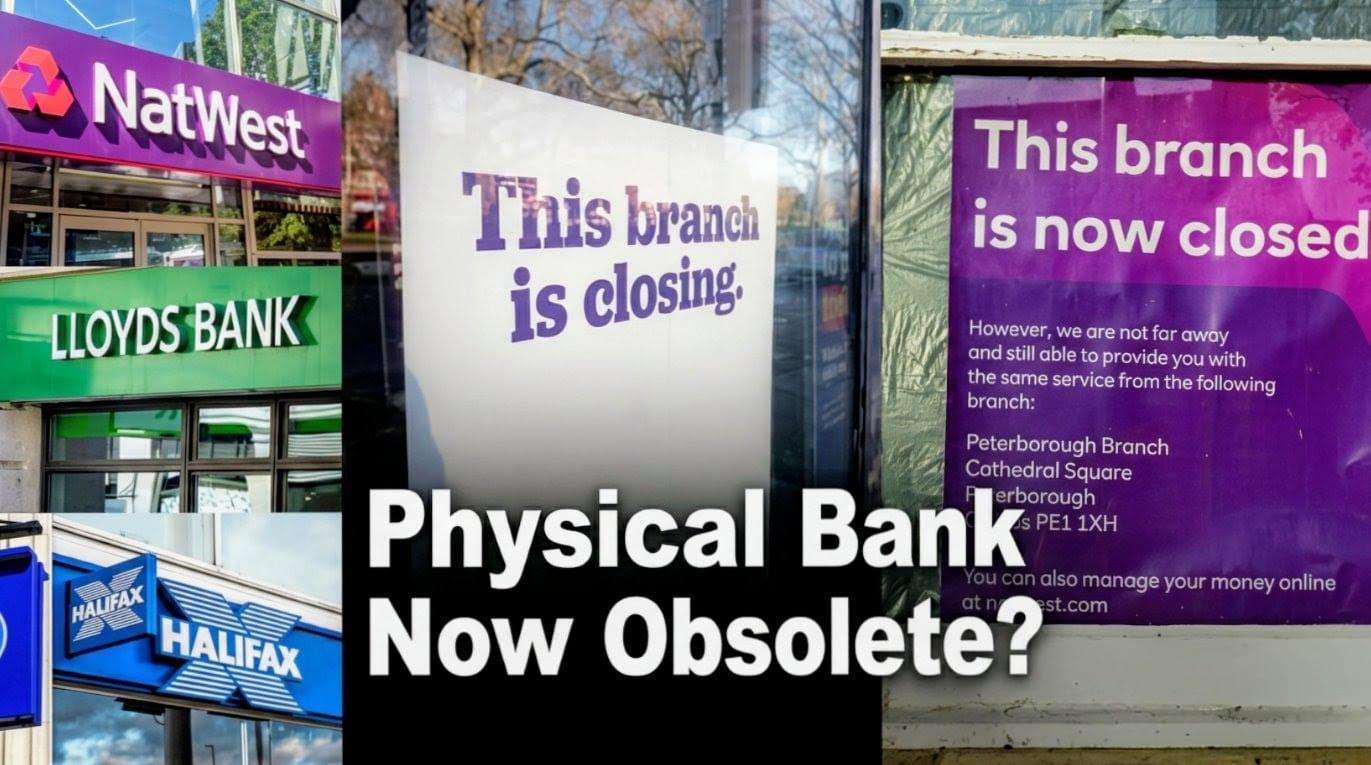
Santander UK’s recent announcement to shutter another 44 branches is not merely a corporate cost-cutting exercise; it is the final whistle for a century-old era of face-to-face retail banking.
The Digital Exodus and the Efficiency Mandate
While public outcry often focuses on the loss of local identity, the data driving these closures is cold and clinical. Since 2020, the UK has witnessed a tectonic shift in consumer behavior. It is no longer just "the youth" using apps; the silver generation has been forced into digital literacy, and they haven't looked back. For a Tier-1 bank like Santander, maintaining a Victorian-era brick-and-mortar footprint in a world of instant biometric payments is an unsustainable legacy burden. The primary driver is a "double-squeeze": the massive overhead of prime real estate combined with a 70% drop in footfall across regional hubs.
Beyond the Balance Sheet: A New Model of Trust
Critics argue that banks are abandoning the vulnerable, but the industry counter-argument is the rise of the "Banking Hub." This new communal model, where multiple brands share one space, is the evolution of the physical branch. Santander’s move highlights a pivot toward centralized advice centers rather than transactional teller windows. The "High Street Bank" is transforming from a place where you deposit a cheque into a place where you only go for high-value, complex emotional decisions—like a first mortgage. Everything else has been swallowed by the smartphone.
The Last Stand of the Regional Branch
The specific locations targeted in this wave span from the tip of Cornwall to the north of Scotland, signaling that no region is immune. While some closures are imminent, others have been pushed to 2027, offering a temporary reprieve that serves more as a "managed decline" than a survival strategy. For towns losing their last remaining bank, the impact is a psychological blow to the viability of the British High Street.
Comprehensive Schedule of Santander Branch Closures
The company revealed a list of locations affected and the dates when closures are due to take place.
In late April 2026, the shutters will come down in Berwick Upon Tweed, Boston, Evesham, Mold, Ramsgate, and Woking on the 28th. These will be followed on the 29th by Bangor (County Down), Bridgwater, Kirkintilloch, Melton Mowbray, Newbury, Scunthorpe, and Tonbridge.
May 2026 sees the heaviest volume of exits. On May 5th, Bishop Auckland, Gosport, Haverfordwest, Huntingdon, Pontefract, and Welwyn Garden City will close. May 6th marks the end for Glengormley, Leyland, Mansfield, Merthyr Tydfil, Northallerton, and Ringwood. The middle of the month sees a wave on May 12th including Andover, Bridgend, Enniskillen, Macclesfield, and Stratford Upon Avon. May 13th follows with Golders Green, Cwmbran, Heswall, Redditch, and Stranraer. The final May closures occur on the 19th for Banbridge, Newton Abbot, and Stafford, followed by Liskeard and Shirley on the 20th.
The bank has also identified four key locations where the transition will be slower, with closures scheduled for the end of January 2027: Leighton Buzzard, Ormskirk, Whitehaven, and Wilmslow.
The Verdict
We are witnessing the "Amazon-ification" of finance. The reason branches are closing is not just because banks want to save money—it’s because the British public has fundamentally changed how they value their time. Convenience has officially killed the queue.