





.svg)
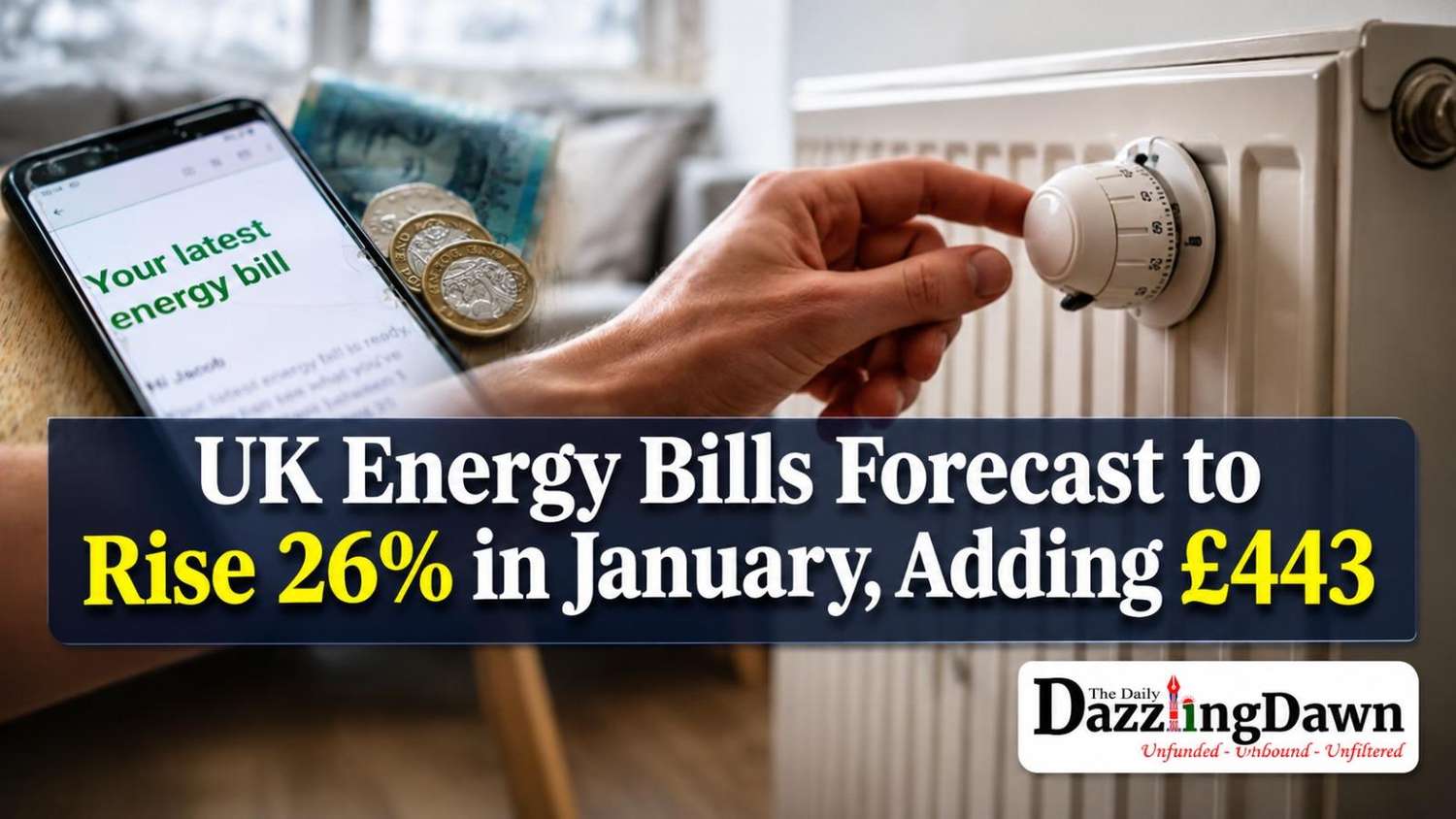
British households across Great Britain face a potential 26% increase in energy costs from January 2027, with the typical annual dual-fuel bill forecast to rise by £443 to £2,166, according to a new projection published by energy consultancy Cornwall Insight on Wednesday, 18 November 2026. The predicted increase comes amid elevated international wholesale gas prices, disruption linked to the continuing Middle East conflict and concerns over European gas storage levels, threatening to deepen the cost-of-living pressures during the winter months.
The forecast represents one of the most significant quarterly increases in household energy costs in recent years. It would take the annualised price cap from its current level of £1,723 to £2,166, placing additional financial pressure on millions of households already struggling with housing, food, transport and other essential expenses.
The projection is not yet an officially confirmed price cap. Britain's energy regulator, Ofgem, is expected to announce the rates applicable between January and March 2027 on 25 November.
Cornwall Insight's latest assessment represents a substantial upward revision from its earlier forecast. In late September, the consultancy had anticipated a 16% increase, which would have taken the typical annual bill to approximately £1,999.
However, movements in international wholesale energy markets during October prompted analysts to revise their expectations. Higher gas prices, geopolitical uncertainty and concerns about Europe's ability to maintain sufficient gas reserves ahead of winter have contributed to the deterioration in the outlook.
The latest projection also exceeds the Bank of England's November estimate of approximately £2,150 for household energy costs, highlighting the growing uncertainty surrounding Britain's inflation and household expenditure outlook.
Craig Lowrey, retail markets principal at Cornwall Insight, said the timing of the expected increase would be particularly difficult for consumers.
"After already climbing in October, energy bills look set to rise again in the new year, and the timing could hardly be worse, with colder weather in January pushing up energy use and households already dealing with the cost-of-living crisis," he said.
Lowrey added that international developments thousands of miles away continued to influence the amount British consumers paid for domestic energy.
The anticipated increase is closely connected to developments in international energy markets. Britain remains exposed to movements in wholesale gas prices, which influence the cost of supplying electricity and heating to households.
The continuing conflict in the Middle East has contributed to uncertainty over energy supplies and international trading conditions. Concerns about disrupted exports and comparatively low European gas storage levels have added pressure to wholesale markets.
These developments have consequences beyond the immediate regions affected by geopolitical tensions. International gas markets are interconnected, meaning supply disruptions, increased competition for liquefied natural gas and changing shipping conditions can influence prices paid by energy suppliers in Europe and the United Kingdom.
Ofgem reviews the energy price cap every three months. Its calculations take account of wholesale energy costs, network charges, operating expenses and other relevant costs, including policy-related components.
Importantly, the price cap does not establish a fixed maximum annual bill for every household. Instead, it limits the unit rates and standing charges suppliers can charge customers on standard variable tariffs. Actual expenditure therefore depends on household consumption, property size, heating arrangements and tariff details.
The current annualised cap of £1,723 already represents a 4% increase compared with the summer level, following an earlier adjustment in October.
The latest energy forecast arrives at a challenging moment for Britain's wider economic outlook. Figures published by the Office for National Statistics on 18 November show that the Consumer Prices Index (CPI) increased by 3.6% in the 12 months to October 2026, compared with 3.5% in September.
Higher motor fuel prices, particularly petrol and diesel, contributed to the increase in the annual inflation rate. The latest figures underline the difficulty facing policymakers as households continue to experience elevated living costs.
A substantial increase in domestic energy prices could create further inflationary pressure during the first quarter of 2027. Higher household heating and electricity expenses may also increase operating costs for businesses, particularly manufacturers, hospitality companies and other energy-intensive industries.
The timing could complicate wage negotiations. If employees seek higher salaries to compensate for increased household expenditure, employers may face additional labour costs. Businesses could subsequently pass some of those costs on to consumers, potentially adding to inflationary pressures.
For the Bank of England, the challenge will be balancing the need to control inflation against the risk that higher borrowing costs could further weaken household spending and economic activity.
The forecast also places renewed attention on the Government's efforts to reduce household energy expenditure.
Under the measures announced in the 2026 Budget, eligible households are due to receive a one-off £100 Household Energy Payment from January 2027. The scheme is expected to support up to 20 million households in England, particularly those in council tax bands A to D, alongside funding arrangements for devolved administrations.
The Government has also extended the reduction in VAT on domestic electricity bills until July 2027. According to the Budget documents, this measure is expected to reduce the annualised Ofgem price cap by approximately £50 from April 2027.
However, these measures do not eliminate the potential January increase. The £100 payment is a separate financial contribution rather than a reduction in the underlying wholesale cost of energy, while the VAT measure is expected to influence the cap at a later stage.
For households facing rising heating costs, the difference between temporary financial assistance and a sustained reduction in energy prices will remain significant.
If Cornwall Insight's projection is reflected in Ofgem's official announcement, households on standard variable tariffs could face substantially higher energy costs during the coldest part of the year.
The potential increase will be particularly difficult for pensioners, low-income families, people living in poorly insulated properties and households that depend heavily on gas heating.
Businesses may also experience indirect consequences as higher utility expenditure reduces disposable income and consumer spending. Retailers, hospitality operators and companies selling non-essential products could face weaker demand if households redirect a larger share of their budgets towards essential bills.
Financial markets will also be watching the developments closely. Persistent energy-driven inflation could influence expectations surrounding future Bank of England interest-rate decisions and demand for inflation-protected government bonds.
The immediate priority, however, remains the official Ofgem announcement on 25 November. Until then, the £2,166 figure should be treated as an industry forecast rather than a confirmed tariff.
For millions of British households, the January adjustment could determine how much financial flexibility remains available during the winter. Daily Dazzling Dawn will continue monitoring Ofgem's announcement and the Government's response as the next stage of Britain's energy-price outlook becomes clearer.

_1.jpg)
.jpg)

.jpg)
.jpg)