






.svg)
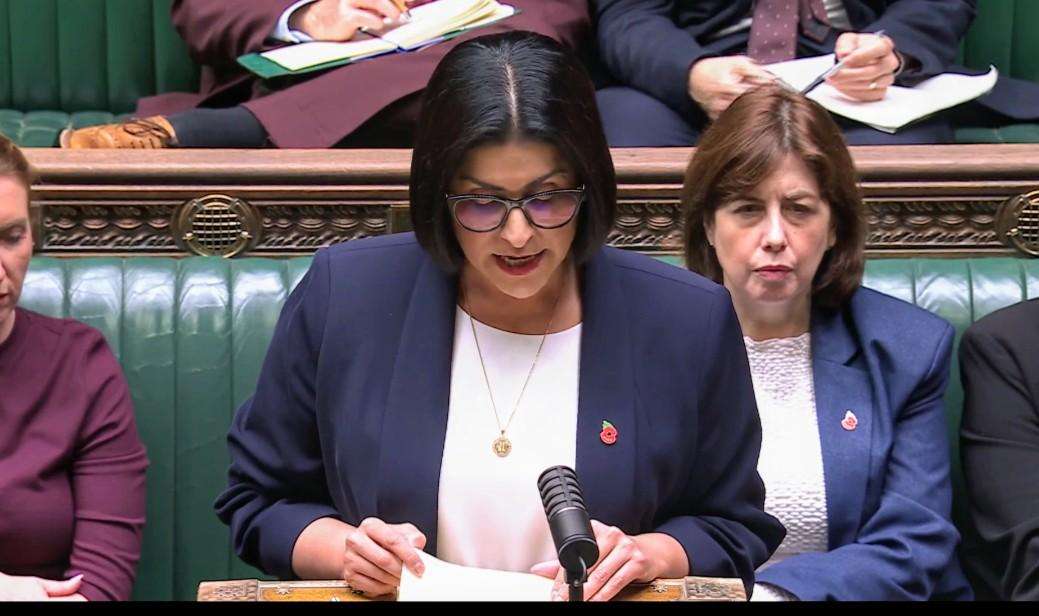
Home Secretary Shabana Mahmood unveiled sweeping revisions to the United Kingdom's Indefinite Leave to Remain (ILR) rules and settlement income thresholds before the House of Commons in Westminster on 2 November 2026, doubling the standard qualifying residency wait from five years to 10 years for approximately 500,000 legal migrants. Following intense warnings from senior Cabinet ministers and the Royal College of Nursing that a planned 15-year wait would compromise Prime Minister Andy Burnham's National Care Service, the Home Office introduced a conditional salary threshold exemption allowing overseas care workers earning at least £25,000 a year to retain their five-year settlement pathway. Under the newly established Earned Settlement model, applicants across all visa categories must now satisfy stringent statutory requirements, including an unblemished criminal record, a sustained history of National Insurance contributions, zero debt owed to the taxpayer, and English language proficiency equivalent to an A-level qualification. While Downing Street maintained that the reforms restore fairness and fiscal control ahead of the February 2027 implementation deadline, public law barristers and migrant advocacy groups confirmed they are preparing High Court Judicial Review proceedings to challenge the retrospective application of the rules on half a million workers and dependents.
Speaking from the Commons despatch box, Mahmood, the Labour Member of Parliament for Birmingham Ladywood, invoked her parents' migration from rural Kashmir over five decades ago to argue that British immigration policy must balance fair play for legal arrivals with fiscal protection for domestic taxpayers. However, the operational terms of the Earned Settlement policy eliminate the longstanding convention of automatic permanent residency after five years of lawful employment. By tying the five-year care worker exemption strictly to a £25,000 annual income threshold and sustained National Insurance records, the policy locks lower-paid or part-time care staff into a decade-long wait alongside workers in other sectors. Furthermore, alongside requiring an A-level standard in English as a foreign language, the Home Office confirmed it has abandoned a previously proposed mechanism launched during the November 2025 consultation that would have allowed migrants to reduce their qualifying residency period through community volunteering. Officials told to journalists that respondents and voluntary-sector charities raised severe safeguarding and verification concerns during the review of 200,000 consultation responses, warning that tying immigration status to charity work risked pressuring vulnerable residents into unpaid labour.
While up to 1.6 million visa holders formed the broader scope of the Whitehall review, Daily Dazzling Dawn learned that approximately 500,000 Skilled Worker and Spouse visa holders who entered Britain between 2021 and 2022 will suffer the direct financial consequences of the retrospective 10-year rule, alongside hundreds of thousands of family dependents affected indirectly. Many of these residents are less than 12 months away from their original five-year threshold after renewing their initial 33-month or three-year visas under the statutory expectation that their next application would secure settlement. Instead of paying a single £2,885 settlement fee, single workers now face two additional visa extension cycles costing more than £8,000, comprising the £1,035 annual Immigration Health Surcharge and £1,500 renewal fees. For a family of four, the total financial outlay reaches £25,000 alongside £5,000 in mandatory employer Immigration Skills Charges. Furthermore, international graduates who completed six years on Student and Graduate visas before spending two years on a Skilled Worker route face seeing their remaining wait extended from three years to eight years, resulting in 16 years of temporary status. The prolonged timeline also doubles the risk for innocent employees whose sponsors lose their licences during UK Visas and Immigration compliance audits, leaving them just 60 calendar days under Appendix Continuous Residence to secure a new licensed employer at higher salary thresholds or face automatic refusal.
Political analysts and senior figures within the governing party have sharply criticised the administration for surrendering to right-wing electoral narratives over a demographic pressures argument that statistical evidence does not substantiate. Although Mahmood attributed border mismanagement to the previous Conservative administration and Conservative Shadow Home Secretary Chris Philp accused ministers of yielding to the political left, Labour's shift toward restrictive settlement baselines and rigid income thresholds stems directly from defensive ballot battles against right-wing populists. That electoral concession comes despite a decisive weakening of the political right following Andy Burnham's assumption of the premiership from Keir Starmer on 20 July 2026. Polling conducted by Ipsos between 15 and 22 October 2026 places Labour eight points ahead on 32%, with the Conservatives on 24% and Reform UK falling to third on 20%, while Opinium data from 21 to 23 October 2026 records Labour on 30% and Reform on 22%. Furthermore, Nigel Farage holds a -28 net approval rating and a -42 net favourability score in YouGov's 20 October tracker, trailing Burnham 41% to 21% as preferred Prime Minister, while activist Stephen Yaxley-Lennon, known as Tommy Robinson, awaits sentencing on 16 December 2026 after his 28 October conviction at Southwark Crown Court for harassing journalists.
Despite Treasury projections following Chancellor John Healey's 28 October Autumn Budget suggesting that care worker settlement between 2026 and 2030 could cost £10 billion in lifetime benefits—a figure supported by Justice Secretary Alex Norris and Cabinet Office Minister Pat McFadden—workforce data demonstrates that Britain faces an acute labour deficit rather than an oversupply of permanent settlers. Prime Minister Burnham acknowledged to ITV that legal migration had already fallen sharply and must follow economic shortages. Analysis by The King's Fund think tank revealed that international care recruitment is projected to fall to just 10,000 workers this financial year amidst declining domestic recruitment and 150,000 sector vacancies. Following an intervention by the Royal College of Nursing and warnings from Housing Secretary Angela Rayner on 30 October that retrospective rule changes are un-British—backed by Energy Secretary Miatta Fahnbulleh, Work and Pensions Minister Alison McGovern, Unison General Secretary Andrea Egan, and over 100 Labour MPs—the Home Office granted the £25,000 income threshold carve-out for carers while still enforcing the 10-year delay on half a million workers across other vital sectors.
Migrant worker organisations and public law practitioners confirmed to Daily Dazzling Dawn that affected residents possess concrete legal avenues to challenge the retrospective enforcement of the 10-year rule and new income rules in the Upper Tribunal and the High Court Administrative Court. Because hundreds of thousands of skilled professionals relocated to Britain in reliance on explicit statutory commitments of a five-year pathway, claimants will file for a Judicial Review seeking a quashing order against the Statement of Changes in Immigration Rules. The primary legal challenge rests on the doctrine of substantive legitimate expectation established in R (HSMP Forum Ltd) v Secretary of State for the Home Department [2008] EWHC 664 (Admin), where Sir George Newman ruled that the government acted unlawfully by retroactively extending the Highly Skilled Migrant Programme settlement wait from four years to five years. While Government Legal Department barristers rely on Odelola v SSHD [2009] UKHL 25 to assert that new immigration rules apply to undecided applications, claimants are supported by Supreme Court and Court of Appeal precedents in R (Alvi) v SSHD [2012] UKSC 33, R (Munir) v SSHD [2012] UKSC 32, and Pankina v SSHD [2010] EWCA Civ 719, which enforce constitutional fairness and parliamentary scrutiny.
Daily Dazzling Dawn understands that legal teams representing migrant worker coalitions have initiated the statutory litigation process, which requires serving a Pre-Action Protocol letter within three months of the rule change, triggering a 14-to-21-day Home Office response window. If ministers refuse to grant full grandfathering protections for the 2021–2022 cohort, barristers will file for permission to proceed—taking two to four months—alongside applications for emergency interim relief within 14 days via Form N463 to suspend the rules pending a nine-to-14-month substantive High Court hearing. During ongoing litigation, migrants whose visas approach expiry must submit valid extension applications to preserve their lawful status and employment rights under Section 3C of the Immigration Act 1971. Furthermore, rather than waiting two to four years to petition the European Court of Human Rights in Strasbourg under Article 35, civil liberties organisations including Liberty, the Joint Council for the Welfare of Immigrants, and the Public Law Project can intervene directly in the UK High Court under the Human Rights Act 1998. Relying on Balajigari v SSHD [2019] EWCA Civ 673 and Saleh Ahmed Handule Ali [2024] EWCA Civ 372, legal representatives will argue that subjecting established tax-paying families to up to 16 years of precarious residency violates Article 8 rights to private and family life, the seven-year child residence rule under Appendix FM, Article 14 non-discrimination protections, and Article 1 of Protocol 1 property rights regarding thousands of pounds in forfeited visa fees.





.jpg)