
.jpeg)





.svg)
Tribunal upholds dismissal of veteran warden caught using late mother’s permit, exposing critical gaps in national parking integrity.
An investigation by Daily Dazzling Dawn has uncovered the systemic vulnerabilities exposed by the downfall of Senior Civil Enforcement Officer Mr D Patel, whose unsuccessful tribunal against the London Borough of Harrow unmasks a deeper crisis in municipal oversight. Armed with over two decades of experience monitoring and enforcing disabled parking regulations, Patel was uniquely positioned to exploit the very blind spots he was paid to protect. His transition from an arbiter of parking compliance to a convicted fraudster exposes how easily deceased citizens' credentials remain active, raising urgent operational questions for local authorities across the capital.
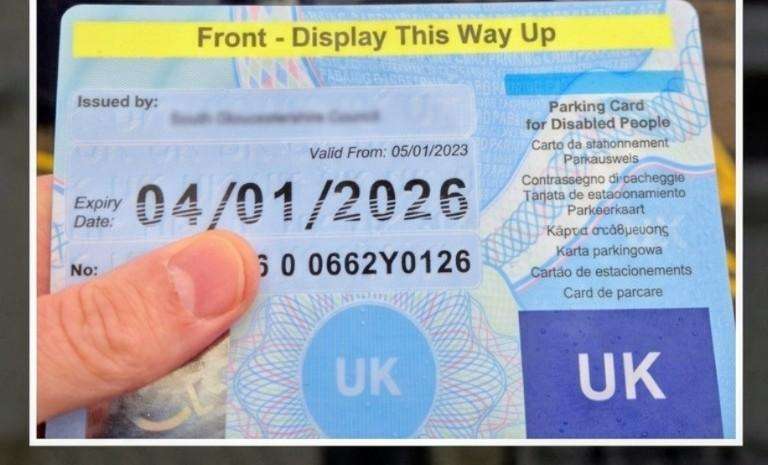
The legal battle reached its definitive conclusion when the Employment Tribunal officially published its judgment, rejecting Patel’s claim of unfair dismissal. The tribunal verified that Harrow Council acted well within the reasonable band of responses by dismissing him for gross misconduct following his magistrates' court conviction for misusing his late mother’s Blue Badge. Patel’s mother passed away on 31 May 2021, yet the permit remained inside his vehicle until a Penalty Charge Notice was pinned to his windscreen on 20 September 2021. The investigation revealed that Patel failed to notify his employers of the criminal charges, a direct breach of the employee handbook that senior management concluded constituted an irretrievable breakdown of trust.
Internal investigation records obtained for this report show that when cornered by investigators, Patel attempted to dismiss the incident as a mistake, shifting the blame to an aunt who he claimed placed the badge on the dashboard. He further asserted that he abstained from using payment machines or telephone apps due to confusion over pandemic-era parking relaxations. Disciplinary officials rejected these explanations, noting the hypocrisy of a twenty-year veteran failing to pay for parking while leaving a deceased person's badge fully accessible.
The role required an absolute standard of honesty and integrity, a council disciplinary chair told journalists during the internal inquiry. An officer whose specific directive is to catch blue badge fraud cannot be permitted to leverage that exact expertise to bypass the law. He should have been leading by example, but instead chose to breach the core confidence of his office.
This case highlights a rapidly escalating crisis across Greater London, where the incentive to abuse disabled permits has surged. Department for Transport statistics reveal that a record 3.07 million Blue Badges are currently active across England, driven heavily by the 2019 expansion of eligibility criteria to include non-visible disabilities. While this expansion provided a vital lifeline for vulnerable residents, it simultaneously created an enforcement vacuum. The Automobile Association estimates that illegal badge use now drains approximately forty-six million pounds from the UK economy annually, with urban hot spots seeing up to one in five accessible spaces occupied fraudulently. In London, the financial temptation is supercharged by the automated eighteen-pound daily exemption from the Congestion Charge, alongside free parking in high-tariff zones, giving fraudulent badges a black-market street value exceeding five hundred pounds.
The systemic gap exposed by Patel's fraud lies in the technological disconnect between local councils and the General Register Office. Currently, when a person passes away, their death is registered locally, but no automated digital kill-switch immediately invalidates their physical Blue Badge or alerts parking enforcement databases. This allows badges issued to deceased individuals to remain physically valid until their natural expiry date, which can be up to three years post-issuance.
To permanently prevent this type of insider and public fraud, digital transport specialists are calling for an immediate overhaul of the database framework. Experts recommend linking the Department for Transport's Blue Badge digital platform directly to the national death register, enabling real-time electronic cancellation. Furthermore, implementing QR-code-enabled smart badges would allow parking wardens to instantly scan a permit and verify its active status against a live ledger. Until such interconnected infrastructure is mandated by the government, local authorities remain heavily reliant on random physical spot-checks, leaving the system wide open to exploitation.
The financial drain on London boroughs is exacerbated by the loss of direct parking revenue and the rising cost of counter-fraud teams. Data from the Royal Borough of Kensington and Chelsea indicates that each misused badge costs taxpayers up to eleven thousand five hundred pounds annually in lost fees and enforcement outlays. Local authorities are shifting toward proactive multi-agency stings rather than relying on routine patrols. Recent figures from Croydon Council's counter-fraud unit show that a coordinated month-long crackdown successfully confiscated twenty-six fraudulent badges, resulting in immediate vehicle removals, hefty release fees, and prosecution files sent straight to the courts.
Under Section 117 of the Road Traffic Regulation Act 1984, misusing a Blue Badge is a criminal offence that carries a maximum fine of one thousand pounds upon conviction in a magistrates' court, alongside a permanent criminal record. Harrow Council is currently reviewing its internal declarations policy for all civil enforcement staff, introducing mandatory biannual background checks and a digital audit of all family-linked parking permits. Meanwhile, pressure is mounting on the Department for Transport to accelerate trials of digital-only permits across London boroughs by the end of the financial year to eliminate physical badge theft and post-mortem exploitation entirely.