




.svg)
The United Kingdom is navigating a structural economic transition that has brought its sovereign liabilities to a critical threshold, prompting senior international financial figures to privately warn that an intervention from global lenders is transitionally becoming a non-negligible risk. Analysis of the current trajectory indicates that the national debt is mathematically on course to breach the landmark £3 trillion threshold by the end of September this year, pushing the overall debt share toward 100 percent of GDP. This escalating fiscal pressure comes at a moment of significant political transition, as international bond markets closely monitor the shifting dynamics of institutional leadership, Daily Dazzling and realised.
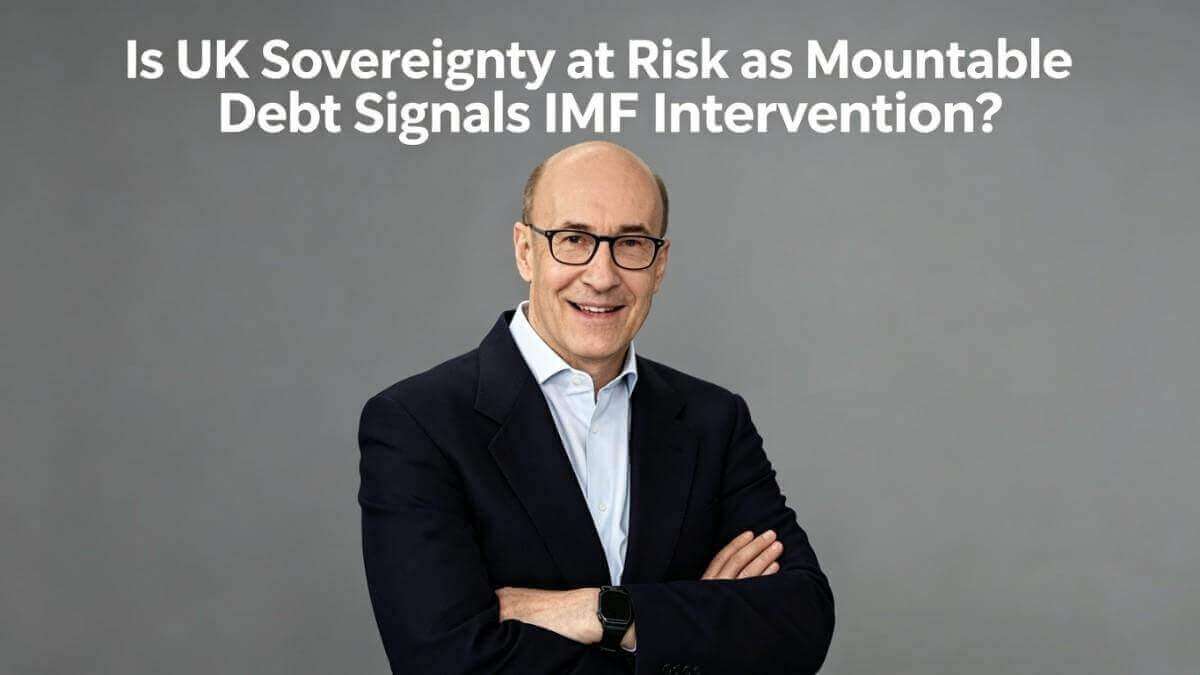
To understand the gravity of the current trajectory, the historical precedent of 1976 looms heavily over Whitehall. During that crisis, the UK was forced to secure a $3.9 billion loan from the International Monetary Fund (IMF)—the largest request in the institution's history at the time—which came at the steep cost of mandatory structural adjustments and deep public expenditure cuts. While the contemporary Treasury insists that current conditions do not mirror the structural collapses of the 1970s, the current vulnerability stems from a distinct modern phenomenon: a prolonged absence of productivity growth paired with structural spending commitments. Former IMF chief economist Ken Rogoff told journalists that repeated global economic shocks have left the country exposed to a more than 50:50 chance of a crisis by 2030, noting that if these shocks lead to a loss of inflation control, the UK would likely require a rescue package involving IMF technical support.
The modern structural decay of the economy is driven by a compounding series of systemic pressures rather than a single policy failure. Long-term capital investment has stagnated, productivity growth has remained largely flat since the financial crisis, and the state's borrowing costs are currently trailing at the upper boundary of the G7 nations. Chancellor Rachel Reeves’ introduction of £70 billion in public spending, with only half funded by a record tax raid on households and businesses, has reduced the fiscal headroom needed to absorb future macroeconomic shocks. Observers note that while the world's largest economies, including the United States, carry substantial deficits, the UK lacks the underlying technological and demographic growth narrative required to effortlessly inflate its way out of its liabilities.
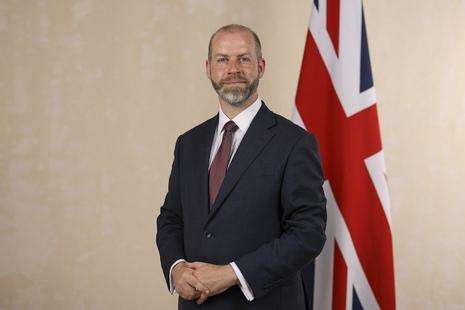
The immediate concern for global market participants is how the next administration will manage the institutional relationship with international bond holders. Investors have become increasingly attentive to the outcome of a key political transition, with Andy Burnham contesting a parliamentary by-election in Makerfield on June 18. While Mr Burnham previously stated he does not wish for Britain to be in hock to the bond market and signaled intentions to spend more on social care and nationalization, he has since sought to calm investor nerves. He told journalists he would stick to the tax and spending rules imposed by the Chancellor and stepped back from earlier pledges to borrow for extra defense spending. Harvard economics experts have compared a radical domestic spending expansion to the Left-wing agenda of François Mitterrand in the early 1980s, which triggered a collapse in the franc, rampant inflation, and immediate capital flight.
Looking ahead, the next twelve months will determine whether the UK can independently stabilize its balance sheet or if it will face external multilateral oversight. Sir Charlie Bean, a former official at the Office for Budget Responsibility, told journalists that an IMF intervention is no longer a negligible probability and must be factored in as a material risk. Olivier Blanchard, another prominent former IMF chief economist, added that it may take a minor technical disruption in a government bond auction, or a widening spread in yields, to compel governments to execute structural corrections.
UK Retail Sales Bounce Back Unexpectedly
The Treasury maintains that its economic plan remains sound, telling journalists that borrowing is down, growth is up, and government borrowing was reduced by £20 billion last year. Officials point out that the IMF itself upgraded the UK growth forecast this year from 0.8 percent to 1.0 percent. However, independent macroeconomic models viewed by Daily Dazzling Dawn suggest that if inflation pressures re-emerge and global energy or security shocks recur, the Bank of England may face structural limitations in its ability to suppress borrowing costs without choking off growth entirely. In such a scenario, calling in global institutions would serve less as a financial necessity and more as political insulation for domestic policymakers seeking a structural scapegoat to enforce highly unpopular economic discipline.