
.jpg)





.svg)
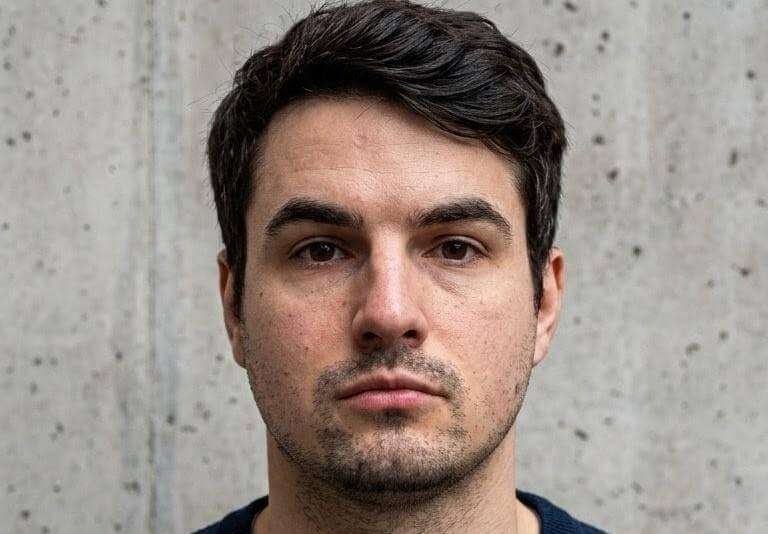
The digital veil of anonymity has once again been pierced as Ivan Jennings, a 46-year-old resident of Stafford, appeared before Leicester Crown Court on Monday, 11 May 2026. Clad in a dark suit and purple tie, Jennings formally entered guilty pleas that underscore the intensifying legal crackdown on online radicalisation and the proliferation of far-right extremism within the United Kingdom.
Jennings admitted to encouraging terrorism over a three-month window between August and November 2024. The court heard that during this period, he utilized encrypted messaging platforms, including Telegram, to propagate a rhetoric of extreme violence. His digital footprint revealed a disturbing fixation on the arrival of small boats, with the defendant explicitly calling for the lethal targeting of migrants upon their arrival on British shores.
Beyond the verbal incitement of violence, Jennings acknowledged his role in the dissemination of a terrorist publication. Specifically, he admitted to sharing the manifesto of Anders Breivik, the Norwegian far-right extremist responsible for the 2011 massacres. By distributing such a document, Jennings moved beyond mere opinion into the realm of active ideological warfare, providing a blueprint for mass violence to others within his social circles.
The prosecution’s case, which previously surfaced during preliminary hearings at the Old Bailey, highlighted Jennings’ obsession with historical atrocities. He reportedly encouraged peers to emulate the Christchurch mosque shooter, Brenton Tarrant, and engaged in technical discussions regarding the construction of incendiary devices like Molotov cocktails. While Jennings denied a third charge—the possession of Tarrant’s own manifesto,
Judge Andrew Lockhart KC directed that this count remain on file, as the existing admissions already carry substantial weight for sentencing.
Observers noted the somber atmosphere in the dock as the reality of these admissions began to settle. The case serves as a poignant reminder of the "lone actor" threat, where digital environments act as incubators for radical ideologies that advocate for domestic terror.
The legal process now shifts toward the evaluation of risk and rehabilitation. Judge Lockhart has remanded Jennings on conditional bail pending a comprehensive pre-sentence report. The court is expected to delve into the depth of his radicalisation and the potential danger he poses to the public when he returns for sentencing on 4 September 2026.
As the government continues to monitor the rise of the extreme right-wing, the conviction of Ivan Jennings stands as a milestone in the effort to decouple online hate from physical action. For the community in Stafford and the wider public, the focus now turns to the looming September hearing, which will determine the duration of his removal from society.