






.svg)
Strategic adaptation and climate mitigation become the new pillars of pilgrim safety as scientific data reveals the narrowing window of human heat tolerance.
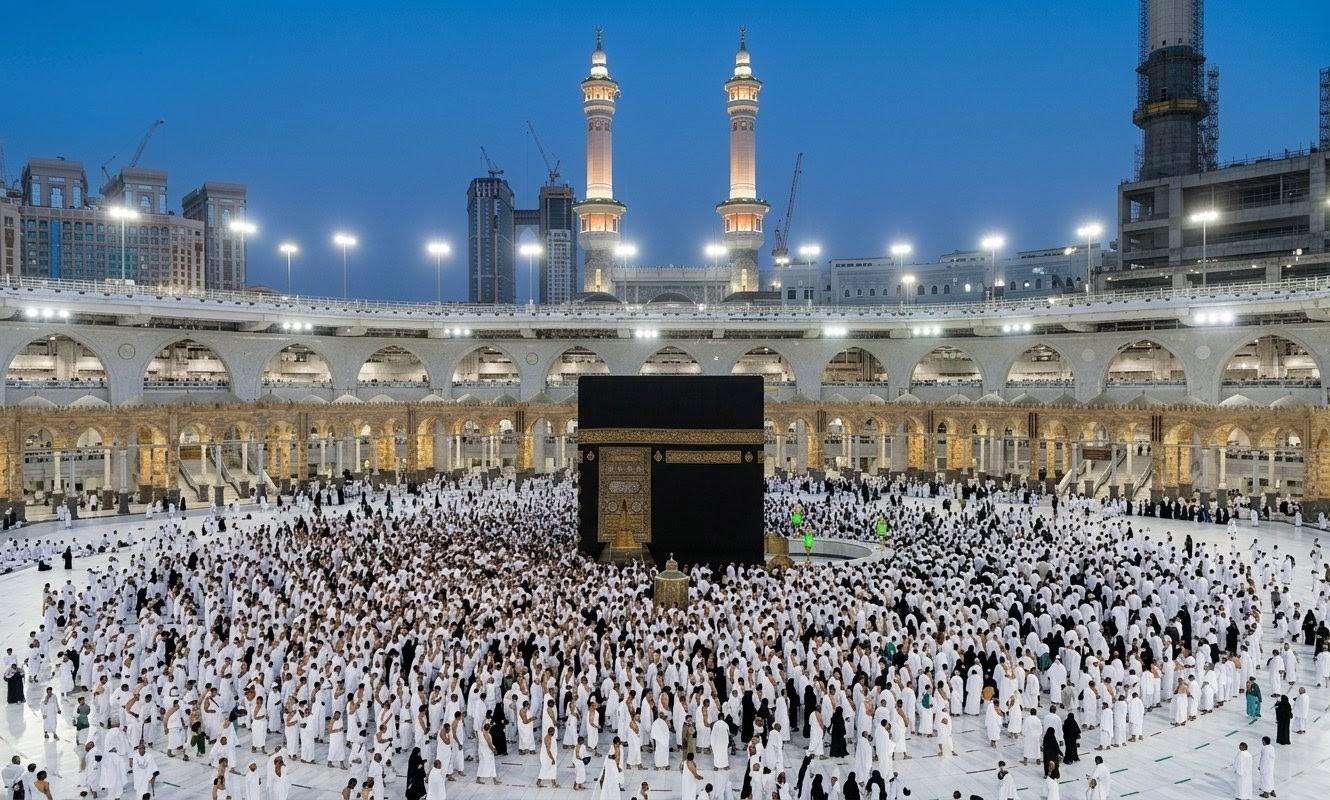
A landmark investigation into the environmental pressures on the world’s largest religious gathering has revealed that the intersection of faith and rising global temperatures is reaching a critical physiological threshold. As presented this week at the EGU General Assembly 2026, researchers led by Atta Ullah of Weather and Climate Services have provided a harrowing retrospective on the 2024 season, confirming that for several hours during the peak rituals, atmospheric conditions moved beyond the capacity of the human body to cool itself through natural perspiration.
The report, which will be featured in the Daily Dazzling Dawn, underscores that the risk is no longer a theoretical projection but a recorded reality. On June 17, 2024, the heat-humidity index reached a level where even healthy young adults faced life-threatening conditions during a four-hour window of outdoor exposure. This finding places a significant emphasis on the Day of Arafat, a cornerstone of the Hajj, where millions stand in prayer on an open plain with historically limited shade.
The Science of Survival and Ritual Integrity
The investigation highlights that the core challenge lies in the "wet-bulb" temperature—a measure that combines heat and humidity. When this reaches certain limits, the biological cooling mechanism of sweating fails. "The data indicates that during physically demanding sequences, such as the walk between Safa and Marwa or the stoning of the devil, the metabolic heat generated by the body compounds the external environmental stress," a researcher told journalists. This has prompted a shift toward "grey infrastructure" solutions, such as the expansion of air-conditioned pathways and the deployment of massive cooling mist systems that have already saved countless lives.
Future Projections and Next Steps
While the Hajj will rotate into the cooler winter and spring months over the next two decades due to the lunar calendar, the study warns against complacency. By the year 2050, the pilgrimage will return to the peak of the summer heat. Analysts suggest that the intervening "cool years" must be utilized as a critical window for massive structural investment. Future planning is expected to focus on "heat-resilient" ritual pathways, including enhanced permanent shading in Mina and Muzdalifah and the potential for technological interventions that monitor pilgrim health in real-time.
Guidance for the Devout
To navigate these escalating conditions, experts advise pilgrims to prioritize pre-travel physical conditioning and strict adherence to hydration protocols. The use of light-colored, breathable umbrellas and the scheduling of non-time-sensitive movements during the evening or early morning hours are becoming essential components of the journey. The narrative moving forward is one of proactive protection, ensuring that the spiritual essence of the Hajj remains preserved through sophisticated environmental management and global climate responsibility.
Daily Dazzling Dawn continues to monitor these developments, providing the public with the verified facts necessary to understand the evolving landscape of global traditions in a changing climate.