




.svg)
The United Kingdom has entered a new era of border enforcement today, March 26, 2026, as the Home Office officially activates a sweeping set of measures designed to end what ministers describe as the "abuse" of the legal migration system.
The Emergency Visa Brake and Institutional Deadlines
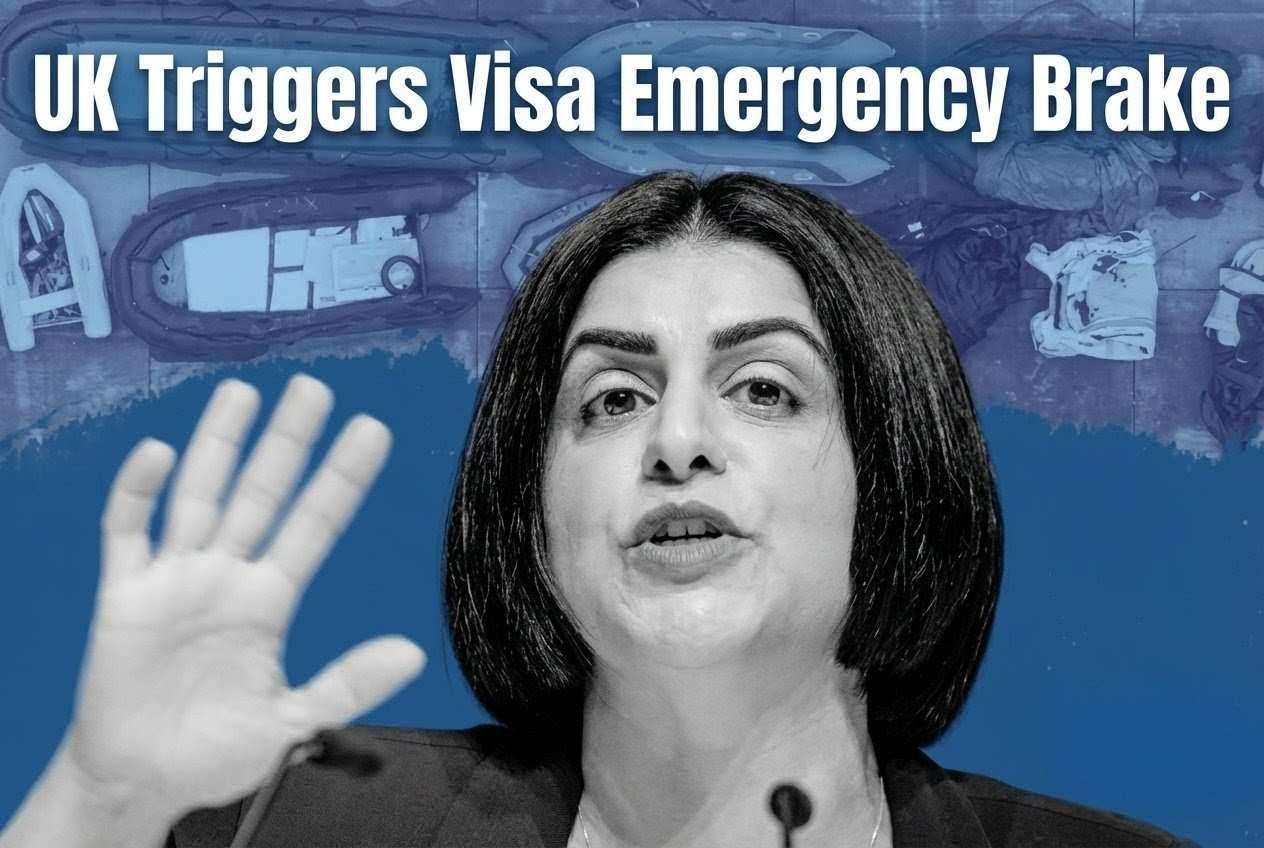
Effective this afternoon, the government has officially imposed an "emergency brake" on visa applications from Afghanistan, Cameroon, Myanmar, and Sudan. This unprecedented move specifically targets student visas and, in the case of Afghanistan, skilled worker visas, following data showing that asylum claims from these routes have surged by 470% since 2021. Home Office officials confirm that any application submitted from these four nations after the 1:30 PM deadline today is being systematically refused. This follows a trend where the number of asylum claims from Afghan nationals on work visas has actually surpassed the total number of such visas issued, prompting the Home Secretary to take what she calls "firm but fair" preventative action.
Temporary Protection and the End of Permanent Settlement
For all individuals claiming asylum from today onwards, the traditional five-year path to residency has been abolished. Successful claimants are now being granted "core protection" for a maximum of 30 months. At the end of this two-and-a-half-year window, the Home Office will conduct a "safe return review" to determine if the individual can be sent back to their country of origin. This policy shift, modeled after the Danish asylum system, aims to double the time required to gain permanent settlement to as much as 20 years for some, effectively removing the "pull factor" of near-automatic residency.
The Controversial £40,000 Voluntary Return Pilot
Alongside these restrictions, a new pilot scheme has been launched today targeting 150 failed asylum seeker families currently housed in taxpayer-funded hotels. The government is offering up to £10,000 per person—capped at £40,000 per family—to leave the UK voluntarily within seven days. While the Home Secretary argues this is a cost-effective alternative to the £158,000 annual cost of housing a family in a migrant hotel, the scheme has faced intense backlash. Internal critics within the Labour Party, including over 100 MPs who have signed a private letter of protest, warn that the plan's secondary phase includes the potential for "forced removal" involving the use of physical restraint on children, a move they describe as a departure from British values.
Read more: Will the Courts Stop Mahmood? 10-Year Residency Reform Is Total Freeze Next?
Political Friction and Public Response
The rollout has exposed a deep divide within the Labour government. Former Deputy Prime Minister Angela Rayner has criticized the plans as "un-British," while backbenchers fear a "Windrush-style" scandal as 1.6 million people face reviews of their right to remain. Public sentiment remains equally polarized. Commentators like Mr. James and Chris Dawbarn have expressed frustration, stating that current measures do not go far enough to "pull up the drawbridge" amid national fiscal strain. Conversely, legal advocates have already indicated that the 30-month review cycle and the suspension of refugee family reunions will face immediate challenges in the High Court this week.
What Happens Next
As these laws settle into practice, the focus shifts to the National Audit Office (NAO), which is expected to investigate the financial viability of the voluntary return payments. Furthermore, the Home Secretary is scheduled to deliver a major address at the IPPR think tank tomorrow, where she is expected to outline how these reforms "restore order" while attempting to quell the rising influence of Reform UK.