





.svg)
The long-held assumption that geographic distance provides a natural shield for Western Europe has been officially dismantled following verified flight data from the Indian Ocean.
The New Perimeter of Vulnerability
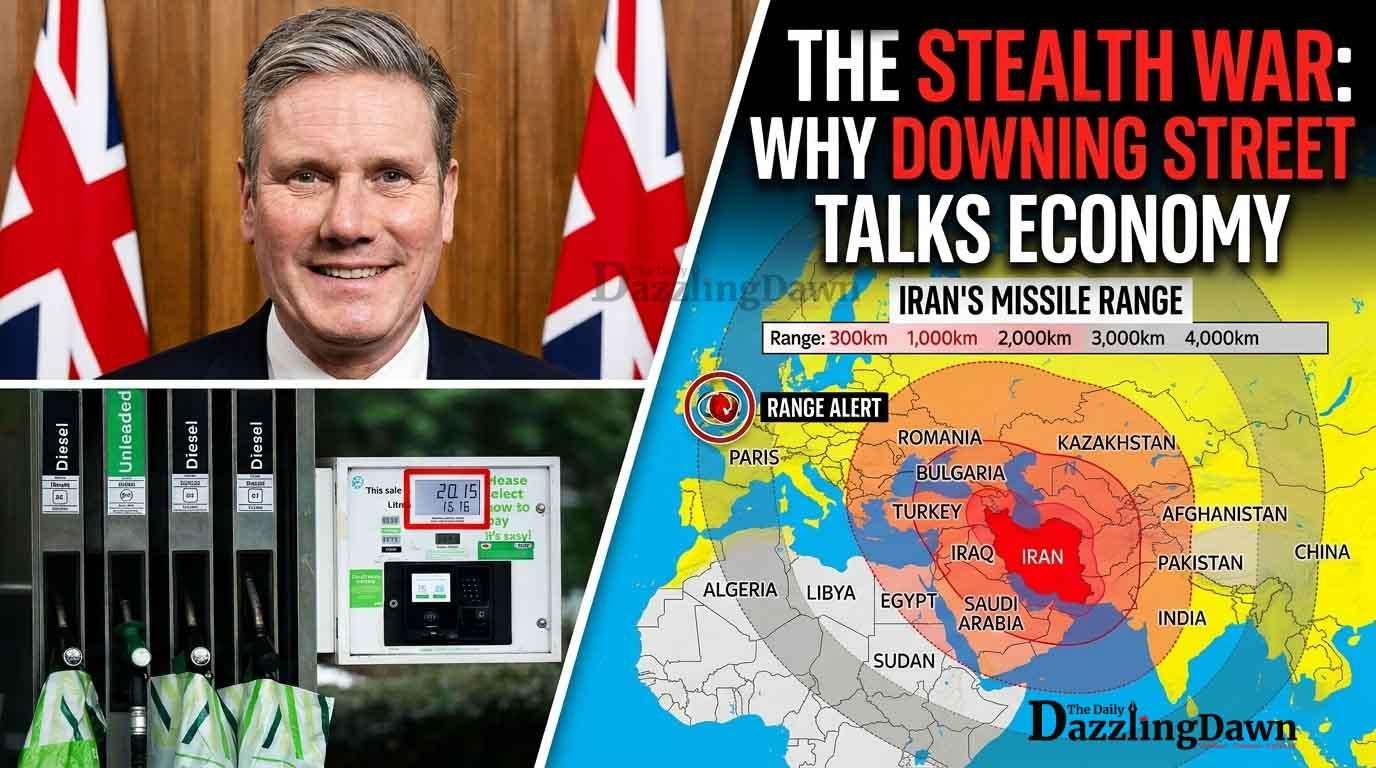
The strategic buffer that once separated the United Kingdom from Middle Eastern missile systems has functionally vanished. For decades, intelligence agencies operated under a 2,000-kilometer ceiling for regional ballistic assets. However, the successful tracking of two missiles toward the Diego Garcia facility—approximately 3,800 to 4,000 kilometers from known launch sites—confirms that the technical barrier has been breached. While the warheads failed to impact the base due to technical malfunctions and US interceptions, the telemetry proves that the capability to reach London, Paris, or Berlin is now a reality rather than a projection. The British public now faces a direct exposure that the government has yet to fully articulate, as current air defense frameworks are calibrated for short-to-medium range threats, not intermediate-range ballistic trajectories targeting the capital.
Read Also: 4,000km Reach: Why the UK is Now in the Strike Radius
The Space Launch Catalyst
Technical analysis identifies the Simorgh space launch vehicle as the primary driver of this range expansion. By utilizing high-altitude propulsion systems originally intended for satellite delivery, the platform has been reconfigured for intermediate-range ballistic trajectories. Military experts indicate that while terminal precision typically decreases at these extreme distances, the "deterrence by reach" objective has been achieved. The distinction between a civilian space program and a long-range military strike capability has effectively dissolved into a single, dual-use technology. This shift means the UK is no longer a bystander but a frontline participant, with British military assets already engaged in "defensive degradation" missions that the Foreign Office insists are not "offensive," despite the clear escalation in kinetic involvement.
Defensive Upgrades at RAF Fairford
In direct response to this expanded threat, RAF Fairford in Gloucestershire has been transformed into a primary hub for "Operation Epic Fury." As of late March 2026, the base is hosting a massive concentration of U.S. strategic assets, including eight B-1B Lancer supersonic bombers and three B-52H Stratofortresses. These aircraft are now flying regular pulses from the UK to the Middle East, carrying GBU-31 Joint Direct Attack Munitions (JDAM) and AGM-158 Joint Air-to-Surface Standoff Missiles (JASSM). These missions are specifically designed to neutralize Iranian missile sites "at source" before launch. The government has implemented restricted airspace around the base for at least a month, signaling that Fairford is no longer just a training ground but a critical launchpad for the active suppression of long-range threats now capable of reaching British soil.
The $118 Oil Peak and Systematic Economic Breakdown
The most immediate domestic risk factor is the surge in global oil prices to $118 per barrel, triggering a systemic economic breakdown. While the Ofgem price cap for April to June 2026 was recently set at £1,641, new forecasts from Cornwall Insight warn that if wholesale prices remain at these war-elevated levels, the July 2026 price cap could skyrocket by over £330, pushing typical annual bills toward £1,973. Beyond home heating, the RAC reports that diesel prices have climbed nearly 20 pence per liter in late March, reaching forecast highs of 180p. This surge has added £13 to the cost of a single tank, leading the International Energy Agency to take the drastic step of urging British workers to carpool or stay home, signaling a regression in national mobility.
Mortgage Crisis and Supply Chain Failure
The UK mortgage market is currently in a state of "catastrophic" contraction as lenders pull nearly 1,000 products from the shelves. The average two-year fixed rate has spiked to 5.35% in just seven days, leaving a typical borrower with a £250,000 loan facing an additional £900 per year in interest. With 1.8 million deals expiring this year, a massive wave of homeowners faces a financial cliff. Simultaneously, the war is strangling the agricultural "water" of the economy; one-third of the world’s seaborne fertilizer passes through the Strait of Hormuz. Asda’s executive chair, Stuart Rose, has warned that significant price rises across all aisles are "inevitable," threatening a repeat of the 2022 shock where food inflation hit 19.1%.
Economic Security as a Shield for War
Downing Street’s recent pivot to discussing inflation and energy prices is a calculated move to manage domestic stability as the UK deepens its military commitment. The government is using the cost-of-living crisis to justify military intervention in the Strait of Hormuz, framing the conflict as a struggle for "economic security" to avoid the political fallout of declaring a new war of choice. However, the risk factor is immediate: the closure of global shipping lanes is not just a market fluctuation but a precursor to a protracted engagement that places British households at the center of a geopolitical crossfire. With the Office for Budget Responsibility warning that this conflict could add 1% to headline inflation by year-end, the "defensive" narrative is becoming increasingly difficult to maintain.
Strategic Countermeasures and Next Steps
In response to this verified range, the UK Ministry of Defence has transitioned to a high-readiness defensive posture. Foreign Secretary Yvette Cooper has authorized the use of British bases for missions targeting the sensor nets and relay stations that guide these long-range assets. The primary objective remains the restoration of traffic in the Strait of Hormuz, where a blockade continues to rattle global markets. As the G7 prepares an emergency session, the focus is shifting toward "Integrated Air and Missile Defense" (IAMD) upgrades across European coastal hubs to meet this new, unhindered threat. The reality remains that the UK has already crossed the threshold of conflict, and the next phase involves hardening domestic infrastructure against a reach that now extends to the heart of London.




.jpg)