






.svg)
Dhaka is aggressively recalibrating its fiscal defenses to ensure national power stability amidst heightening regional tensions.
Strategic Financial Mobilization
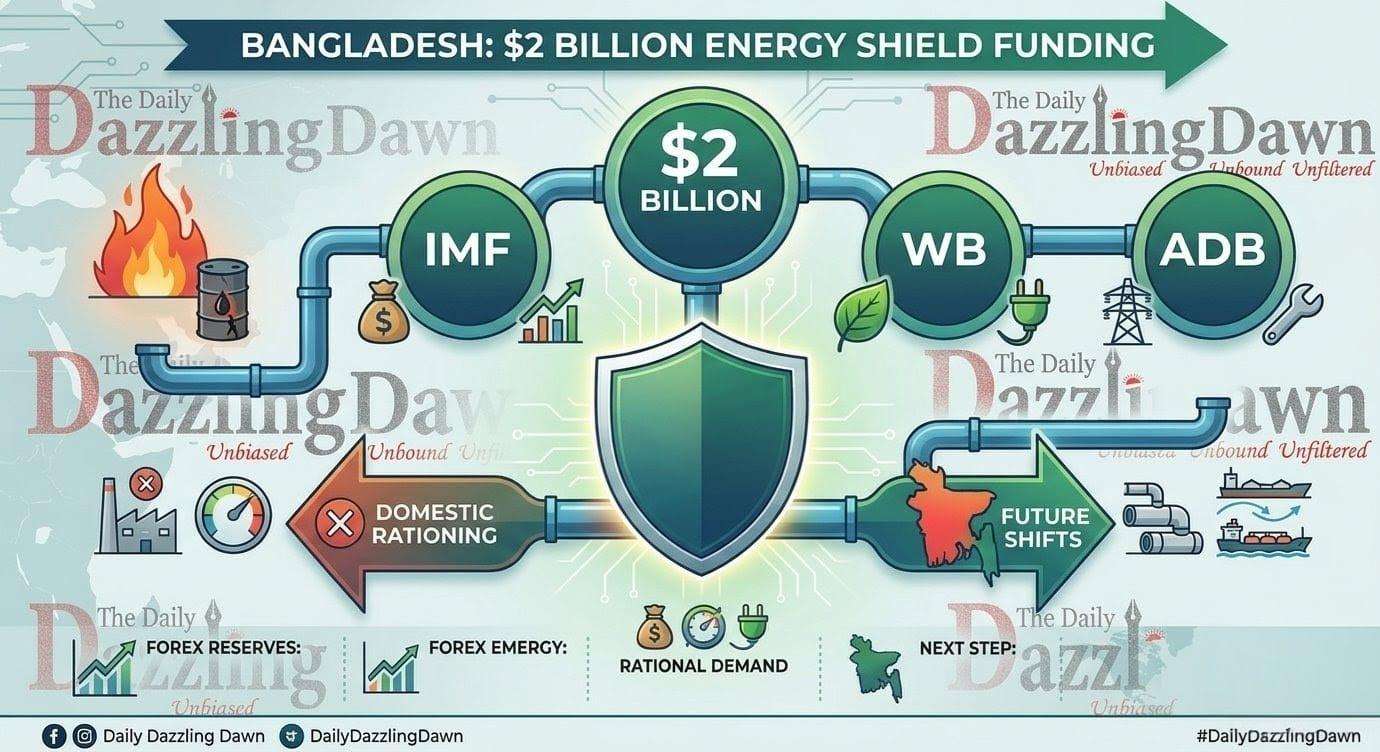
The Bangladeshi government has moved beyond mere negotiation, entering the final stages of securing a $2 billion liquidity injection from the International Monetary Fund (IMF) and the World Bank. This fiscal maneuver is designed specifically to insulate the national economy from the escalating cost of liquefied natural gas and petroleum imports. While previous reports focused on the initial request, the latest updates from the Ministry of Finance indicate that the World Bank’s portion is being fast-tracked under an emergency "Green Transition and Energy Security" window. This funding is intended to provide a buffer for the dwindling foreign exchange reserves, which have faced renewed pressure as spot market prices for energy fluctuate due to maritime disruptions in the Middle East.
Domestic Conservation and Industrial Impact
Beyond external borrowing, the administration has implemented a rigid domestic prioritization framework. The recent decision to halt operations at major state-run fertilizer plants is a calculated sacrifice to ensure that power grids remain operational for residential and essential industrial zones. This internal rationing is part of a broader "Demand Side Management" protocol that had not been fully detailed in earlier briefings. Government insiders suggest that if the conflict in West Asia persists into the next quarter, Dhaka may introduce mandatory "energy holidays" for non-essential commercial sectors to stretch the current fuel inventory.
Future Energy Infrastructure and Shifts
The next phase of this strategy involves a pivot toward more reliable, long-term bilateral contracts to bypass the volatility of the spot market. Reports indicate that Bangladesh is currently in high-level talks with alternative suppliers in Southeast Asia and North Africa to diversify its import portfolio away from the Ras Laffan hub, which is currently sensitive to regional geopolitics. Moving forward, the $2 billion loan is expected to be paired with a structural reform package from the Asian Development Bank aimed at modernizing the national grid to reduce transmission losses. This dual approach of immediate borrowing and long-term structural efficiency is now the cornerstone of Dhaka’s plan to navigate the global energy shock.

.jpg)