





.svg)
Violence linked to jihadist groups increased significantly in Nigeria and the Democratic Republic of Congo (DRC) last year, even as global terrorism-related deaths dropped to their lowest level in a decade, according to a new report.
Nigeria experienced the largest rise in terrorism fatalities worldwide in 2025, with deaths increasing by 46%, from 513 in 2024 to 750. This placed the country fourth on the Global Terrorism Index, behind Pakistan, Burkina Faso and Niger.
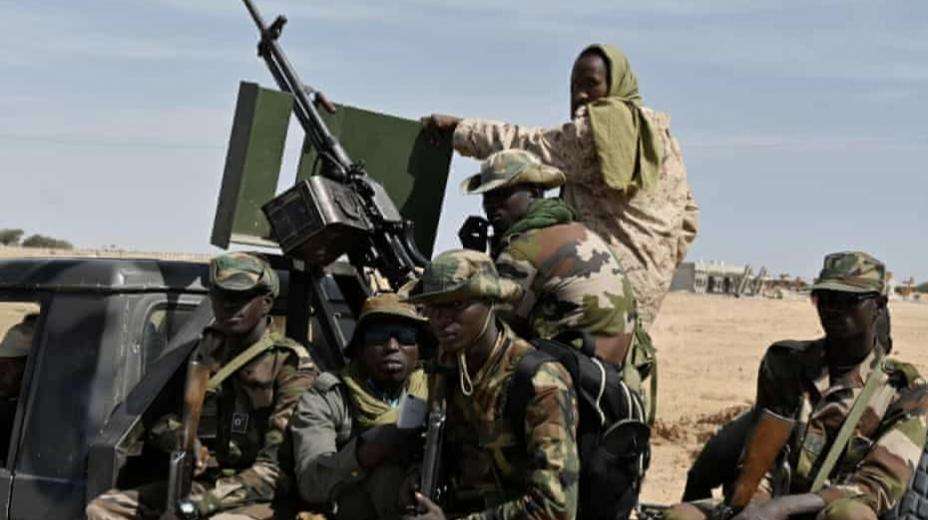
The country continues to face a complex security crisis, with extremist organisations such as Boko Haram and its splinter groups trying to gain control over large areas. At the same time, ethnic militias and criminal “bandit” groups remain active, particularly in northern and central regions. Emerging threats, including the Lakurawa group, are also adding to the instability.
One of the deadliest incidents occurred in February, when 162 people were killed in Kwara state near the border with Benin. More recently, Nigeria’s military reported that troops, supported by air power, successfully repelled an attack on a base in Borno state, killing at least 80 insurgents, including senior figures. The assault followed multiple suicide bombings in Maiduguri that left at least 23 people dead and over 100 injured.
In the DRC, terrorism-related deaths rose by nearly 28% in 2025, climbing from 365 to 467 and pushing the country to eighth place on the index, its worst ranking so far. The increase was largely driven by the Islamic State-linked Allied Democratic Forces (ADF).
Despite these regional increases, global trends show a decline. The report by the Institute for Economics & Peace recorded a 28% drop in terrorism-related deaths worldwide, totalling 5,582 in 2025. The number of attacks also fell by nearly 22%.
However, Western countries saw a sharp rise, with terrorism-related deaths increasing by 280%, reaching 57. In the United States, 28 people were killed in such attacks — the highest number since 2019. The report suggests this rise is increasingly linked to youth radicalisation and lone-actor attacks.
Steve Killelea, founder of the Institute for Economics & Peace, warned that these trends reflect a fragile global security environment that could reverse progress made against terrorism over the past decade.
More than half of all terrorism-related deaths in 2025 occurred in the Sahel region, which remains a global hotspot despite a decline from the previous year. Burkina Faso recorded the largest drop in fatalities, with deaths falling by 50%, and civilian casualties decreasing by 84%.
Analysts believe this reduction may be due to a strategic shift by the al-Qaida-linked group Jamaat Nusrat al-Islam wal Muslimeen (JNIM), which appears to be focusing less on civilians in an effort to gain local support and strengthen territorial control.
Killelea explained that the group is now prioritising higher-value targets, such as military forces and political figures, as it expands its influence.
This shift is part of a broader trend of increasingly coordinated and sophisticated attacks on military bases across the region. JNIM has also expanded its use of drones, carrying out over 100 drone-related incidents in the Sahel over the past three years.
According to data from ACLED, the Islamic State West Africa Province (ISWAP) has also been involved in drone activity, with 16 recorded incidents since 2014. These include both direct attacks and surveillance operations used to plan assaults on military targets.
The report also highlights a growing concentration of terrorist activity in border regions, particularly in the Central Sahel tri-border area and around the Lake Chad Basin.