




.svg)
The Middle East was thrust into a dramatic new phase of conflict on Saturday as hostilities between Iran, the United States and Israel spread across multiple Gulf nations, shattering the region’s long-standing image of stability.
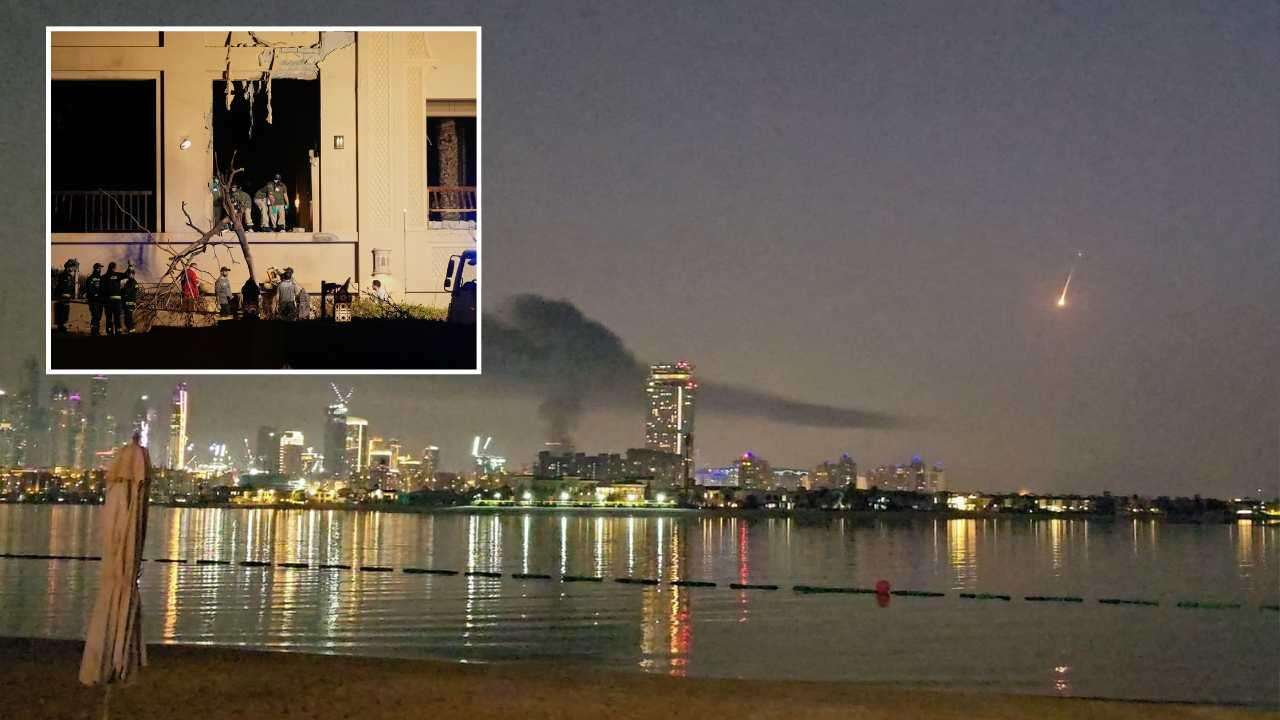
In Dubai, residents reported seeing missile interceptions over the city after what authorities later described as debris from an intercepted drone caused fires near prominent landmarks. Initial reports suggested a blaze at the Fairmont The Palm, located on the iconic Palm Jumeirah, while separate incidents were reported near the city’s luxury landmark, the Burj Al Arab, and parts of Dubai International Airport.
Dubai’s media office said Civil Defence teams quickly brought the fire under control and reported no casualties in the city. Officials added that part of the airport sustained minor damage but did not provide further details. Airspace closures across parts of the Gulf added to public anxiety, with residents describing scenes of fear and uncertainty.
In Abu Dhabi, an incident at Zayed International Airport reportedly resulted in casualties, though official statements later appeared to revise earlier claims.
Regional Escalation
The flare-up followed what Washington described as “Operation Epic Fury,” a coordinated US and Israeli campaign targeting Iranian infrastructure. Within hours, Iran launched retaliatory strikes that expanded well beyond Israel, targeting locations across the Gulf.
In Bahrain, explosions were reported near high-rise buildings and security facilities. Social media footage appeared to show impacts near the headquarters of the US Navy’s Fifth Fleet. Kuwait also reported damage at its main airport after a drone crash injured several employees.
Meanwhile in Iraq, bases linked to the Iran-backed Popular Mobilization Forces were struck, reportedly killing members of the armed faction Kataib Hezbollah. The group, along with Yemen’s Houthi movement, warned of further attacks on US military assets in the region.
Anxiety Across Lebanon and Jordan
The conflict’s rapid expansion stirred alarm across neighboring countries. In Lebanon, long lines formed at gas stations and grocery stores as residents feared a broader regional war. At Beirut’s airport, commercial flights were cancelled amid growing uncertainty.
Attention quickly turned to Hezbollah, the powerful Iran-aligned group that has previously signaled it could intervene if Iran’s leadership faced existential threats. In a statement, Hezbollah condemned US and Israeli actions as violations of international law but stopped short of announcing direct involvement.
In Jordan, falling missile debris reportedly caused fires in the northern city of Irbid as Israel intercepted incoming projectiles overhead.
Gulf States Condemn Strikes
Arab governments across the region condemned what they described as violations of sovereignty. Qatar labeled Iranian strikes on its territory a “direct assault on national security,” while other Gulf states signaled they reserved the right to respond.
Iranian Foreign Minister Abbas Araghchi told NBC that Tehran’s actions were aimed at American bases and carried out in what he described as self-defense. He insisted Iran had no intention of attacking Gulf nations directly.
Political Calculations and Strategic Risks
Analysts suggest Iran’s broader targeting of Gulf states may be intended to impose economic and political costs on US allies, potentially pressuring them to lobby Washington to scale back its campaign.
Some Gulf leaders maintain close ties to former US President Donald Trump and his son-in-law Jared Kushner, who has played a significant role in shaping Middle East policy. Observers believe Tehran may be attempting to leverage these relationships indirectly.
However, regional experts caution that widening the conflict to previously stable Gulf monarchies could backfire, strengthening anti-Iran sentiment and consolidating support for continued US military action.
A Region on Edge
What began as a direct confrontation between Israel and Iran has now spread across multiple borders, pulling in Gulf states that had previously sought to avoid entanglement. With airspace closures, military exchanges, and rising civilian anxiety, the crisis marks one of the most geographically expansive escalations in recent Middle Eastern history.
As diplomatic efforts struggle to keep pace with military developments, the region faces an uncertain and potentially volatile path forward.