






.svg)
As we move into 2026, the narrative surrounding the UK’s welfare landscape has shifted from simple spending totals to a deeper look at the demographic and geographic realities of the "Benefit Capital" regions. While the initial report by Neil O’Brien highlighted the massive £1.1 billion bill in Enfield, new data and local insights reveal a complex picture of who is receiving support and why.
The Demographic Reality of Support in High-Spend Boroughs
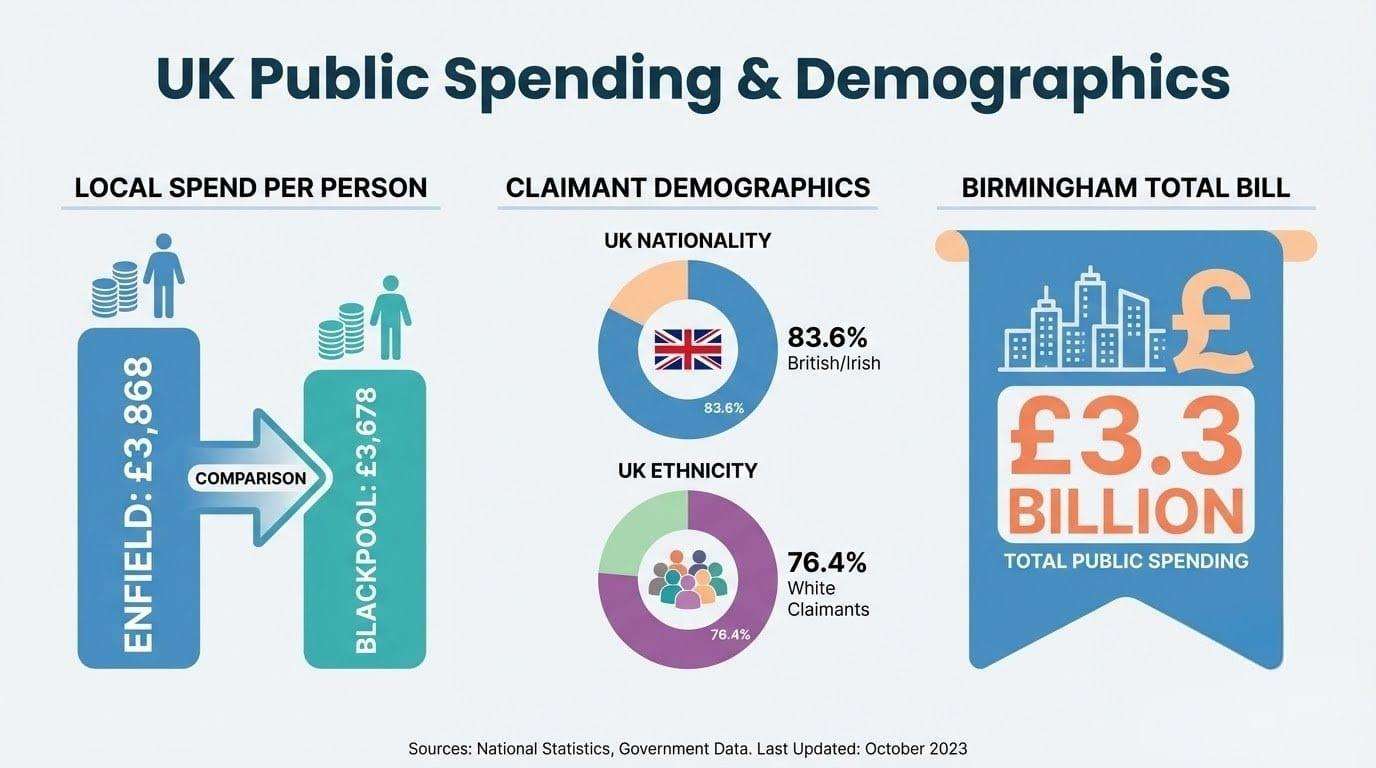
To understand why Enfield sits at the top of the spending list, we must look at the residents behind the numbers. In Enfield, the demographic makeup is highly diverse. Recent census data indicates that White British residents make up 31.3% of the population, while the "White Other" category, including large Turkish, Greek, and Eastern European communities, accounts for 25.2%. The Black African and Caribbean community represents roughly 18%, and Asian residents account for 11.2%. When comparing this to the other high-spend areas identified, the contrast is stark. Blackpool, which ranks second in spending per person, is over 94% White British, proving that the welfare crisis transcends ethnic boundaries and is firmly rooted in regional economic stagnation.
The Truth Behind Benefit Claimants and Ethnic Identity
A primary focus of the national debate remains whether White British citizens or ethnic minority groups account for the majority of benefit claims. According to the most recent Department for Work and Pensions data, White British claimants remain the largest group receiving Universal Credit nationally, accounting for approximately 76% of all claimants. This aligns with the fact that they are the largest demographic in the UK. However, the proportional need for benefits highlights deeper economic inequality. Households from Bangladeshi and Pakistani backgrounds are statistically more likely to rely on benefits for a higher percentage of their total income compared to White British households. In Enfield specifically, the high spend is largely driven by a combination of high housing costs and income deprivation affecting over a third of the borough’s diverse population, rather than any single ethnic group's over-reliance.
Housing Crises Fueling the Billion-Pound Bill
The "Benefit Capital" title held by Enfield is not merely a statistic of unemployment; it is a symptom of a severe housing crisis. While the borough spends nearly £4,000 per working-age person, a significant portion of this is diverted directly to private landlords through the housing element of Universal Credit. Local leaders point out that despite the massive bill, residents are often living in substandard conditions, with rising reports of mould and overcrowding in the Edmonton and Upper Edmonton wards. Across the UK, the benefits bill is projected to climb to £177 billion by 2029. While political figures suggest these funds could be better spent on infrastructure, DWP officials argue that the current focus is on Pathways to Work, an initiative deploying over 1,000 specialist advisors to bridge the gap between high-claim areas and secure employment.