

.jpg)


.svg)
After five hospitals failed to diagnose a rare but potentially life-threatening childbirth complication, Amisha Adhia has launched a campaign calling on the NHS to improve detection and save lives.
Adhia was eventually diagnosed with placenta accreta spectrum (PAS), a serious condition in which the placenta grows too deeply into the wall of the uterus. If not identified before labour, PAS can lead to severe haemorrhage, emergency hysterectomy, or even death.
Rising Risk Linked to C-Sections and IVF
Women who have previously delivered by caesarean section or undergone IVF treatment face a significantly higher risk of developing PAS. According to the NHS, the condition affects between one in 300 and one in 2,000 pregnancies. However, doctors warn that cases are increasing as C-section births in England (45%) now slightly exceed vaginal deliveries (44%).
Adhia, 36, said she feared the growing number of at-risk women were not being properly diagnosed due to limited specialist expertise within some NHS maternity services.
“Placenta accreta can cause catastrophic bleeding within minutes if it isn’t anticipated,” she said.
Diagnosis Finally Confirmed by Specialist
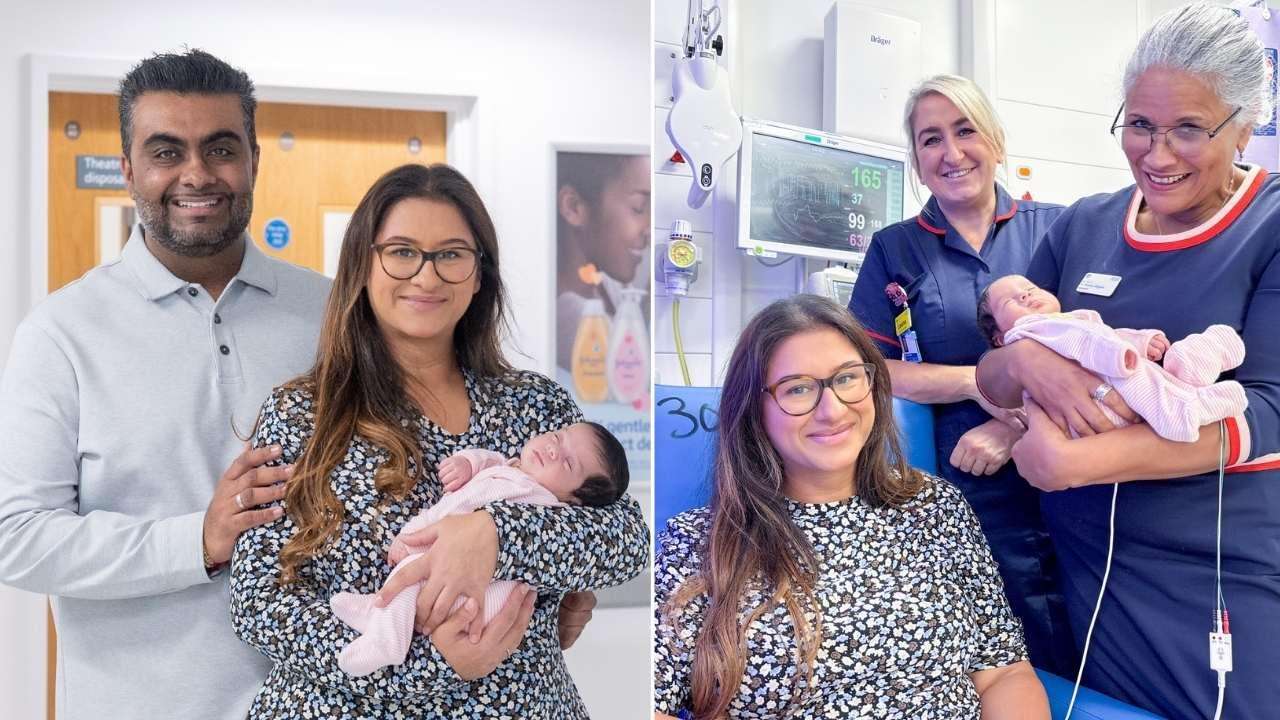
Despite being reassured by specialists at five London hospitals that she did not have PAS, consultant obstetrician Dr Chineze Otigbah later confirmed the diagnosis. Under Dr Otigbah’s care at Queen’s Hospital in Romford, Adhia delivered her daughter, Ishaani, by planned C-section last September.
Adhia lost nearly a litre of blood during delivery but avoided serious complications. She believes early specialist intervention prevented a potentially fatal outcome.
“I was repeatedly told I had almost zero risk,” she said. “But the condition was there and deeply invasive. I felt unheard and reassured into danger.”
Action for Accreta Campaign
Following her experience, Adhia and her husband Nik founded Action for Accreta to raise awareness and push for improved screening and diagnosis. Around 40 women have contacted the couple after sharing similar experiences of complications linked to undiagnosed PAS.
Currently, the NHS does not collect comprehensive data on how often PAS develops or causes complications. Even the annual MBBRACE-UK maternal health report does not include detailed figures. Research from the US and Israel suggests the condition may be more common than UK estimates indicate.
Eight maternal health organisations, including Birthrights and the Birth Trauma Association, have backed the campaign. Baby charities Tommy’s and Sands also welcomed efforts to highlight gaps in awareness and monitoring.
Calls for Updated Guidance
The Royal College of Obstetricians and Gynaecologists (RCOG) acknowledges that PAS and placenta praevia are associated with high maternal and neonatal risks. The organisation says rates are rising due to increased C-sections, higher maternal age, and wider use of assisted reproductive technologies.
The Adhias recently gave evidence to a maternity care inquiry led by Valerie Amos, urging stronger recommendations to improve PAS identification across the NHS.
Dr Otigbah warned that not all hospitals have PAS specialists, meaning subtle warning signs can be missed.
The RCOG confirmed updated guidance is expected later this year, emphasising the importance of early detection through pregnancy scans and specialist care planning.
NHS England stated that while PAS is rare, identifying high-risk women early in pregnancy is critical to preventing life-threatening bleeding, and patients are referred to specialist centres when necessary.