



.svg)
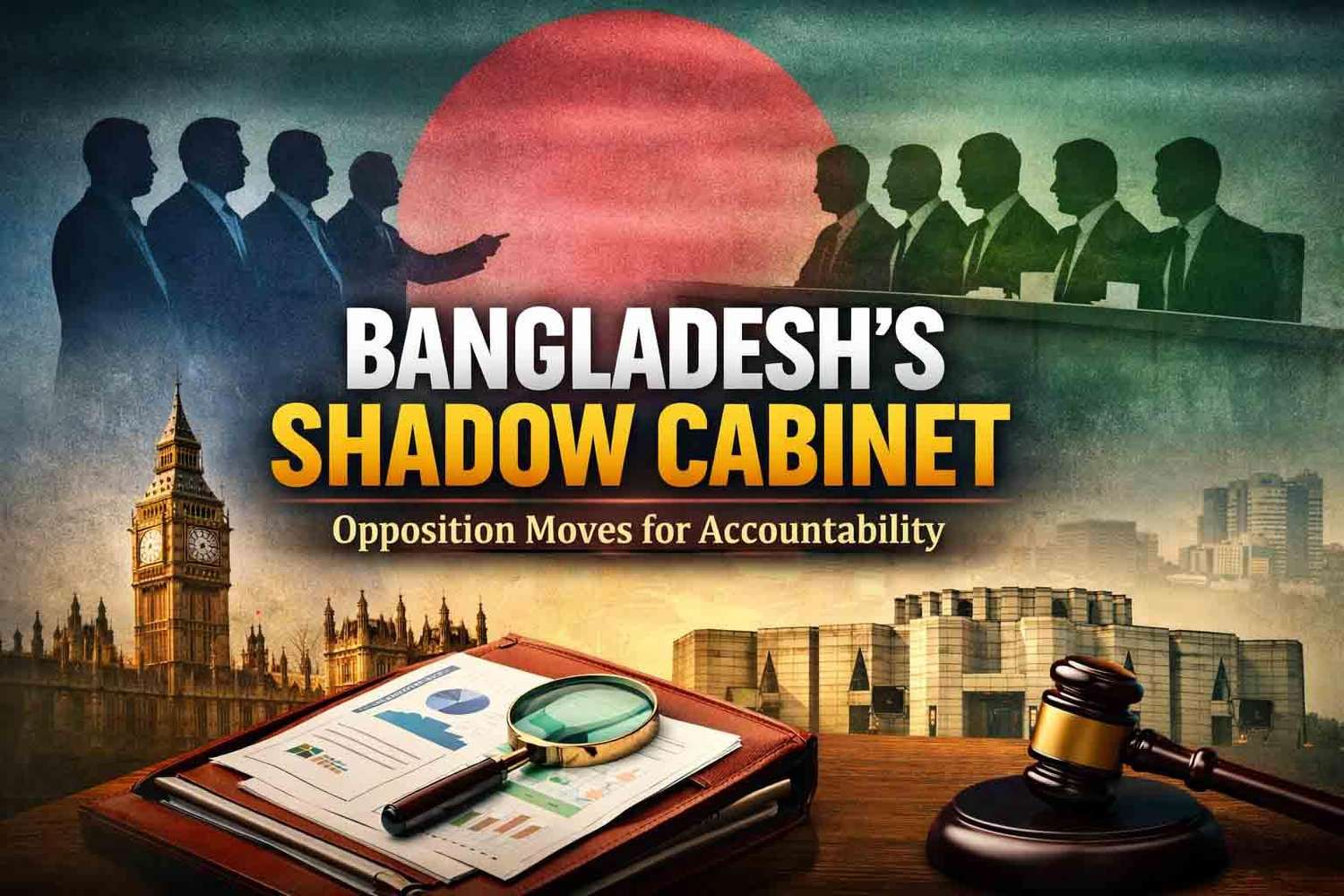
In the wake of Bangladesh’s 13th National Parliamentary Election, a new idea has sparked intense debate in the country’s political circles: the formation of a shadow cabinet by opposition forces. This concept, familiar in some parliamentary democracies around the world, could add a fresh dimension to political oversight and accountability in Bangladesh.
What Is a Shadow Cabinet?
A shadow cabinet is a group of senior politicians chosen by the main opposition party in a parliamentary system to “mirror” the government’s cabinet. Each shadow minister is assigned a portfolio that corresponds to a government minister — such as finance, foreign affairs, education, or health — and is responsible for monitoring that ministry’s work.
Although shadow cabinets do not have executive power or legal authority to implement policy, they act as a government-in-waiting, scrutinising the actions of the sitting cabinet, questioning decisions, and offering alternative proposals.
In traditional Westminster systems — especially in the United Kingdom — the shadow cabinet is a formal and respected part of parliamentary politics. The Leader of the Opposition heads it, and members regularly challenge their government counterparts in debates and committee discussions.
Which Countries Have Shadow Cabinets?
Shadow cabinets are most closely associated with parliamentary democracies rooted in the Westminster model. Some examples include:
United Kingdom: The most prominent and institutionalised shadow cabinet system, where the opposition’s team regularly scrutinises government actions and proposes alternative policies.
Australia and Canada: These countries also maintain active shadow cabinets with defined roles for holding the government to account.
New Zealand: Similar opposition structures exist, enabling detailed policy critique.
Malaysia: Although not always formally recognised by law, opposition groups have used shadow cabinet practices to coordinate critique of government policies.
Other parliamentary systems also adopt versions of shadow or frontbench teams to organise opposition oversight.
In contrast, many presidential systems — and some parliamentary democracies without a strong tradition of organised opposition — do not systematically use shadow cabinets.
Why Do Shadow Cabinets Matter?
Political analysts and democratic scholars point to several important roles for a shadow cabinet:
1. Enhanced Accountability
Shadow ministers focus on specific government departments, studying budgets, policies, and implementation details. This specialization allows for precise critique of decisions and exposes weaknesses or contradictions in government plans.
2. Watchdog Function
By regularly monitoring government activity, shadow cabinets act like a watchdog — raising questions in parliament, during committee hearings, and in public forums. This continual scrutiny can help curb policy blunders and promote transparency.
3. Alternative Policy Development
Shadow cabinets don’t just criticise; they propose alternatives. From alternate economic strategies to different budget priorities, these proposals give voters a clear comparison between the ruling party’s vision and the opposition’s plans.
4. Readiness to Govern
Having an organised group of experienced politicians assigned to run ministries primes an opposition party for future governance. It allows leaders to build expertise, refine ideas, and demonstrate capability to the electorate.
Bangladesh’s Emerging Shadow Cabinet Debate
In Bangladesh, the idea of an official shadow cabinet is new and still informal. The country’s constitution and parliamentary rules do not currently recognise shadow cabinets as a formal institution.
However, key political figures and alliance leaders have recently revived the idea following the 12 February 2026 general election. Jamaat-e-Islami leader Shishir Monir and National Citizen Party (NCP) spokesperson Asif Mahmud Shojib Bhuyain have both publicly stated that they are preparing to form a shadow cabinet focused on ensuring transparency, accountability, and vigilant monitoring of government work.
According to their statements, the shadow cabinet would:
Act as a watchdog over government activities,
Highlight policy shortcomings and errors,
Offer alternative ideas to current governance,
Strengthen democratic “checks and balances.”
Political analysts say that while a shadow cabinet has no legal power in Bangladesh’s current system, its formation could signal a maturing of parliamentary politics — giving voters clearer policy debates and enhancing the opposition’s organisational structure.
Criticisms and Challenges
Not everyone agrees that a shadow cabinet is realistic or useful in Bangladesh. Critics argue that without formal recognition, budgetary authority, or institutional support — like committee funding or official briefings — such bodies risk becoming symbolic rather than substantive. Others also worry that it could intensify political polarisation.
As discussions continue in party forums, social media, and newspaper editorials, one thing is clear: the shadow cabinet debate has sparked a broader conversation about how Bangladesh’s democracy can evolve to be more accountable, transparent, and policy-focused. Whether this idea will become part of the political mainstream remains an open question — but its emergence shows a growing appetite among some leaders for new democratic tools.