




.svg)
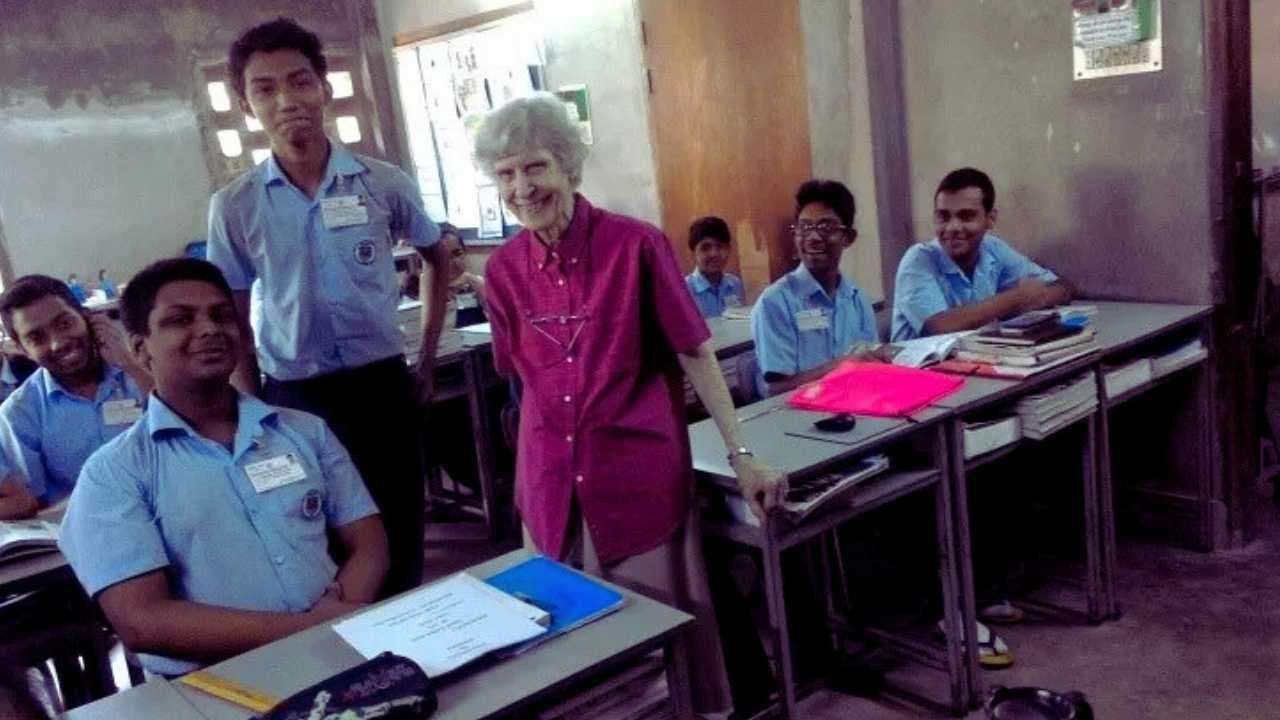
For nearly 40 years, Sister Miriam Francis Perlewitz has quietly shaped lives in Bangladesh, a Muslim-majority nation where Christians represent only a small fraction of the population. An American missionary nun, Scripture scholar, and educator, Sister Miriam has played a pivotal role in forming Catholic clergy while also pioneering inclusive education initiatives that serve children of all faiths.
Sister Miriam arrived in Bangladesh in 1985 to teach sacred Scripture part time at Holy Spirit Major Seminary in Dhaka. Her arrival coincided with a period of deep social challenges in the country, including widespread poverty, limited access to education, and high illiteracy rates. At the time, her role was unusual: a woman teaching future Catholic priests in South Asia was largely unprecedented and initially met with resistance.
Despite early skepticism, Sister Miriam quickly gained the trust of her students. She later recalled being deeply moved by their openness and curiosity, particularly in engaging Scripture within a Muslim cultural context. When Maryknoll closed its school of theology in 1992, she made a defining decision to remain in Bangladesh full time — a commitment that would shape the local Church for decades.
Over more than 20 years at Holy Spirit Major Seminary, Sister Miriam taught generations of seminarians, many of whom later became bishops and senior Church leaders. Her presence challenged traditional assumptions about women’s roles in theological education. While some Church authorities initially questioned her appointment, strong support from seminarians ultimately secured her continued ministry.
Sister Miriam described her years at the seminary as a collaborative spiritual journey rather than a purely academic task. Her teaching emphasized personal reflection, dialogue, and the belief that education begins with uncovering each individual’s inner potential.
Her missionary work extended far beyond seminary walls. In her early years, she also led sewing and skills-training programs for women recovering from drug addiction. Witnessing their determination reinforced her conviction that education should address emotional, moral, and social development alongside academic learning.
This philosophy led to the creation of the “Education for Life” curriculum in the 1990s, which focused on self-esteem, communication, anger management, and personal responsibility — topics rarely addressed in Bangladesh’s traditional rote-learning system. The program proved transformative when piloted in Dhaka-area schools.
Sister Miriam’s educational vision reached its fullest expression with the founding of BACHA English Medium School in Dhaka. Co-founded as an inclusive institution, the school brings together Christian, Muslim, and Hindu students in a shared learning environment, emphasizing values, critical thinking, and life skills. The school is widely recognized for its affordability and strong academic standards.
Parents and former students credit BACHA with fostering discipline, confidence, leadership, and global awareness. Many describe the school as a rare space where interfaith harmony is practiced naturally through everyday interaction.
Sister Miriam has consistently emphasized that children do not divide themselves along religious lines. “That question belongs to adults,” she once said, noting that children see one another simply as companions in life.
Now in advanced age, Sister Miriam is preparing to leave Bangladesh, marking the end of an era. She is among the last American nuns still serving in the country — a reflection of shifting global missionary dynamics. Yet she hopes her legacy will continue collectively through educators, students, and institutions she helped build.
Her message to future generations remains hopeful: equipped with strong values and shared responsibility, they can contribute to a more just, productive, and compassionate Bangladesh. Rooted in her congregation’s mission to proclaim God’s goodness and care, Sister Miriam’s life stands as a quiet testament to perseverance, women’s leadership, and faith lived at the margins.