


.jpg)


.svg)
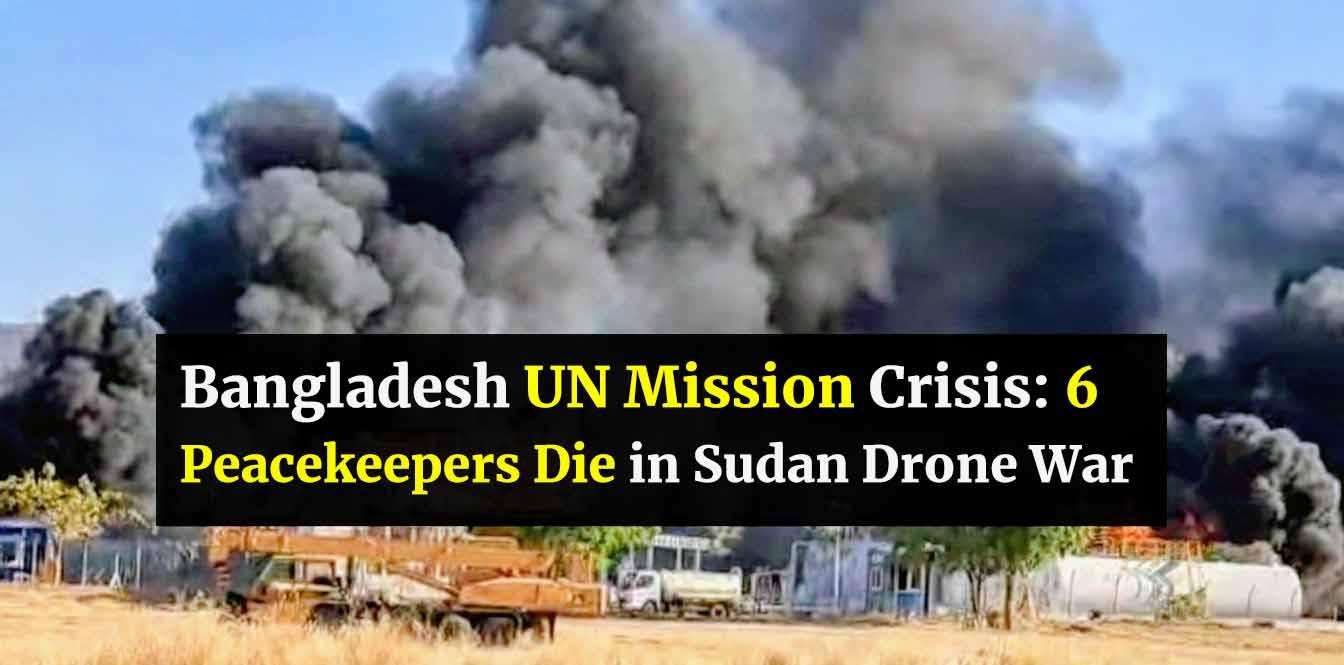
A sophisticated and deadly drone attack targeted a United Nations peacekeeping base in Kadugli, Sudan, resulting in the immediate deaths of six Bangladeshi peacekeepers and critically wounding several others. The assault, which initially struck the fuel reserves before focusing on troop movements, occurred at the United Nations Interim Security Force for Abyei (UNISFA) mission's base this afternoon, local time.
The Bangladeshi Inter-Services Public Relations Directorate (ISPR) confirmed the fatalities and injuries, stating that six peacekeepers from the Bangladesh Army's 9 Bire Unit were killed and eight others were wounded, including three female personnel, four of whom are in critical condition. The attack, which witnesses confirmed involved drones, has cast a pall of deep sorrow and concern over the affected families back in Bangladesh, as reports indicate that clashes between the peacekeepers and the assaulting forces are still ongoing. Officials fear the death toll may yet rise given the severity of the injuries.
Principal Advisor Professor Muhammad Yunus issued a statement late tonight, expressing profound shock and grief over the 'martyrdom' of the six brave peacekeepers and the injuries sustained by the eight others while they were carrying out the noble duty of establishing peace and stability. Acknowledging Bangladesh's significant and internationally recognized contributions to UN Peacekeeping Operations, Professor Yunus stated that this sacrifice is simultaneously a source of national pride and deep sorrow. He offered his sincerest condolences to the bereaved families and prayed for the speedy recovery of the wounded.
In his statement, Professor Yunus confirmed that urgent requests have already been made to the United Nations to ensure the highest level of medical care and necessary assistance for the wounded. He pledged that the government would stand by the peacekeepers’ families during this difficult time.
Strongly condemning the terrorist act, the Principal Advisor emphasized that an attack on peacekeepers constitutes a serious crime against international peace and humanity. He urgently called upon the UN and the international community to take effective measures to further strengthen the security of peacekeepers operating globally. The Bangladeshi government is also maintaining close contact with the UN to expedite the repatriation of the bodies of the fallen soldiers and ensure comprehensive medical treatment for the injured.
Meanwhile, in a parallel development, the Sudan Army-backed Sovereign Council, led by Commander-in-Chief General Abdel Fattah al-Burhan, strongly condemned the attack on the UN facility in the Kordofan region, blaming the anti-government paramilitary Rapid Support Forces (RSF) for the aggression. The Council described the strike as a "dangerous escalation." The city of Kadugli, which was declared a famine zone earlier in November, has been under siege by the RSF for approximately a year and a half.
Analysts suggest this aggressive move by the RSF, which is engaged in a widespread conflict with the Sudanese Army since April 2023, is aimed at penetrating the army's defenses around central Sudan to clear a path for the potential recapture of Khartoum. Kordofan, a vast agricultural region split into three states, is critically positioned between the RSF-controlled Darfur region to the west and the army-held northern, eastern, and central areas, making Kadugli vital for maintaining supply lines and troop movements.
The RSF, which was originally formed in 2013 from the Janjaweed militias notorious for atrocities, genocide, and ethnic cleansing against non-Arab communities in Darfur, has evolved into a formidable force under the leadership of General Mohamed Hamdan Dagalo, known as "Hemedti." The group has been accused of intervening in conflicts in Yemen and Libya, and General Dagalo is known to control several Sudanese gold mines, allegedly smuggling the metal to the UAE—a nation the Sudanese Army accuses of supporting the RSF with arms and drone attacks, a charge the Gulf state denies. The Sudanese Army has also accused Eastern Libya's powerful General Khalifa Haftar of aiding the RSF by smuggling weapons and deploying fighters.