


.svg)
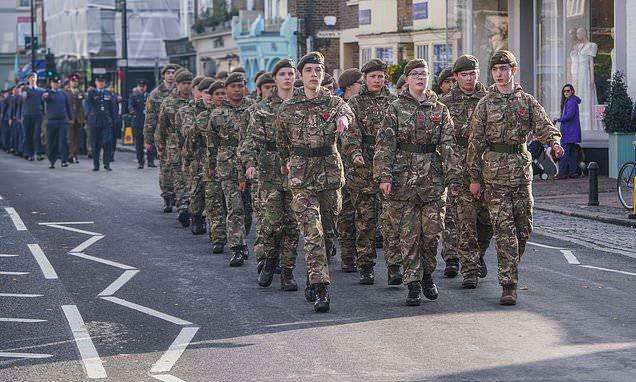
The British Army has found itself at the center of a cultural firestorm this week, igniting a fierce national debate about the erosion of traditional values and the rapid secularisation of the United Kingdom. In a move that critics have branded a capitulation to political correctness, military chiefs have appointed Ex-Major Neil Weddell as the armed forces’ first-ever non-religious chaplain. While the Ministry of Defence frames this as a necessary modernization, the appointment serves as a potent symbol of a much deeper transformation—and for many, a deterioration—within British society.
The controversy erupting around Mr. Weddell’s appointment is merely the tip of the iceberg in a nation where the spiritual landscape is shifting at breakneck speed. The appointment drew immediate ire from senior political figures and veterans who argue that the removal of religious underpinning from institutions like the military invites a dangerous loss of gravity. Former Tory Cabinet Minister Sir Jacob Rees-Mogg did not mince words, suggesting the decision makes the Army look "silly" and warning against the institution falling prey to "another outbreak of wokeness." His sentiments were echoed by former paratrooper Jim Wilson, who served in Afghanistan and invoked the age-old military maxim that "there are no atheists in foxholes," suggesting that when mortality is on the line, the human soul naturally seeks divine, not humanistic, reassurance.
However, this military row is symptomatic of a profound demographic reality that is reshaping the nation’s social fabric. Recent data from the Office for National Statistics paints a stark picture of a country turning its back on faith. The 2021 Census revealed that for the first time in history, less than half of the population describes themselves as Christian, a drop to 46.2 percent from 59.3 percent a decade earlier. Conversely, the number of people identifying as having "no religion" has surged to 37.2 percent, representing a jump of over 8 million people in just ten years. In the younger demographics, the numbers are even more pronounced, with the British Social Attitudes survey indicating that more than half of those under 40 consider themselves atheists or agnostics.
Sociologists and cultural commentators are increasingly raising alarms about the implications of this mass exodus from the pews. The concern is that the rise of a "godless generation" is stripping away the fear of ultimate accountability that has historically underpinned social order and community cohesion. For centuries, the concept of divine judgement and the structure of organized religion provided a framework for moral behavior and a distinct sense of consequences beyond the temporal laws of the state. Critics argue that without this spiritual "fear" or reverence for a higher power, the moral compass of the next generation is becoming increasingly relativistic, centred on the self rather than the collective good.
This shift is particularly palpable in the breakdown of community structures. The parish church once served as the beating heart of British villages and towns, a place where people of different classes and backgrounds congregated, supported one another, and upheld shared values. As these doors close, they are rarely replaced by institutions that offer the same depth of connection or duty to one’s neighbour. The atomisation of society, where individuals are increasingly isolated and driven by personal autonomy rather than communal duty, tracks closely with the decline in religious observance.
The impact on the Armed Forces is a microcosm of this wider societal challenge. The Ministry of Defence defends the appointment of a Humanist chaplain by pointing to the data, noting that over 40 percent of UK regular forces now profess no religion. They argue that pastoral care must reflect the diversity of the troops. Mr. Weddell, speaking to Soldier magazine, stated he was honoured by the role and emphasized that support must reflect the full diversity of worldviews. Yet, for traditionalists, the role of a chaplain is not merely to offer a sympathetic ear, but to offer spiritual fortitude and a connection to the transcendent in the face of death—something a framework based solely on reason and science may struggle to provide in the heat of battle.
The rapid growth of the non-religious population suggests a future where the binding agents of tradition, ritual, and shared belief are dissolved. As the "nones" (those with no religion) become the dominant demographic, questions regarding social responsibility, the resilience of community bonds, and the psychological fortitude of a generation raised without spiritual anchors become unavoidable. The backlash against the Army’s new Humanist padre is not just about a single job appointment; it is a resistance against the dawning of an era where the ancient fears and faiths that built the nation are quietly discarded, leaving a vacuum that secularism has yet to provenly fill.