






.svg)
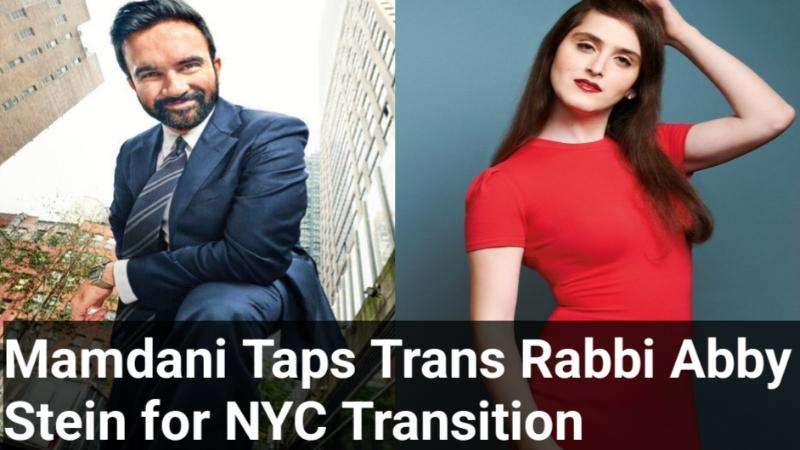
In a move that signals an unwavering commitment to the progressive coalition that swept him into City Hall, Mayor-elect Zohran Mamdani has appointed Abby Stein, a prominent transgender activist and rabbi, to his transition team. The decision has immediately become a lightning rod for political discourse, drawing sharp lines between the city’s energized socialist left and an increasingly vocal conservative opposition, while simultaneously testing the cohesion of Mamdani’s diverse immigrant support base, Daily Dazzling Dawn realized.
The appointment is not merely symbolic. Mamdani, who recently secured a historic victory over Andrew Cuomo to become the city’s first Muslim mayor, is assembling a government intended to dismantle the status quo. By tapping Stein, a former ultra-Orthodox Jew who left the Hasidic community to live openly as a trans woman, Mamdani is strategically consolidating the support of the progressive Jewish left. This demographic was crucial to his "Jews for Zohran" campaign arm and serves as a vital counterweight to accusations of antisemitism often leveled at the Democratic Socialists of America by political opponents.
For the Mayor-elect, the logic is clear. Stein represents the intersection of housing affordability advocacy, LGBTQ+ rights, and religious progressivism—three pillars of the Mamdani platform. In a statement regarding the broader transition team, which includes over 400 experts, Mamdani emphasized that the unifying force is a commitment to the affordability agenda New Yorkers are demanding. Stein’s inclusion sends a message that his administration intends to protect marginalized communities regardless of pressure from the incoming Trump administration in Washington.
Predictably, the reaction from the political right has been vitriolic. Conservative commentators and media outlets have seized on the appointment to reignite culture war grievances. The outrage focuses heavily on Stein’s dual identity as a transgender woman and an anti-Zionist activist associated with Jewish Voice for Peace. Detractors have flooded social media platforms, labeling the incoming administration as radical and out of touch with mainstream values. One high-profile critique circulating online attempted to delegitimize Stein’s religious standing and gender identity simultaneously, framing the appointment as a direct provocation to traditionalists.
Conversely, the progressive left sees the move as a triumph of intersectional politics. For supporters, Stein’s presence on the transition team validates the "big tent" strategy of the socialist movement. It reinforces the idea that the fight for economic justice is inextricably linked to the fight for gender and social liberation. Prominent Jewish activists and cultural commentators have rallied behind Stein, praising Mamdani for refusing to pivot toward the center after the general election—a common maneuver for newly elected officials that Mamdani appears intent on avoiding.
Perhaps the most complex reaction comes from within Mamdani’s own base of working-class immigrant voters. Representing a coalition that includes devout Muslims and conservative immigrants from South Asia and the Middle East, Mamdani navigates a delicate balance. For many in these communities, the pride of electing the first Muslim mayor outweighs disagreements on social issues. While there is a quiet disconnect regarding LGBTQ+ policies among socially conservative elders in his district, the reaction has largely been tempered by Mamdani’s laser focus on economic survival.
Voters in Astoria and Jackson Heights supported Mamdani primarily for his aggressive stance on rent control, taxi medallion debt relief, and public transit funding. Political analysts suggest that as long as the Mayor-elect delivers on these bread-and-butter economic promises, his immigrant base is likely to overlook appointments that align with Western progressive social values. The "socialist" label has effectively allowed him to bridge the gap between young, secular progressives and religious immigrant families by centering the conversation on class struggle rather than cultural divides.
Abby Stein herself remains a figure of resilience amidst the noise. Raised in the insular Hasidic enclave of Williamsburg, she navigated a traumatic departure from her community and an arranged marriage before coming out in 2015. Now a rabbi at a progressive Brooklyn synagogue, she views her role in government as an extension of her pastoral and activist work. Her task, alongside hundreds of other appointees, will be to translate campaign rhetoric into actionable policy by January 1st.
As the dust settles on the election, this appointment serves as the first major stress test for the Mamdani administration. It draws a clear line in the sand: this will be a government that prioritizes ideology and coalition loyalty over the path of least resistance. For his detractors, it is proof of radicalism. For his supporters, it is apromise kept.



_2.jpg)